 |
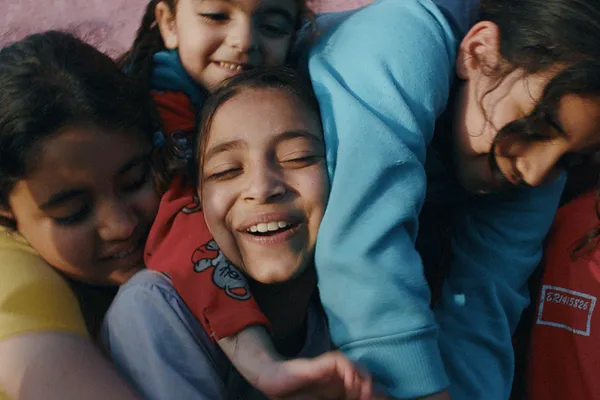
| Ashgan El-Hamus rehearsed a lot with the children in Al Baraneya so they 'felt comfortable being themselves in front of us' |
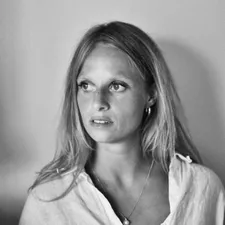 |
| Ashgan El-Hamus Photo: Janniek-Sinnige/Courtesy of Giornate delgi Autore |
“So it was about four years ago that we actually met and it was a bit weird because we share the same last name, and we feel like we are connected in a natural way of being together in one room and to spend the day together, but also like, I don't know you at all. In a way I feel that made it a bit easier to work together as well, because it's not like you're working with your dad or your mum, it’s a bit further away.”
The director says she had a bit of an inner debate about whether to involve them in the film she wanted to make at the start, although she loved the idea of it. “I was constantly aware of what it could bring for them as well, instead of it only being something that could bring something for me or for the Dutch crew or whatever.
“I felt like it also had to be something that they really wanted to do. And of course, there's also the financial element of it. They got paid quite a lot by their standards. So there was also a contract, and that it could really help them. That was also something that we were very transparent about from the beginning. Not as a way to convince them, but more like, ‘It should be something that's also bringing something for you guys, instead of it being only something for me’.”
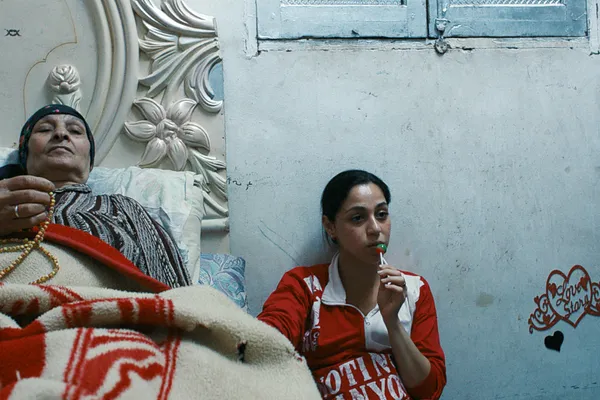 |
| Reem Amer as Amal with Fatma Farahat El-Hadary as her grandmother. Ashgan El-Hamus: |
“It was very much built on trust,” she adds, explaining that they took the crew members one by one to the village to introduce them until the point at which they shot the film. The whole process took around two years and it had its moments of insecurity when she was worried that the family might change their mind.
In the end, however, everything worked out and they spent three months in Egypt, shooting for about 28 days within that so that they didn’t put too much pressure on everyone, especially as a lot of children are involved.
The kids are an important part of the film, as their energy often propels the action along. El-Hamus and her cinematographer Douwe Hennink spent a lot of time rehearsing with the children so that they “felt comfortable being themselves in front of us”.
She adds: “I think that really helped as well is that he is a very good friend of mine and the production designer Clara Bragdon is my best friend, and he has been her boyfriend for 10 years so we are a bit like family.”
The family are obviously used to being together but professional star Amer does an excellent job of integrating herself into the tumble of everyday life.
“She did a wonderful job,” says El-Hamus. “She stars in soaps, and in Ramadan series, and it's all very much about the actors and making them feel like stars. So they love coming with their own trailer to set and the glamorous lifestyle. They put a lot of make-up on and we didn’t have any make-up on set. So it took me quite some time with her to explain, ‘Okay, it’s going to be totally different and for the audience it's going to be super-European-Art-House’ So let’s talk. What are your concerns? What are you afraid about?’
I remember the first day on set she was secretly wearing make-up. I had to rub it off in between takes. I was like, ‘We talked about this’, and then she was, like, ‘Yeah, but I was super insecure, I'm not used to this’. It took us quite some time to get there, and I get that because I'm also super aware when I’m in front of a camera. We're all vain, you know, in a way, so I really got that.”
But in terms of the family, the filmmaker says it was easy because when they took Amer to spend time with them it wasn’t long before the girls were playing with her and she was braiding their hair.
“I thought, ‘Okay, this is going to work’.”
Although there are men in the film, the story is female-centric and focused on the women in the household and, in particular, on Amal’s desires as she considers what life might be like if she moved to Cairo. The director says: “I wanted to be close to their natural way of living but to focus a bit more on the women. That’s because I always had this feeling growing up half-Egyptian and coming there every summer, that when we’d go out of the house, the men were really in charge, and they walked in front of us, and they had a lot to say. But when we were inside, I felt like my grandma was always like the boss. It was non-negotiable. She was deciding and all the women were just so talkative, and they were so together. They spent way more time with the other women of the family than they do with their actual husbands, because they go to work.
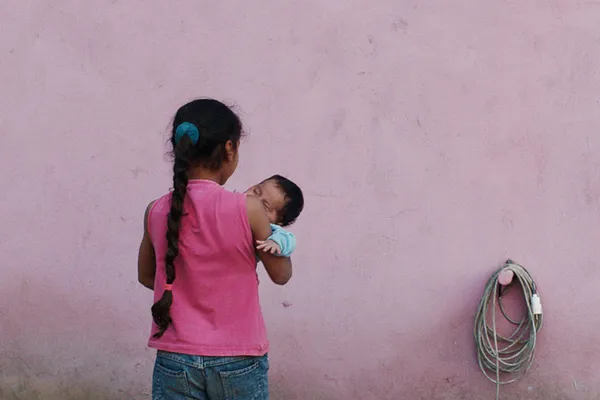 |
| Ashgan El-Hamus: 'When I'm in Egypt, I don't know whose kid is whose, so you just pick up a child because it's crying, and it doesn't matter who it belongs to' |
Al Baraneya is a film that shows the importance of traditions within the family and the way that things are passed down through the generations, so does El-Hamus worry that some of these are getting lost in the modern world?
“Definitely,” she says, “And I think that was really at the core of my motivation.”
She explains that’s because of the “collectiveness” of Egyptian households. She adds: “In Holland, I find it still very weird sometimes that we that we live with only our core family in one house with, like the three or the four of you, and then when your mom gets sick, you don't take her in your house, but you know she's been taking care of you, your whole life. When I'm in Egypt, I don't know whose kid is whose, so you just pick up a child because it's crying, and it doesn't matter who it belongs to.
“I feel quite alone sometimes in Holland and this collectiveness, especially with women, is something I’m missing more and more. It’s also part of our politics, it’s so polarised and I feel that’s also because we don’t live together any more and don’t look one another in the eye. This is a very small film and it’s very much about their livelihood but there is this other layer, I hope for some people, where you get to think about these things.”
El-Hamus, who is currently pregnant with her second child, due in October, says she isn’t thinking too much about her next film yet but that it will be set in Holland. “These big things change you in terms of what kind of filmmaker you are,” she says “I feel like becoming a mum the first time changed me and changed what kind of films I wanted to make and I know that this will probably do the same. Also, this film coming out will change my perspective on the fils I want to make.”
But her naturalistic approach is here to say. “That’s something that’s not going to change. I love looking at real people and I love working with real people. In that sense, I'm not so technical as a director, I work for my gut, and I love to talk to people about, ‘What are your fears? What are your dreams? And then I can also share mine.’ Also, when I watch films, I love looking at real people.”
Although she is working on a documentary project “in my head”, she says she “needs my control as well”. She adds: “I love the fact you can see real people playing a story where the authenticity really hits you and you’re like, ‘How can this not be a documentary?’ Where you have that line [between fact and fiction] and it’s really thin, I love that.”