





Eye For Film >> Movies >> Hoarder (2026) Film Review


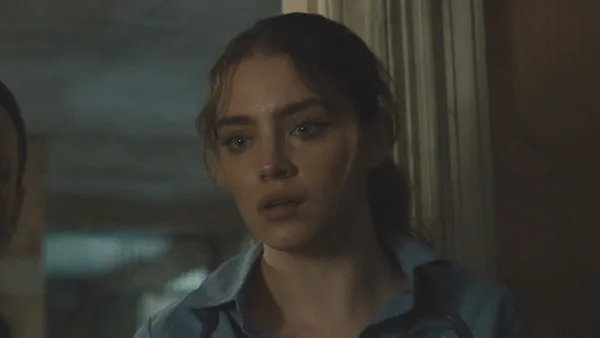

Director James Owen is also a doctor. It’s a rare combination. It means that, in taking on body horror, he understands his subject well; and he also understands the mercenary way that many medical people talk when away from their patients, the crudity and black humour which enable them to cope with repeated exposure to distressing situations. Eric (Paul Casar) has some pretty unpleasant things to say about housebound people as he and his young colleague Lissa (Daisy Jelley), set out in their van to deliver the ‘flu vaccine to them. Her distaste for this is an early hint that she has not yet learned to set firm boundaries. The friendly rapport that the two of them have despite it shows us that that they respect on another’s deeper motives, and skills.
People can be housebound for lots of different reasons. On their first visit, they’re looking for Doris, who has a diagnosis of dementia. Travel might be distressing for her, or her carer, who is an old man himself, might not be able to manage it. He’s not in when they get there, but Eric is anxious to avoid delay since they have many more visits to make. Even when Doris reacts angrily to the injection, Lissa understands that it’s probably a result of confusion. But then the aged woman has one of those sudden moments of lucidity that dementia patients sometimes get, reminding us that there are people just like us inside there desperately trying to make sense of the world. Gripping Lissa’s hand, she says “I live with terrors that I dare not think of,” and then, “He will return.”
Let’s go back for a moment. Before these events, we have been treated to a prequel in which we see a mailman desperately fleeing the house, hiding in a shed, and subsequently mutilating himself – so we know, though the characters do not, that something is seriously wrong here. In the absence of such information, Lissa is concerned that the woman may be experiencing abuse, and wants to arrange an in-depth welfare check. Eric doesn’t want to get involved. Going out into the garden, he meets the old man, Fred, as he comes in at the gate, wheeling his bicycle, plainly under the influence of alcohol. He is displeased when he learns that Eric and Lissa have already been inside the house. The specifics of his questions will make more sense to you later on. In the meantime, we follow Lissa on an increasingly disorientating journey through the house after Eric disappears.
The story is rather slight. Lissa discovers other inhabitants in the house, all mentally or physically changed, or both. She strives to help Eric and to avoid the old man, and in due course she discovers that he’s not the only thing to be afraid of. Messy though the house is, this isn’t just another film about people holding on to things they feel unable to replace; the hoarding goes a step beyond that. As Lissa makes her way through the tunnels that run through the house, getting closer to the subterranean heart of it, she becomes aware of another, more powerful presence. She also begins to lose her grip on reality, so that her journey becomes almost like a trip through her own mind.
There’s a lot going on here and Owen, on his first feature as a solo screenwriter, doesn’t quite have the skill to keep it all together. The supporting players become a freakshow which contributes little. There is too much repetition, too many dead ends – though we need to feel Lissa’s frustration, we shouldn’t become frustrated with the film. A great deal of care and attention has gone into the design of the house, however, and it pays off, building atmosphere and giving context to the real world tragedy of mental deterioration. It exists in parallel with the body horror elements, which are at their most effective when relatively simply, evoking forms of unpleasantness which viewers may have encountered in the course of their own lives.
One thing that housebound people tend to have in common is a higher than average vulnerability to ‘flu, so home vaccination teams do heroic work. With the aid of two impressive leads, Owen shows what his characters can do when forced to find a different kind of heroism within themselves. The underlying narrative takes on issues around infection and quarantine, as well as looking at the way that disease can enhance or exploit our natural human desires for freedom and society, all the way to a bittersweet ending which sets aside rational concerns in favour of something deeply instinctive. Screened as part of Frightfest 2026, it’s a strong indicator of talent, but it may take another film or two for Owen to really find his groove.
Reviewed on: 29 Aug 2026


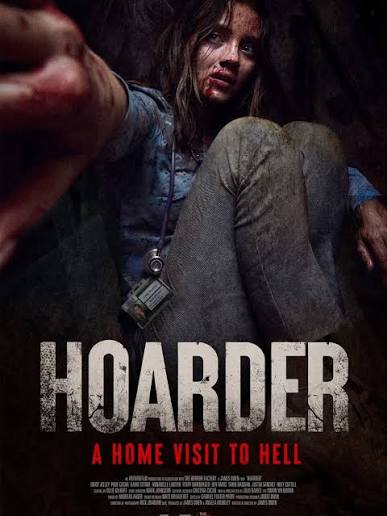
Director: James Owen
Writer: James Owen
Starring: Daisy Jelley, Paul Casar, David Sterne, Annabella Lanyon, Terry Bamberger
Year: 2026
Runtime: 90 minutes
Country: UK
Search database:
