




 |
| Valley View Motel |
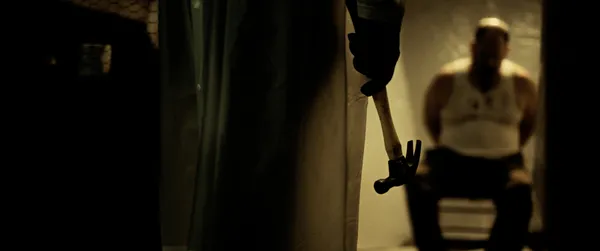
American directors Nick Psinakis and Kevin Ignatius' neo-noir crime thriller Valley View Motel is set in 1977. After a diamond heist goes wrong, Cliff (Ignatius) and Reg (Soulo Smith), with a bag full of diamonds, come across a remote Pennsylvania motel to lay low. However, it's run by siblings Lester (Tom Mesmer) and LouAnne (McKenzie Such), who have a frightening side hustle. As the night unfolds, other guests arrive, including Hal (Psinakis), a math teacher and hitman sent to retrieve the diamonds, and a mother (Judy J Lee) and her daughter Sunny (Laura Im), who are relocating.
Valley View Motel is Psinakis and Ignatius' fourth feature film collaboration, which began with the comedy My Best Friend's Famous, about a man whose life appears to be unravelling. They followed this with the horror The Long Dark Trail, which follows two brothers go off in search of their estranged mother, who left them to join a cult, and the supernatural horror Cheat, about a violent entity that punishes cheaters.
In conversation with Eye For Film, Psinakis and Ignatius discussed nostalgia for a simpler time, reverse engineering, absurdity, nurturing a Seventies vibe, wanting a little rock and roll, and more.
The following has been edited for clarity.
Paul Risker: You’re about to share this film with an audience. Has letting go of a film become easier from project to project?
Nick Psinakis: We're trying to get better at it. I don't think it's ever easy, and we're probably two years into this now, and so it's the first time it's playing. It’s tough because you want people to enjoy it and take something away from it. We always say as long as they feel something. They could hate it or love it, but if they feel something, then maybe we did our job.
So, we're trying to get better at letting go. Our human side wants people to like it, but that's probably not the best way to approach art. You have to put everything into it and then just let it go.
Kevin Ignatius: We fight it every day. We were just talking last night about how you start having thoughts about the cut. My God, it’s a battle, but you have to embrace it. We tell ourselves: Look, this is it, let’s commit to it. You have to stick with your gut on the story.
We've been working together for 15 years, and it's great that we share in it together, especially nurturing Valley View Motel. It's our fourth feature, and we're getting better at handling what Nick had mentioned there.
PR: What was the genesis of the idea for Valley View Motel?
NP: Well, because we're working on such small budgets, we often reverse engineer stuff, but it always starts with the characters. Kevin had this idea for a couple of characters and some broad strokes. We shoot a lot of films where he grew up in Pennsylvania, which, in some regards, is stuck in the Seventies. So, there were places and vehicles that we had at our disposal.
We started there, and then we wanted to make a fun and unserious kind of film that we feel we aren’t seeing anymore. And Valley View Motel was definitely inspired by some filmmakers and films that we grew up with.
So, that's how we started and we began writing backwards from that. Kevin was actually the one who suggested we should act in this, which I thought was a terrible idea, but I'm really glad we did.
We wrote it knowing we were going to shoot it on a low budget, and so, we wrote our characters purposefully so that one of us could always be on the other side of the camera for any given scene.
KI: Shooting in a small town on a super-micro budget, we don't know anything else. We have to be inspired by the geography and what's there. And yes, the town and the area is kind of stuck in a time capsule of the Fifties, Sixties, and Seventies. We just started to create the world around what we saw, which is a different way of doing it.
We're fans of the Seventies musically and everything as well about the decade. We had our ideal playlist going while we were making it, which was all Seventies tracks. And it ended up being more of those indie vibes on the soundtrack.
PR: Thinking about the physical space in the film, the motel is not only a stage for the drama but is a character itself.
NP: Kevin had found this motel that we ultimately shot at. We cheated a little bit, but the majority of the motel was one motel — the entrance lobby where they check in was a different location. But the main motel that you see the exterior of was where the majority of the film was shot. Kevin mentioned that he was talking to the owners about it. Then, we went over to look at it, and it was just trapped in the Seventies.
Looking around, there was so much history, and it made you wonder what kind of stories had taken place there in those rooms? That definitely sparked our imagination, and hopefully it comes through in the film too, where it’s like Lester and LouAnne have inherited not only the motel, but its history that has come along with it in a weird way.
KI: It was key for us to obviously find a motel, and honestly, it was tough. And the motel is a huge character. Nick and I spent a lot of time trying to vibe the sequences in the rooms. And my wife, who production designs for us, put a lot of effort into transforming the rooms so we could make it all work. But yeah, it was definitely a huge character.
PR: The Seventies was a period of anti-establishment movies, with a raw and gritty cynicism. It’s understandable given the anti-war feelings and the slew of assassinations which stripped America of its innocence. How does Valley View Motel's characters reckon with this reality, and how does that feed into the film’s thematic engine?
NP: There was something refreshing and nice about not being in the present day for a lot of reasons. I think a lot of us are longing for simpler times in a lot of ways, including art and culture, and that might have sparked it for us, either consciously or subconsciously.
But I do think there is an innocence, specifically with Sunny and this idea of searching for a simpler life and those simple pleasures. I mean, they're just basically trying to have somewhat of a normal, suburban middle-class life. And from a morality standpoint, it fits into that time period because these characters are making all the wrong decisions for the right reasons. There's a moral compass that could get them into trouble.
I feel like I'm going off of the Seventies thing, but it touches on what you said of the simpler morality and the Americana of the time. And maybe we are longing for it.
KI: We test screened it for the generation from that era, and they really connected with that, which was cool. They were like: “Oh, I remember that” or “It takes me back to that.”
PR: There’s a playfulness to the film where the characters aren’t quite what you expect. It’s one of the fun things about the film, where it’s not so much that they’re winking at the screen, but you know what you’re doing and so do they. It’s a fun and subtle exchange between the film and its audience.
NP: It's a tough line to get, right? And it was something we were striving for. We wanted to teeter on that line, where, like you said, there might be serious things happening on screen, but the way the characters are interacting could lean into the absurd. So, it was definitely something we were trying to achieve, and I hope we did in some cases.
We really wanted to play with non-linear structure, especially when introducing the characters in some of the vignettes and when trying to keep it as unexpected as we could. But we always definitely wanted it to be playful and fun. We wanted you to have a good ride and enjoy the vibe of the type of movie that we feel we're missing a little bit.
PR: Valley View Motel hinges on our cineliteracy. We know certain things are going to happen, but the idea is to create a sense of surprise or shock. So much of a cinema is like a magic trick, which relies on misdirecting the audience. Here, it’s using the audience’s expectations against them.
NP: Absolutely, and that's the trick. What's hard is suspending disbelief as much as you can while still trying to tell a good story and keep people engaged so they feel the twists and turns, which are genuine and earned. It’s a lot of spinning plates.
You could just make a quick left turn for the sake of it. We really try to think about those decisions and justify them in some way in our own mind before we film them. Hopefully that comes through a little bit.
PR: The visual language of the film is interesting with the angled shots and being in up close on the characters. It all helps to convey this impression of claustrophobia, and characters who are ensnared and trapped. Visually, the cinematography leaps off the screen.
NP: That's something we put a lot of thought into this one. Kevin and I storyboarded the whole film. Working on such small budgets, the days are precious. So, we sat beforehand with a physical three-ring binder. Most people would have an iPad or something, but we had printed pages. And the reason we did that was, in our experience, we've found that sometimes being on an iPad isn't actually as quick as having a tab for: here, scene 30, this is what we’re trying to feel.
We talked about all those things, including the thought-out shots and why we wanted to do them. And we wanted to have this voyeuristic thing going on with the motel, which is a character itself. For the colour palette, we were looking at a lot of neo-noir stuff. We wanted those colours also to vibe with the Seventies [sensibility] but also at times, hopefully, this sense of anger.
KI: We give a big shout-out to Connor Smyers, our cinematographer, who is fantastic. Nick and I had our shot list obviously tight, but once we got it into his hands, we could collaborate to shape those sequences. He'll come to the table with something where we're like: “Oh, yeah, there we go.”
NP: There were a couple of shots in the motel rooms where we had wide lenses really close to Kevin's face to kind of distort it. So, you feel like you're close to him and, hopefully, you feel like he’s losing his mind. And when Reg is on the phone, we're up above him and, again, hopefully it's this trapped pressure cooker of these guys trying to make those decisions. And then in the basement, we tried to play with a lot of in-camera effects, and we also have what’s like a fisheye lens, but not quite, to get in the headspace of what is going on down there. So yeah, we really tried to think it out and plan ahead of shooting.
PR; Big budgets films are struggling to make a return on their investment. I remember speaking with an indie filmmaker a few years ago who suggested that the direction of power and influence may shift again towards indie film, and character-based and auteur-driven films like we saw in the Seventies. Do you see the films you are making as an example of how cinema needs to move away from the bloated and unsustainable model?
NP: I really hope so, and we talk about it all the time. If you watch history, it does circle back. So, we're really hopeful that it's going to. Even with this film, we say it tongue in cheek, but we're kind of serious: give me a little rock and roll. Give me a little something fun, like anti-establishment and those indie films that had that run in the Seventies getting into theatres and the people that made them being able to have a sustainable living. I really hope that's where it's going. Talking to a lot of filmmakers, it seems that's the hope and that's what people are leaning into.
KI: We're all gathering on this and trying to make this movement happen, where we can turn the tables a little bit on the industry. But yeah, we are all about the anti-establishment and pushing these microfilms with microbudgets. It’s almost fun, and Nick and I don't know any other way to work with a bigger budget. So, we work within our parameters but still try to push the envelope. And we're seeing so many other people do that as well when budgets come out. And ours being around 116,000, we tried to do as much as we could with that amount. And we can only hope that the tables do turn in that direction.
Valley View Motel had its world première at the 2026 edition of London FrightFest.