





 |
| This Is Not A Test |
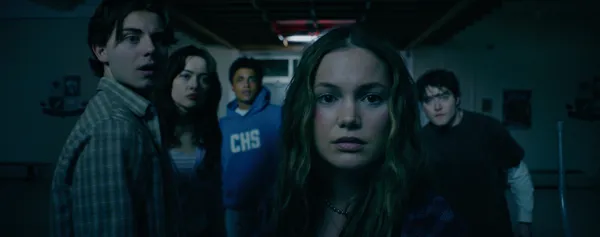
Director Adam McDonald's apocalyptic horror This Is Not A Test, follows Sloane (Olivia Holt) and a group of her classmates who seek shelter in their school when their town is overrun by zombies.
McDonald's directorial début Backcountry revolves around a couple who find themselves lost in the woods and at the mercy of a predatory bear. He has since directed the supernatural horror Pyewacket, Out Come The Wolves and eight episodes of the horror miniseries, Hell Motel. This Is Not A Test is his fourth feature.
 |
| This Is Not A Test |
Speaking with Eye For Film, McDonald discussed the making of the film.
The following has been edited for clarity.
Casper Borges: Watching This Is Not A Test, it appears that you're not repeating yourself but are exploring the genre through each film. Where does your latest sit within your filmography?
Adam McDonald: Well, either or would have been fine because Leah [from Pyewacket] would fit right into this group of friends. Leah and Sloane are very similar and that's what drew me to Sloane. And it's funny, because "my filmography', I don't know if I've ever said that out loud.
One of the themes I like to explore in one way or another is survival. I don't know where it comes from, but that entices me. And I like movies that push people to their limits, which they can overcome. I've always loved those kinds of movies, from Deliverance to 127 Hours. So, whether they're in the horror genre or more of an action adventure or thriller, I gravitate towards characters persevering. I mean, Rocky's no different, and we can all relate to those stories.
CB: While the film is narratively simple, it's emotionally complicated from the beginning, when Sloane goes from arguing with her father to surviving the zombie apocalypse.
 |
| This Is Not A Test |
AM: What drew me to Sloane was her depression. I went through it myself, and so, I could really latch onto and understand it. I wanted to honour that and tell a story that never loses hope, despite everything that happens. We're looking for hope; the theme is hope. It's a simple theme, but if you're a teenager, then you're completely lost, and at that age you want to hear, "You're gonna be fine. Trust me, you can get through this." And what enticed me to make the film is that it's a transitional period in Sloane's life. The film is filled with metaphors.
CB: The camera at times becomes a character itself. What are the challenges to using the camera in this way? Is it a fine line between energising the camera in a way that engages the audience versus being a distraction?
AM: Christian Bielz is the cinematographer, and he has done all four films with me. He comes from documentary.
It's tricky, because the way I approach either making or watching a film is that I don't want to just be watching it as if it were a play. That works for some people, but not for me personally. So, the best way of describing it is I look for the camera to be athletic, right? Or to be a character and present in the scene.
 |
| This Is Not A Test |
As the director, I'm feeling what the actors are feeling, and so is the camera. So, it's about feeling this, and sometimes the camera does nothing and other times it is accentuated when it needs to be — augmenting scenes when it needs to. But it's a very fine line because you don't want to take the audience out of the film by being too aware of being motivated or guided by the camera. Or maybe it's almost like extra spice in food when the camera does a certain thing.
When I'm breaking down the script, I really create the visual language I want for the film. And there will be certain things I've never done before that I want to do to capture a specific moment.
I love Christian's documentary background because there are some scenes that need to be spontaneous. We're capturing the moment, not creating it. For example, when the girls are fighting with the father in the bedroom, there are no marks on the ground. They didn't know when they were going to be on camera, and so, they just had to go for it. It augments everything, and you capture something unique that's personal to the scene and is not contrived.
CB: How would you describe the experience of making This Is Not A Test?
AM: It was a very fast, intense, and challenging shoot. It was not a simple shoot by any means, but I'm very fond of the film, because come the end, it was extremely rewarding, and it reminded me of the Backcountry shoot, which was very similar in its challenging nature. We were deep in the woods, and it was very complicated, even though it looks simple. I remember feeling euphoric at the end. So, let's go with euphoria for This Is Not A Test, which I now have fond memories of.
This Is Not A Test is in US theatres Friday 20th February.