 |
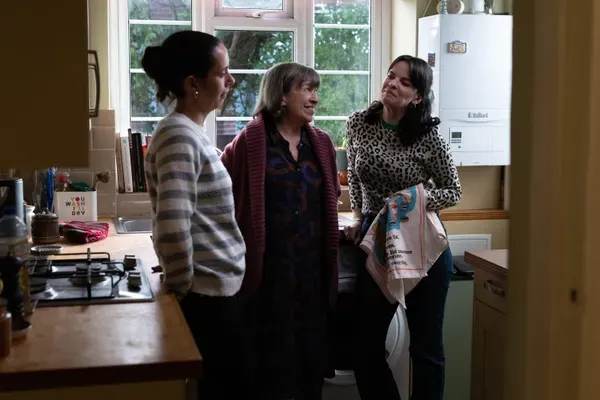
| Kate O'Flynn, Marion Bailey and Alice Bailey Johnson in Tender Loving Care. Mike Leigh: c
ompassion is as important in these times as at any other times' Photo: Courtesy of San Sebastian Film Festival/Studiocanal |
The director, who has previously spoken about his autoimmune disease myositis, which causes inflammation of the muscles, speaking at a press conference in San Sebastian, reiterated the fact that it was “probable” that Tender Loving Care would be his last film as a result. If it is then he goes out on a humanistic note with his social drama, which charts the friendship between two social workers Amy (O’Flynn) and Rosie (Alice Bailey Johnson), and the way that it particular helps Amy as her parents (Marion Bailey and Paul Jesson) as they face a health crisis.
Leigh, who was speaking via Zoom, said: “It’s quite straightforward. I have a medical condition which affects my muscular movement, and it's quite difficult to move around, certainly more difficult than it should have been for a filmmaker. Therefore it's more than probable that this will have to be my last film. That’s all there is to it, it’s a practical matter to do with my medical condition and physical condition.”
All the key actors were in attendance in Spain and talked about the research for their characters. With Bailey Johnson noting that her character works with the elderly community, while O’Flynn is dealing with children and young adults.
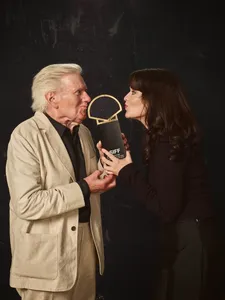 |
| Paul Jesson and Alice Bailey Johnson with Tender Loving Care's Golden Shell, as Kate O'Flynn and Mike Leigh weren't in the city Photo: Courtesy of San Sebastian Film Festival/Jorge Fuembuena |
Addressing the positive nature of the film, which shows how shared glasses of wine, conversations and cups of tea can help people get through tough times together, given what one journalist suggested are “cynical times”, Leigh said: “Humanity is humanity. We haven't stopped being human. The quality of life hasn't gone away just because we're in tough times.
“On the contrary, all the more reason for reflecting positivity where we can. Obviously, I hope the film wouldn't be misunderstood as a piece of romantic escapism because it isn't, it's a hard look at realities, but it is about compassion and compassion is as important in these times as at any other times.”
That compassion is evident within the family scenes in the film, which show how important it is for more than just family to come together in times of need. And in those times, in Britain, at least, tea and wine can often be involved.
Jesson said: “There is also a lot of tea drunk [in the film]. I don’t think you should run away with the idea that most Brits are drunkards.”
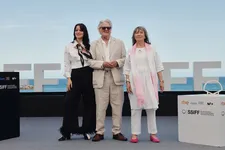 |
| Marion Bailey, Paul Jesson and Alice Bailey Johnson in San Sebastian Photo: Courtesy of San Sebastian Film Festival/Jorge Fuembuena |
That everyday life, the film suggests, is immeasurably improved by being able to share our troubles with others.
Bailey said: “Hopefully we all look out for our friends in life.” and Jesson added: “I think it’s particularly important these days that we do help look after each other – strangers, too. It's very hard sometimes [when you] walk past someone who's on the streets begging, to engage with them. It’s a tough call these days, especially when the world is so aggressive and, by and large, run by people with astronomical amounts of money, who really run their countries rather brutally. It’s all the more important for us not to close our eyes, put our hands over our ears and just thin we’re all right because nothing is happening to us.”
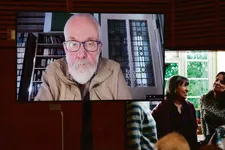 |
| Mike Leigh dialling in to the press conference in San Sebastian Photo: Courtesy of San Sebastian Film Festival/Jorge Fuembuena |
“On the other hand, it’s not difficult to be pessimistic because, as has already been referred to, so many things are happening in the world which are frightening and negative. And really, that’s all I can say, it’s not a black and white matter.”
Bailey added: “I would say we have a moral obligation to try to be optimistic, but it's very hard. But unless we are optimistic, we’ve failed already. I'll just point out Alice is actually my daughter in real life, so, of course, I am concerned. I'd be concerned. In any case about the future of human beings, but I'm of the same generation as Birdie [her character], and certainly when we were in our twenties, we thought we were going to change everything. We thought it was going to keep getting better, that we were breaking down all sorts of horrible taboos and repressions that were around after the war and that ordinary working people would have a better life.
“I would have been astonished to have known then what I see happening now. I don't know where it all went wrong or if it's just a backlash but yeah, it's easy to be pessimistic, but I personally try really hard not to be.”