 |
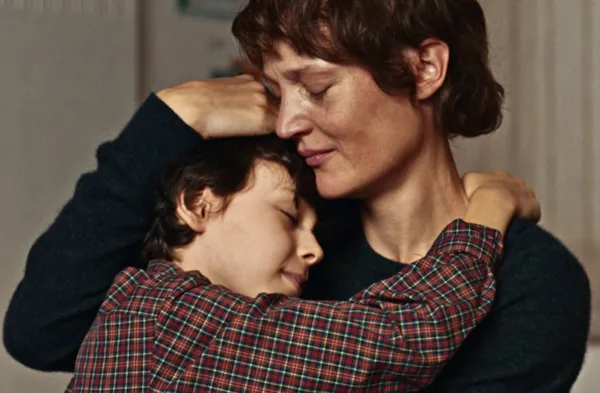
| Clémence (played Vicky Krieps) and her screen son Paul (Viggo Ferreira Redier) Photo: UniFrance |
When, for her second feature, she turned to Love Me Tender, an autobiographical book by Constance Debré, she was mindful that the adaptation should not “revolve around the character’s homosexuality. I wanted to talk about a woman and to affirm that the fact she’s gay doesn’t make what she’s going through any less universal”.
She has confided that she has always had relationships with “people of different genders and has always seen the world in that way.” She recalls having read the book when it first came out a few years ago “and it really moved me. It shed light on and said new things about motherhood at a time when I was also asking myself questions about my identity as a mother, a woman and a writer. A little more than a year later I was approached by the producers to do an adaptation. It took several months for me to think about and during that time I met Constance through her publisher and we talked a lot. It was at a time when I had just had a child myself.
“We exchanged ideas about the place of writing in our lives and essentially she left me to get on with it. I was happy about that because I don’t think she would have been the person to have an objective view of the script, or indeed, the film itself. I don’t think I could work with author who was too involved in a project so may be I should stick to writers who are no longer with us. Constance hasn’t seem the film and I don’t think she wants to particularly.”
 |
| Love Me Tender director Anna Cazenave Cambet: 'I feel that when I arrive in certain places, people still ask if I'm the actress – they assume I'm the actress' Photo: UniFrance |
Cazenave Cambet, 35, was able to bring with her almost the entire crew from her first film Gold For Dogs (De l’Or Pour Les Chiens), including grips, electricians and prop masters as well as her cinematographer Kirsty Baboul and editor Joris Laquittant whom she knew from their days at La Fémis film school in Paris. For the role of Clémence she wanted to find an actress “who was very built and tall and muscled with broad shoulders. I wanted her body to show a sort of discipline. It took a long time because I could not find anyone with the right physicality. I had discussions with the casting director and eventually we thought of Vicky [Krieps]. Once she had read the script she came right back to us to say she wanted to take on the character. And from the first day on set it was obvious that Vicky had become Clémence.”
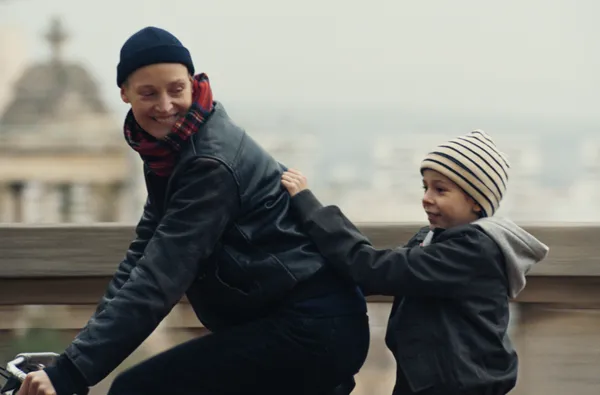 |
| Anna Cazenave Cambet: 'From the first day on set it was obvious that Vicky had become Clémence' Photo: UniFrance |
As for the way she filmed Krieps it was to avoid any clichés normally associated with female protagonists on screen. She said: “I constantly thought of this character as a ‘lonesome cowboy.’ That’s how Kristy [Baboul], and I filmed her. We wanted to give her that kind of strength and charisma – filming her from a low angle to give her a commanding stature. In a way, we never tried to ‘film her like a woman.’ We looked for references among male ‘heroes.’ This was also – and above all – because stories about women like Clémence are still struggling to find their place in cinema.”
Although now based in Paris out of work necessity Cazenave Cambet still feels a strong attachment to the area of Les Landes in south-west France with its forests and ocean aspects and where she grew up. Part of the film was shot there for its wide open vistas and never-ending skies. “It is important for me to keep this part of my life. I miss the trees and the sea too. When I go back to visit my family I walk for ages in the forests and on the beach and suddenly feel calm, happy and content.”
Right from the early stages of working on the film, she focussed on the Paris she wanted to show. “It was a Paris that wasn't typically Haussmann-esque, but rather the neighbourhood where we live – Belleville and its surroundings, the towers at Place des Fêtes, the high ground of the 19th arrondissement. For me, setting almost the entire story in this part of Paris was also an act of freedom; it is the Paris I love and that inspires me.
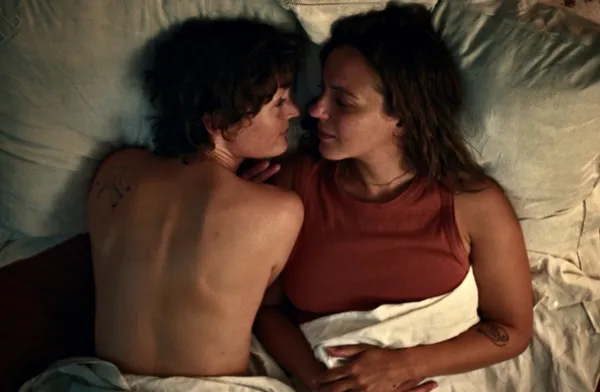 |
| 'Stories about women like Clémence are still struggling to find their place in cinema,' says Anna Cazenave Cambet Photo: UniFrance |
When she was back in Cannes this year (Love Me Tender was shown in Un Certain Regard in 2025) as one of a selection of ambassadors for French film, she reflected on female access to the profession. She remarked in an interview for a radio station: “I didn't feel like I was being held back in my career, but I do feel it's harder. I feel like I always have to justify myself. I feel that when I arrive in certain places, people still ask if I'm the actress – they assume I'm the actress. And then I also feel, and see – and the statistics speak for themselves – that it's very difficult. It might be easier to make a first film, but making a second, a third... that's where things get complicated. So it's still a reality: the difficulty of being a female filmmaker.
“I think things are changing. The new generations in film schools are more gender-balanced, and so there's a good chance this will lead to new, more diverse generations. But there's still a lot of work to be done. In the journalistic sphere... I won't give specific examples but I've had two or three rather surprising encounters there, with men who were really keen to put me in my place as a young woman. They didn't respect me at all. So you have to be prepared, you have to be resilient, you have to be there, you can't give up.
"But it's true that it's definitely more difficult. It's simply more difficult in our society to hold positions of power. You're always suspected of trying to build a career, of being ambitious. So things are moving forward, but slowly.”
Love Me Tender is released in the UK and Ireland on 7 August.
Richard Mowe talked to Anna Cazenave Cambet at the UniFrance Rendezvous with French Cinema in Paris in January