 |
| Marijana Janković on Home: 'For me it’s about a family, about dreamers trying to do their best' Photo: Manuel Claro |
How do Maja and Home relate to each other, and what did you want the feature to add beyond what the short could hold?
Marijana JankovićI honestly see Maja like a scene from the feature. When I started Home, I kept thinking, how do I unfold this short into a bigger story. It was also the right way for me as I was taking a step from acting to directing. The short felt like a manageable step before the feature.
That step from acting to directing also changes the hats you wear on set. When did you realise you couldn’t direct a feature and also play the mother the way you did in the short?
MJ: For a long time, I thought I would play the mother in Home as well. When we got into pre-production, I realised it wasn’t going to work. Directing a feature and playing a key part would have stretched me too far. I wanted to focus on one thing at a time. So, I ended up playing the adult Maja, who shows up toward the end of Home. In a way it becomes full circle.
You draw a clear boundary between what is “yours” and what belongs to the work. Why change some of the names and details between the short and the feature?
MJ: Maja was based on my own story and it uses my parents’ real names. Home is inspired by my life, but not based on it. I didn’t want to put my parents or myself out there. I didn’t want people watching and thinking about whether something really happened or whether it was fiction.
If you’re creating that distance from your own life, what opens up for you as a storyteller?
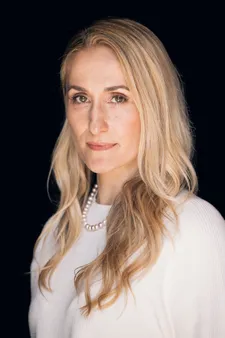 |
| Marijana Janković |
In industry terms this is often described as a Danish film because of financing and production structures. Does that label fit how you think about Home?
MJ: I love when people say it’s a Danish film. It is Danish, but it’s about people from another place living in Denmark. I put a world into Danish cinema that has never been there before.
That idea of “bringing a world” into a cinema culture depends on precision. You cast Dejan Čukić as Maja’s father in both works. Why was keeping him important to you?
MJ: Dejan is my muse. He’s an extraordinary actor. Our families share an immigrant past in Denmark. He was one of the first immigrant children to graduate acting school here, and I look up to him. We share that cultural shorthand. He told me, “You’re telling my story too.” There are things he understands instantly, the way a father bargains, the meaning of a certain gaze, the unspoken rules inside a family. Those are cultural things you can’t always explain.
Music becomes another form of cultural shorthand in the film. When you pick songs like “Jutro je” (It’s Morning) by Nada Topčagić, what are you trying to communicate that a score or dialogue can’t?
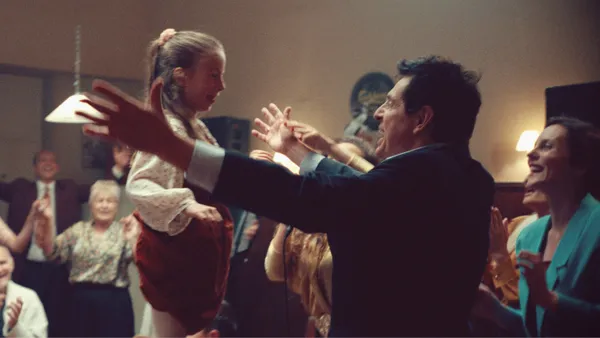
MJ: Songs carry memory in a way dialogue can’t. With “Jutro je,” the meaning was found in the edit. The celebration scene where the song plays was originally placed early-on in the story, as an arrival celebration. Late in the edit I moved it to the moment when the family reunites, and suddenly it became about reunion. And I like that some layers are only legible mainly to people from the Balkans. We hear it differently. We recognise ourselves.
You talk about what can’t be “explained,” only felt. Is that also why you keep the politics indirect, and don’t explicitly mention the war that followed the breakup of Yugoslavia, even though the timeline brushes up against it?
MJ: I wanted the project to have no political agenda, so I didn’t address events directly. There are only two brief clips, just enough to suggest something is happening. I avoided the war because once you make it about war, it becomes a different story. For me it’s about a family, about dreamers trying to do their best. And it’s about belonging. Where do we belong? Where is home?
You also thread history through a very specific detail, Yugoslavia being removed from Euro ’92, a decision made amid international sanctions, and Denmark taking its place. Why did that become such a central motif for you?
MJ: What are the odds Denmark didn’t just replace Yugoslavia, but won the whole thing? I kept thinking, why has no one told that story. It was one of my first ideas. I wanted to begin Home with a match and end with Denmark winning, while the family sits in their Danish apartment in Yugoslavia jerseys, surrounded by neighbors celebrating with Danish flags. Denmark wins, and the family has lost everything.
[imageright id=335467Toward the end, the story jumps from the 1990s to the late 2010s, and the present-day scenes have a documentary-like feel. What drove that choice?
MJ: It wasn’t the plan at first. But as the story unfolded, I felt viewers needed an answer as to why I’m telling this story. My director’s cut is without the present-day part. I know what happens 30 years later but the audience doesn’t. And the financing people asked about the answers. The “now” became that answer. I could live without it, but I think it helps the story.
Belonging, for you, isn’t only emotional, it’s also physical. Home crystallises that in one detail, a burial plot prepared in advance, the headstone already set with a photograph and even the first digits of a future death year carved. Why did you need that image?
MJ: It broke my heart when I saw it while visiting Montenegro. I couldn’t sleep that night. But it’s a fact. My parents prepared their burial plots a long time ago. It’s ready. It’s just waiting. I understand them. They’re getting ready to go back. That’s the life of immigrants. You can live decades somewhere else and still prepare your final resting place in the place you left behind. So which place is home? That is the question.
Ahead of the world premiere in Rotterdam, what do you hope happens when the film meets audiences?
MJ: I’m humbled, and I’m looking forward to Rotterdam and to seeing how people react. I want it to be seen widely. I want it to travel, because so many people will recognise something of themselves in it. And I hope it reaches the Balkans too. It will be seen differently there. Different audiences will notice different things. That’s part of what I want, that the story can hold multiple readings.