 |
| Mihai Mincan on his star Emma Ioana Mogos: 'She is remarkable. She's actually the best actress I’ve ever worked with, adult or child' Photo: Sabina Costinel |
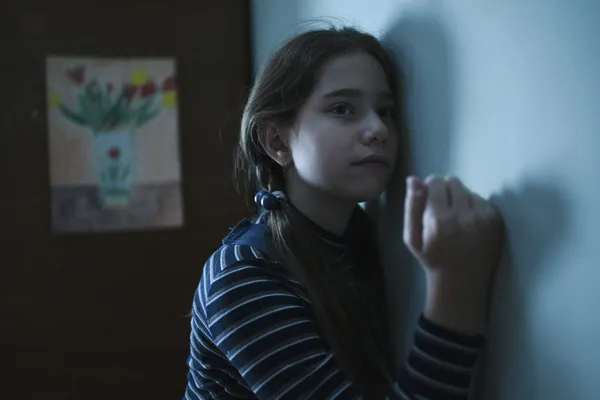
Beginning during the dying days of the reign of Nicolai Ceausescu in 1989, Mihai Mincan’s Milk Teeth is a gripping character study of ten-year-old Maria (Emma Ioana Mogos), who becomes the last person to see her sister before she disappears. The film has a looser style than his claustrophobic debut To The North but it is still riven with tension.
When we meet for a chat at Thessaloniki Film Festival where his film had its premiere, I put it to him that another thing they have in common is the way that they both articulate fear, albeit from different perspectives.
“Nice observation, I agree,” he says. “I think what you're seeing is connected to something deep inside of me. Fear really is something important that I need to speak about. I don’t think it starts like that but it becomes obvious I think by the end of it. When I finish something I say, ‘Okay so maybe here's another variation on or another thing I’ve tried to say about fear’ but when I start things I never start like that.
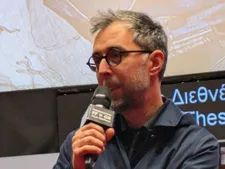 |
| Mihai Mincan in Thessaloniki: 'Whenever I start working on something, it’s always scary, this ethical question of how I should tell it in an honest way' Photo: Amber Wilkinson |
“It’s always a feeling that I start from not, maybe the story in itself. In To The North, I think it was fear. Here it was loneliness mostly. Even when I was editing the film, I brought in this big piece of paper, which I wrote on and put in front of me in the editor, so we would have it in front of our eyes all the time. Written on it was: 'This is a film about loneliness'. Fear comes, I think, from history, the moment when it happens, which is actually the moment of my childhood.”
Mincan was exactly the same age as his protagonist in that period, so he says he remembers the feeling of Romania at the time of the transition from Ceausescu’s dictatorship well so tackling it with this film proved to be “very intense”.
“I discovered that maybe I don't have a lot of memories about specific things that I did back then but I have a lot of memories about what were almost sensory experiences. I still remember the lights and the colours very well, the way we dressed, the way we felt. The general feeling of living in a world that’s more like a void, as if somebody came there before you and sucked all the vital energy out of it. People living in complete Solitude, not relating to each other. Not many words spoken. It was very interesting to go back there, but I think it's important because I made a film about a child, but also indirectly I made a film about me as a child back then.
“It’s important autobiographically because now I’m a father and it’s important to somehow understand the place you came from.”
The sensory nature of the film is strong, particularly in a scene in which Maria is given a piece of chocolate by another girl from a better off family. Even the way she holds it indicates how utterly alien it is.
“That’s totally autobiographical,” says Mincan. He says he was given a piece of chocolate by another boy whose father worked somewhere where he could get hold of it.
“I remember that boy giving me the first bite of a chocolate when I was that age. I was looking at it as if it was some kind of foreign object. I knew what it was but I’d never had it. I held it in my hand to feel the texture of it. And what I remember the most was once I took the first bite, that cracking sound, which I tried to recreate in the film. It's amazing, like Proust’s Madeline, I hear that sound and I’m back 35 years ago.”
There are a lot of items in the film that are redolent of the time period, including the girls’ pencil boxes which we see transitioning from wooden to plastic.
“Those pencil boxes made quite an impression, especially for Romanian audiences and especially for women in Romania because for boys a pencil box is just an object. But for a girl, it was a very special object. In the film there are two types of pencil boxes. There's the pencil boxes that the protagonist and her sister have, which are wooden. But when she gets to that scene where the other girl gives her the chocolate, you see a more fancy type of box with the magnets. It was exactly that that made the difference in everyday life and Romanians understand that very well. That small difference could tell you a lot about how those people lived and what kind of money they had and what kind of life.
“Objects are really important for me but I think the most important thing is how you shoot objects. If you, if you shoot an object in a, in a certain way, you can also bring you back to the time where your child, but it can also give you so much more than just being an object in itself. It's about a time gone by, a life gone by or a feeling from that time.”
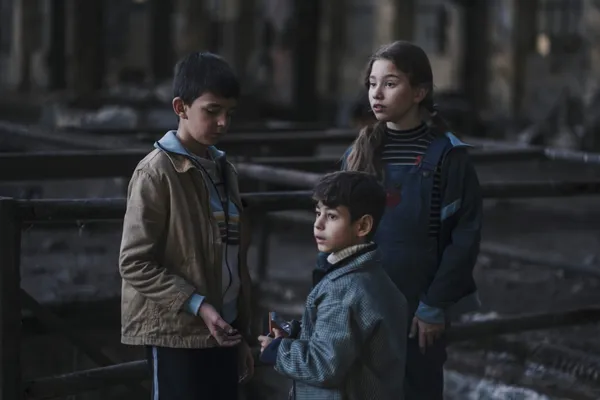
A child’s perspective is also crucial to Mincan’s film, which gets down to a pint-sized viewpoint, with the handheld camera often running along with the children as well as observing them. It’s a much less formal approach than he used in his previous film.
“I wanted to go away from To The North and it will probably take me a very long time to go back to that type of cinema. When we started working on this, the first question I asked myself was how am I going to shoot this little girl? You can get a tripod and you can put the camera in two or three different places, and then you can create classic mise en scene, drawing lines and saying, ‘Okay, you move from here to there’. That’s one way of doing it. The other way, since it's about the life of a child and about the emotions of a child, is you can say, ‘Okay, you're completely free this is the thought that you’re having, now and show me how you live with that sentiment and I will move the camera after you’
 |
| Mihai Mincan: 'It just felt right and it still feels right to me that if I'm doing this little girl’s story, it should be only her story and I should do it completely and honestly' Photo: Sabina Costinel |
“And what is her story? It is the story of a child who doesn't have a lot of control over the other things in the world. She has almost no information available to her, everything she hears and she tries to understand is fragmented. It's almost like she gets a puzzle and she tries to rearrange all those pieces to create the image of the puzzle, but there's always a few of them missing. So you end up with blank spaces. That's the kind of story that I wanted to do.”
He adds: “Whenever I start working on something, it’s always scary, this ethical question of how I should tell it in an honest way. The thing I don’t like about films that I’m seeing nowadays is those that are trying to be a little bit for everyone. Like, here is the perspective of the child but as soon as it’s important for you as an adult to get something things, I’m moving the camera to the adult perspective or I’m putting some music here to make it easier to get. This kind of ratatouille, I get it, but it’s not what I’m searching for.”
The idea of control, or rather the lack of it, that Mincan mentions is a strong theme in the film, not just for Maria, but also for her parents, who aren’t able to get the answers they are seeking either.
“It’s something that comes from me as a Romanian. If any of us would define our lives, whatever we say to describe our lives, two things will always appear – unpredictability and the lack of control. Our lives were always run and controlled by different forces than ourselves, be it political or social or economic or whatever. That’s something very Romanian in me. It’s the life I’ve been living and that everybody around me that I know has been living and it comes every time you write or direct something.”
Given the very personal nature of the film, it’s interesting that the director chose a little girl rather than a little boy as a protagonist – although that is partially down to the fact that he was inspired in the first place by the real-life disappearance of a young girl.
“It’s a lot to do with the relationship with my daughter, who’s nine,” he says. “She had a very difficult entrance into life. She was a very quiet child. She started speaking very late, maybe when she was five years old. But I remember it's one of the things that stayed with me for the longest time. When she was small, I remember watching her for hours just sitting on a chair and looking out of the window at trees, blocks of flats, cars, people on the street. And I could read in her eyes that inside of her, there was a huge world, full of colours and people and unspoken words and feelings that she wouldn’t articulate.
“Maybe it's my poetic way of reading this but it wasn't like a refusal to do that. It was almost like a fear from her side that once she started articulating that, the mystery and everything that's beautiful would vanish. That's one of the strongest images of my life.
It also felt very fair that if I wanted to do this film starting from a real girl that disappeared, I would create the mind of a girl not a boy. I understood it better.”
The focus on the youngster means that casting the role was vital and Emma Ioana Mogos puts in one of the best child performances this year.
“She is remarkable. She's actually the best actress I’ve ever worked with, adult or child. She had no previous experience. It was her first time in front of the camera. She was brought to me quite early in the casting process by the casting director who saw her at a birthday party where she was with her son. She liked the fact that she was somehow more isolated and felt as though she had a lot of thoughts – very reserved somehow. The casting process was really long and I think I saw 100 girls before I chose her.
“The first part of the process was a simple one. I would talk to them and see what kind of people they were. But when I chose the last 10, I started to talk about some really heavy things with them because I needed to know what's inside of them. She had to have something inside of her that was already suited to this kind of story. We started talking about loneliness and the death of her grandparents which happened quite recently to when I started talking to her and the death of her dog. When we started talking about the disappearance of beings from your life and the sensation that you that you're left with and the incapacity to talk with them ever again or to hug them or to keep them close to you, I knew she was the right one. She had such a rich internal kind of life. She’s 11 now and the first time we met during casting she was nine.”
He says that compared to To The North, this film is “a lot more true to myself and the type of person that I am.” He adds: “Not because of the autobiographical elements but because the tone and the way I told the story I feel is so much more honest than the first one.”
As for what’s next, he says he’s not sure but that he’s trying to get films made faster and that it will be a “very contemporary” subject. He adds: “I will try to work on a super-low budget and to make something more directly about the world I’m living in now and, maybe, let’s see if I can get it right, more of a comedy than a drama.”