




 |
| Strange Journey: The Rocky Horror Story |
From a tiny space in the attic of London’s Royal Court Theatre to a phenomenon whose influence spans continents, Rocky Horror has been on a very strange journey indeed. For Linus O’Brien, who grew up with it as the son of its creator, Richard O’Brien, it’s something that was always present in the background of his life – the theatrical experience, The Rocky Horror Picture Show, and the culture that developed around it. Now, on the 50th anniversary, his documentary, Strange Journey: The Rocky Horror Story, is about to hit screens.
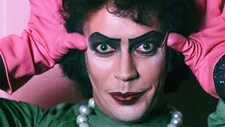 |
| Tim Curry as Dr Frank N Furter in The Rocky Horror Picture Show Photo: Mick Rock |
To mark the occasion, I had arranged a chat with both Linus and Richard, but the challenges of bringing together Scotland, California and New Zealand/Aotearoa were not easily overcome. Richard was still lost somewhere out in the ether when Linus and I connected, so we chatted one to one in the meantime, and I asked him how it feels, as someone who spent most of his life avoiding the spotlight, to be getting so much attention now.
“It's interesting question,” he says, taking a moment to think. “I guess I'm just very happy about the film that me and my team have made. Being in the spotlight, as you say, is just an opportunity to highlight it, so it's very pleasant. I guess I'm shy in general, but if I'm talking about something that I care about, whether it's the music I've made or what I've done in my career prior to the documentary, I'm always happy to talk about those things. If I don't feel like I have something of interest to share, then I get a bit more shy, basically.
“I've been a DJ and producer for most of my career. I started out DJing when I was 14, and then I started a record label when I was 22 and then a record shop while I was in London, and then DJed around the world playing techno and then started producing techno. And then I transferred into working for a film company in Vancouver in Canada, Network Entertainment. I was the head of development there and worked on a documentary called Facing Ali, which told the story of Muhammad Ali, but through the fighters that fought him.
“Then I made an album with Amy White, called the Black Below. We. We went under the name Linus and Amy. And then I started throwing underground techno parties in Los Angeles and bringing other DJs and producers to Los Angeles. Then after the pandemic, I didn't have the energy to start that back up again, so I was looking for something else to do. In a simple twist of fate, I came across the YouTube clip for I'm Going Home and all the comments underneath it. And it was when reading those comments that I felt like the people who Rocky has meant a lot to over the years needed to be celebrated.
“With the 50th anniversary coming up, I thought, ‘Well, here's a nice opportunity to celebrate my dad's work and the fans that have adored it for the last 50 years.’ So it's been a really roundabout way to get where I am now, but making the film with my team has been probably the highlight of my professional life. Now I have an agent and a manager and I'm going to start developing other films and other projects that I've always wanted to work on. It's very strange how you end up where you do sometimes, but I feel like almost the universe has conspired with me to make this happen. I'm just very grateful for the opportunity.”
Those other projects include a documentary series, a mockumentary and what he refers to as his dream project, a science fiction film. He knows he needs to prove himself before he can get the budget to make that properly.
We go back to that YouTube experience and his feelings about the culture around Rocky Horror.
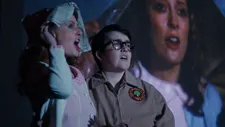 |
| Shadow cast members perform as Brad and Janet, dodging the rain in front of a cinema screen. |
“We always knew how much it had touched the fans and how important it was for them, but I think it just brought it home in a new way because they were just incredibly poignant and heartfelt, the stories,” he says. “The documentary had its world première at South by Southwest in March of this year. And after the Q&A, a gentleman came up to the stage and he was shaking, and he said ‘My wife and I met at Rocky Horror 32 years ago, and she wanted me to let you and your dad know that if it wasn't for Rocky Horror, she wouldn't be alive today.’ And it's those kind of stories which happen on a daily basis, whether through social media or in person.
“I think Rocky has probably saved hundreds of thousands of people's lives. Given that it's been here for 50 years and three generations of fans, I think that's conservative, that number. I can't think of another work of art, a movie, a stage play, an album, a song, which has tangibly saved the lives of hundreds of thousands of people the way that Rocky has. And so when you think of it in those terms, it becomes quite overwhelming. It's hard to kind of dwell on it and give it its time because, I don't know, it just becomes a bit much in a way. It becomes heavy. And it's not to say that we don't enjoy hearing those stories. We love hearing those stories, but it's a lot to take in.”
I venture that for me, growing up with it, the thing that stood out was that it was so singular. There were things like Phantom Of The Paradise, but they didn't quite work in the same way. There was nothing else that did what it did and spoke to people in that situation that way.
“Yeah. It's hard because the word ‘unique’ gets thrown around quite a lot, describing things, but I think, really, Rocky is very unique in not only in its storytelling approach and the subject matter that's in it, but just the effect that it's had on people and the way it's connected with people and brought people together. The two key words, when I think about the legacy of Rocky, are community and connection. They describes Rocky and its legacy better than anything else.
“I guess it's just always come in and out of our lives, whether it's been anniversaries or conventions or new stage productions. It's always been there. It'll pop in for a minute or two and then pop out again. And then you go about the rest of your life. There's over 250 current active shadow casts still in North America. It really speaks to the longevity of the whole thing and the importance of it really, for so many millions of people around the world.”
i used to be in Glasgow shadow cast Dr. Scott’s Extra Forks, I explain, and he smiles.
“There's so many people who have their whole friend group, their families, their wives, their husbands, they've all either met at Rocky or they knew each other before when they came to Rocky together. It's really such an inviting place for people who feel a little bit different or outside of society. And what a wonderful thing to be a part of, in terms of bringing people together, which is something that a lot of artists would like to be a part of. Rocky will outlive us all. That's what I keep saying. When you think about the next 30 or 50 years when we're all dead, Rocky's still going to be performed and still going to be presented because of how fun it is. Like, let's be real, it's so fun and it's so filled with joy, and I think that's another reason why it's lasted so long.”
 |
| Patricia Quinn |
He has two books coming out next month.
“One's the original script with annotated notes, and the other one is basically a documentary companion book: Strange Journey, The Oral History Of The Rocky Horror Show. Basically we took all the transcripts from all the interviews that we did – there was hours and hours of footage – and we edited it all together in one cohesive storyline so that it would flesh out the documentary and tell stories that we couldn't fit in there.”
It must feel great to have that opportunity, I suggest, because most people feel the hardest part of any documentary is always all the stuff that one has to cut out and abandon. He says, however, that it’s different for him.
“I don’t have a problem with that at all. If you're making the piece stronger, but taking more out and killing your darlings, essentially, that's what you want. You want it to be this cohesive piece which really flows really well, so be ruthless. Cut, cut, cut. And we wanted to keep it to 90 minutes as well. I find often that when you give yourself restrictions, that can often be so much more invigorating creatively. You find very good creative ways to make that work. And this was definitely the case with our documentary.
“When I was making techno I used to sit in the song for too long and my tracks were like eight, nine minutes, and they would be much stronger if they were six and a half.”
He knew most of the stories that are told in Strange Journey to begin with, he says.
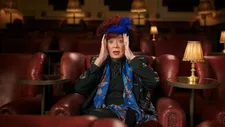
“There were a few things which were a surprise. I think. Patricia Quinn kissing Meatloaf, learning that he was the best kisser in his high school in Texas. That was very funny.”
He breaks off, as his dad has finally managed to connect. Richard O’Brien’s first concern is with what Linus is doing sitting in a tiny, carpeted booth.
“I'm in a CIA black site, dad.”
“Oh yeah. Okay.”
I ask Richard what it was like being involved in this as a family film, and if it changed the relationship between the two of them.
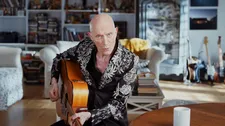
“It wasn't any different, actually,” he responds. “We were just doing something different. The relationship is the same. It was lovely just knowing that the whole thing was in safe hands. The agenda was the same. That was to look at the 50 years, the strange phenomenon that it is, but not with any other nasty kinds of intentions for anyone, for whatever reason that might be, like other genders. As you know yourself, we're living in such awful times with authoritarianism all over the world staring us in the face, and the belittlement of others, the embracing of religious concepts which are so medieval and old fashioned and past their sell by date. It's annoying.
 |
| Strange Journey: The Rocky Horror Story Photo: SXSW |
“We're living in very troubled times and the whole world is on edge. Everybody. And that's not just socially, but economically. The entire world is on edge because they don't know what's going to happen with the American dollar. They’ve got no idea what this man's got planned. This strange lie that he keeps talking about – tariffs bringing money into the country and not being paid by the consumers in America. It goes on and on. We're living in disgusting times with disgusting people trying to tell us how we are supposed to live.”
Does this make the message of Rocky Horror more important?
“By default, sadly. It was always intended to be just an entertainment. It was never meant to be a political piece, but it has become that by default because these dreadful people are saying ‘Oh, you're not allowed to be. I can't help it. I was born this way, you know? It's like being blond. What am I supposed to do about that? It's the insanity of these people, and small mindedness. This little world that they inhabit is so dreadful. It's so dog-eat-dog and bitter. It's shameful.”
I respond that it feels like a huge contrast with the expansiveness of the Rocky Horror world and that community, and all of the warmth that there is there, that's been so empowering for so many people – and for him, at this stage in his life.
“Yes. It's liberating, isn't it? In many ways. It's a rainbow event, you see. ‘Keep that rainbow banner flying high’ is my mantra at the moment because I think we have to keep flying that flag and keep speaking up for liberal democracy and kindness and civility and, you know, going ahead and trying to make the world a better place for everybody, not just the oligarchs and dreadful human beings.
“When I first wrote Rocky, this was something I was doing in my front room on my own time, amusing myself. I'd been out of work. I was supposed to take over the role of Herod in Jesus Christ Superstar when it first opened in the West End. And then Robert Stigwood, the producer, decided I wasn't to do that, so they paid me off and sent me home. And I thought about coming back to New Zealand because Linus was born and I had a responsibility now – I needed a proper job – and then I was invited out to EMI Studios to do an entertainment for their Christmas party. All the staff of EMI Studios. So I cobbled a few jokes together and wrote a song.
“Specifically because it was a cinema of the film studios, I wrote Science Fiction Double Feature, which I sang that evening. The jokes went down well. My spot went down well. And I thought, ‘Oh well, I'll give it another try.’ And then when I went home I thought, ‘Actually, this wouldn't make a bad prologue for a musical, would it?’ And away I went. And then Jim Sharman who directed Superstition gave me a phone call and asked me to go down to the Royal Court Theatre to audition for a role in a Sam Shepard play called The Unseen Hand. And I went and did that. And while were working on that, I met Richard Hartley, the musical director of that production. And Richard and I have been partners now for the last 50 years.
 |
| Little Nell |
“I mentioned to both them that I was writing this piece, it might amuse them. And they both came around to the apartment one evening. Linus was in bed. And I sang the songs and told them about how it worked. And Jim went away and he phoned me about two weeks or so later and said, ‘I've been asked to do another play at the theatre downstairs, but I said I won't unless I can have three weeks’ fun upstairs first. And so we're on. Another 20 pages by the end of the week, please, and three more songs.’ So basically, that's the way it went, and it was delightful. It all happened. There was no time to think. We just got on with it. I wrote songs in rehearsal. It was very instructive and yeah, it was a lot of fun.
“After it had flopped on Broadway, Tim [Curry] and I stood on 44th street opposite the Algonquin Hotel, and he said ‘Well, that looks as if it's all over now, doesn't it?’ And I said, ‘Yes.’ And he said ‘But it's been a wonderful three years, hasn't it? What a wonderful ride for three years.’ And I said ‘Yeah, absolutely.’
“He went off to Los Angeles, and I went back to London. And we thought ‘Well, that's it, basically.’ It was still running on stage in London. But as far as it becoming much bigger was concerned, was that was still a moot point, really.” He smiles. “It's been a delight, actually.”
It still feels like a wonderful ride?
“Yes. Absolutely.”
Strange Journey: The Rocky Horror Story will arrive in UK cinemas on Friday 3 October.