




 |
| From Ground Zero |
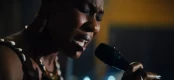
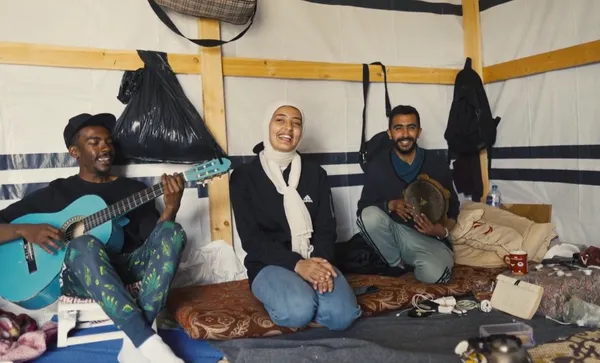
An anthology of 22 short films made by Palestinian filmmakers about their experiences under Israeli bombardment, From Ground Zero raises voices rarely heard on the news, rarely represented in international conversation. It’s a rich and varied work which shows the diversity of Palestinian culture and helps to establish an understanding that those under attack and individual, relatable human beings, not an unknowable mass of strangers.
 |
| Rashid Masharawi Photo: Francesc Fort |
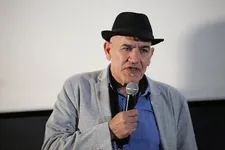
From Ground Zero can be seen in UK cinemas from today, 12 September, and its producer, acclaimed filmmaker Rashid Masharawi, has been presenting it to audiences in London. When we met and discussed conditions in Gaza today, he told me about the process of making the film, why he continues to take risks to capture the stories of his compatriots, and why he sees cinema as part of a culture which those who seek to destroy Palestine can never overcome.
“I'm here now in London to promote for the distribution of the film, but it’s not easy,” he says. “Right now, when we are talking, my family is in Gaza and in the last few days they started to bomb the area. And for sure I'm in contact with friends, neighbours, our filmmakers that we made From Ground Zero with. They are there. Some of them have lost houses, some are injured, some of them are refugees again in Gaza. It's not easy, but it means we believe that we have to continue.”
Israel has recently ordered everyone in Gaza to move south, I note.
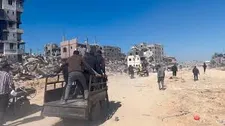
“Yeah, this is what's going on. And again, searching for tents, searching for wood to make fire, electricity, and searching for safe places again. And this is happening right now, when we are talking. Today, until now, they killed 86 people, but they did not finish yet.”
All of the filmmakers who worked on From Ground Zero are still alive, he says.
“Some are injured. One lost his son, one lost seven from his family. One filmmaker, a woman, two weeks ago, she lost her house; another one lost her husband. And so, yeah, it's not easy. But we are filming now in Gaza, new films, and we believe that we should keep adding life, adding hope, adding optimism for the people. We believe it means no war forever, also no occupation forever. It cost us a lot. They kill many people. They destroy a lot. They destroy a lot. Not only buildings. When they destroy houses, it's not only the stones.”
It’s people’s belongings, their sense of security, and the things that have been handed down through families, I observe, thinking of what friends there have told me, and he nods. For a moment, the sorrow shows on his face, but he quickly recovers his composure.
 |
| From Ground Zero |
“For so many years I am dealing, in my cinema, with all the Palestinian issues in my way,” he says, “I'm always trying to make simple stories, to make them deep and to try to use the cinema to add life. I find myself doing this because I’m a Palestinian filmmaker. I'm from Gaza. I was born in, I grew up in Gaza. Even as human beings, we should deal with this and participate. I cannot just cry front of the television, in front of the news. I want to participate. I want to try. It doesn't matter what's the result. Try to change, to move, to share stories. To participate in changing opinions, adding awareness, with the tools that we have. We have cinema, art, culture, music, dancing, life, paintings.”
It seems particularly important to preserve Palestinian culture in this way as well, I venture, because some things are going to be changed forever.
“Yeah, yeah. Even in these films, it means it's not that everything starts the 7th of October. We are dealing with Palestinians as a history, as a culture, as mentality. The identity of all these numbers – because they kill them as numbers. We come to term them as human beings. This is the difference between the news and cinema.
“This was also one of the aims of From Ground Zero, just to go to the innocent people and to show their own feelings, their own thoughts, their own dreams, their own art.”
We discuss his approach to selecting those stories.
“I know what was in the news all the time, and it's kind of the repetition of the same things,” he notes. “News is very important, but the news shows action that's going on all the time. I was trying to play a role as a filmmaker, so I went to the untold stories and only personal stories and I wanted to make them cinema. How much is possible? Because we don't have really comfortable work and equipment and technicians.
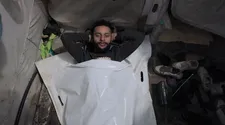
“We had some [equipment] in Gaza, but we were moving cameras between the people. Some filmmakers, they filmed themselves. We allowed mobile phones; it makes it even easier. But we had problems in moving the things between the filmmakers, because it's dangerous. We were working in Rafah, in the middle, also in the south of Gaza, where the border of Egypt and the border with Israel are. So it was difficult to play with hard discs and it was difficult all the time to find Internet, to find electricity, to upload material, to be in contact with people. It was a very long and dangerous process for the people on the ground. We didn't know what to expect, and we were learning during the process what to do, how to do things, because nobody knew what would happen tomorrow. So we were learning and adapting ourselves to what was going on on the ground all the time.”
 |
| From Ground Zero |
Did you feel that the Israelis were trying to stop the filming?
“Yes, because you know, the camera, for them, it's dangerous. And a camera is a camera. If it was in the hand of a journalist or the hands of filmmakers, it's a camera.”
They were also in danger, he notes, because they needed to keep uploading material, which meant they had to go to dangerous places to get good internet, like the hospitals where journalists have sometimes been targeted.
“We were next to a hospital called al-Aqsa Hospital in Deir al-Balah, and I was lucky that the people who were uploading material for us, they went back home to their own tents at 3 o' clock in the morning. And at 6 o' clock, they bombed all the area. So by accident, they were not there. So we were happy that they left.
“It means they [the Israeli forces] are trying to avoid filming until now. They killed 244 journalists until today. We were part of this because we were using also the journalists for electricity and internet and material to upload.
“I have to believe all the time that [the war] should stop one day and we should continue, and we should keep sharing these stories because people there, they feel alone. And once we have all these screenings, all these articles, all this feedback that comes back to Gaza, it makes them have more hope, it makes them more strong. It will show them, that way, that they are not alone. It will also raise awareness outside Gaza. This window, it's important to let it open.”
He made an effort in the film to talk about positive things as well. Some people may find that hard to understand in this kind of situation. But children’s entertainment, people who are making music, that's all very important to morale and keeping people going.
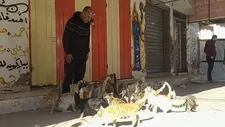
“It's very important for us,” he says. “Because you know what's going on in Gaza now. This is not our life. It's our culture, it's our identity, it's our history. And the film's trying to deal also with all these elements. It's not only this story, not started in October [2023], and I let the news play its own role to show the people what's going on, but this is not the job of the cinema. News can kill the memory, because what happened yesterday, it's history. Something else is happening today. Cinema can protect the memory.
 |
| From Ground Zero |
“I think a big part of why the Israelis did not win and finish all the Palestinians and stop the process of the Palestinian existing in Palestine is because of our culture, because of our history, because of our art, because of our cinema and theatre and music and poetry and many things. And cinema can deal with all this, can protect all this, can carry all this. They cannot occupy cinema, and cinema, it's like dreams. They cannot occupy dreams, thoughts, imagination, love. They cannot. It's not possible. And this is a cinema. We already have a Palestinian state in cinema. It will come.”
There are several people in the film who are making other kinds of art to talk about what's happening.
“I have a painter, I have stand up comedy, I have dancers, I have someone making animation and someone making films. You have some editors, some musicians from Gaza participating. This means it's all about filmmaking as an action, not as a reaction to what they are doing. Because reactions can finish when the actions finish. Cinema, without that, can live long.”
Will people restore the cinemas when Gaza gets back on its feet?
“Yeah. Yeah. Because we are filmmakers. Not because we are Palestinians. Being Palestinian under the Israeli occupation, having all the rights, being a victim or whatever will not help you to make cinema, will not help you to make films. But being a filmmaker, a good filmmaker – myself, I was making films before the first intifada, before 87, I was making films. And I made films after the Oslo agreement, after 94. And it has nothing, no relation to war. We can make films about love, about life. We can make comedy, we can make musical films. We can make them about art, about love stories. We are filmmakers now. With what's going on in our country, the priority is to share these stories, so we are doing that.”