 |
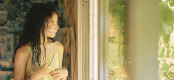
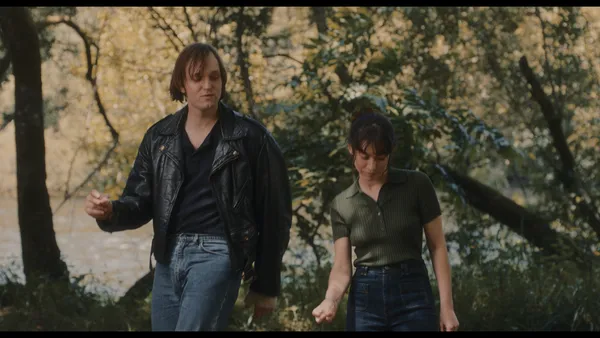
| Iria (Greta Fernández) and Hajo (Jan Bülow) in The Guests Photo: Courtesy of San Sebastian Film Festival |
A lot of people when they think of guest workers in Germany automatically think of Greek or Turkish people, so your film is interesting because of having a Spanish focus. How did you decide on that story, were these workers something you had always known about?
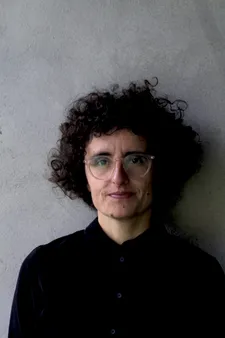 |
| Cristina Diz Photo: Courtesy of San Sebastian Film Festival |
Stefan Butzmühlen: We started thinking about our new film and we wanted to do a film about work. So we did a lot of research and Cristina works in the university and was involved in a project about Turkish so-called ‘guest workers’. So we were talking a lot about this. In Germany they say there was a ‘Wirtschaftswunder’ – an economic miracle – but it’s not a miracle, a lot of people have worked very hard in bad conditions for this, otherwise it couldn’t have happened. And these people came from the south of Europe. In the last few years this subject came up a little bit more but it’s not so well known in Germany and so we wanted to do a film about this.
There are a lot of scenes in the car during the middle road trip that’s in the film, how did you tackle shooting those because shooting in cramped conditions like that is notoriously difficult?
Diz: We shot in a studio. As you say, a road movie is really complicated and in the preparation we were considering the different options for doing it for real. We've done it three or four times while writing this script but at the end, for many reasons, it made sense to shoot it in a studio. So most of when they are in the car is shot in the studio and, for the rest, we were very lucky with the weather in Galicia because it rains a lot there and we shot for 10 days and it didn’t rain.
Tell me a bit about recreating the Seventies and the music choices you use, which are slightly more unusual than usual, including people like Miles Davis, Jim Sullivan and Ray Stinnett
Diz: Music was actually the element through which we wanted to tell the Seventies. The Seventies are a joy but at the same time, music is so expensive, so we had to make choices. Most of the songs we had from the beginning and then it was a great joy, at some point, to be cleared to work with Miles Davis and this trumpet that we love so much.
Butzmühlen: It was always the idea of, what would they listen to? Also to play with it. When you’re doing films, you’re not starting from zero as there are a lot of films that have already been made. For us, film history is very important and it’s also part of our biography, so we were watching a lot of films, and we were talking a lot about him, so it’s always part of the process.
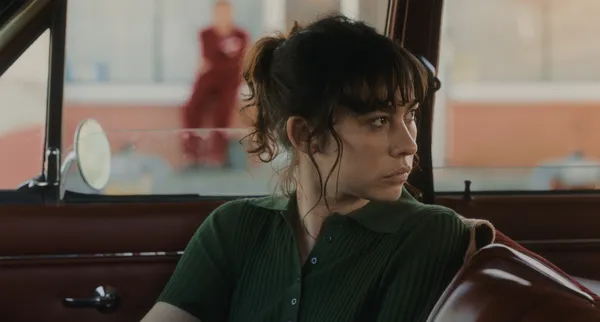 |
| Greta Fernández as Iria. Cristina Diz: 'She dived into this very difficult language and spent many months learning it' Photo: Courtesy of San Sebastian Film Festival |
So did you have specific films in mind then?
Butzmühlen: Wanda by Barbara Loden [which tells the story of a woman who leaves her family and drifts through rural Pennsylvania] is a very, very important film to us and Terrence Malick’s Badlands [about a man and teenage girl on a violent crime spree].
Diz: Then, for other reasons, LouLou by Maurice Pialat…
Butzmühlen: ... especially because Jan, who plays Hajo, has a similar look to Gérard Depardieu.
How did you settle on the casting because this film unfolds in Spanish and German with both characters speaking both languages. Could the actors already speak the other language or did they have to learn it?
Diz: It was clear that there were going to be a lot of languages and, in a single scene, more than one language. When we were looking for Iria, we knew we wanted this very strong woman. We knew Greta from other films and, when we met her, it was clear, she was Iria. And then it was clear we wanted her to learn German. We really wanted her to have to struggle with this language for real.
Butzmühlen: Yes, not just to learn the lines with a language coach. We forced her [he laughs]... asked her.
Diz: She read the script and said, “I’m in”. She dived into this very difficult language and spent many months learning it. Of course, at some point she had to learn the script but before that it was very important for her that she began to learn this language. It was important that she speaks very good German. We wanted also to tell about how many people who had to migrate for different reasons, arrived in another country and learned a language outside of school – it’s a very different way of learning the language while working and we wanted her to have this very, very precise way of articulating herself.
Butzmühlen: Because she learned her German from books and poems and films.
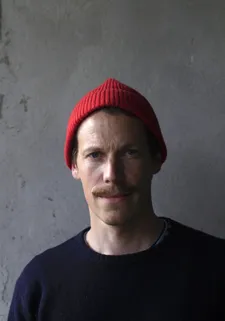 |
| Stefan Butzmühlen Photo: Courtesy of San Sebastian Film Festival |
Butzmühlen: We were asked by the producers a lot to maybe reduce her German, to help her a bit but this is what we also wanted to show – that Iria made this effort and he didn’t. So this is a huge difference in how you are going through the world.
Diz: We did a casting for Hajo but what we loved instantly about Jan is he doesn't look like anybody else. He looks like somebody from the Seventies. We talked a lot about this because these perfect faces of today with perfect teeth and perfect noses didn’t exist.
Butzmühlen: And he’s such a charming giant.
Turning to the filmmaking itself, you have some very elegant transitions in this film, for example between a stretch of open road and machinery.
Butzmühlen: We are not high concept filmmakers, so it's not like we storyboard everything. We love to work with the conditions we can find. This is not always easy because there’s always a time limitation while shooting, so you need to prepare, of course, and you need to decide we're going to shoot this one and not this one. But we always try to get the freedom of being able to say, “Oh this light is beautiful” and maybe include that in the build of what we constructed before. With the transitions, some were planned but with this from the car to the machine to the dream it happened in the editing. There was no reason to shoot the machine in that moment but we noticed it was amazing, so, we said, “Come on, let's do it”. It was more of a feeling for it but then, in the editing, it made sense. These are the lucky moments.
If you're coming from low budget film, you can't say I want to have this house pink, so you need to find the pink house, or you take what you have. I kind of like this because this always gives the film something new. The other thing is that how we understand our work is that we are guiding a group of people so that each of them can do their best. So with each person the idea is changing somehow and it’s very beautiful to get these great impulses from so many people.