 |
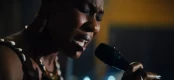
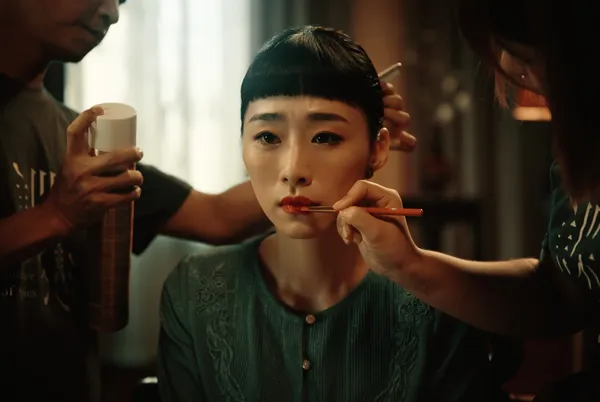
| Ke-xi Wu in Nina Wu |
Taiwanese actress Ke-xi Wu has formed a longstanding collaborative relationship with director Midi Z, beginning in 2009, when Wu came across an online post from Z, on a Taiwanese film site, seeking collaborators for his short films.
Film Movement Plus’ year-long celebration of Wu and Z’s collaboration brings together five of their award-winning films: Poor Folk, Silent Asylum, Ice Poison, The Road To Mandalay and Nina Wu.
A common thread running through these films is the subject of immigration, from the ordeal of a pair of siblings who are smuggled into Northern Thailand in Poor Folk, to a story about two illegal immigrants seeking a new beginning in Thailand, who share conflicting feelings for one another. Meanwhile, Silent Asylum is a documentary short, which brings together testimonies from Burmese refugees about their harrowing experiences. Creating a contrast within this group of five films are Nina Wu, which sees Wu’s character encounter a difficult series of events after being cast as the lead actress in a spy film, and Ice Poison, about a farmer’s son who falls into a life of crime.
Speaking with Eye For Film, Wu discussed finding her creative voice and wanting to be remembered.
The following has been edited for clarity.
Casper Borges: What are the roots of your creative energy and passion for cinema?
Ke-xi Wu: Performing was the first thing I knew I wanted to do with my life when I was little. I was as young as five-years-old, and I dreamt of being a K-Pop singer — singing and dancing. I tried to learn hip-hop dance when I was in high school, and then later I started to take vocal classes to try to be a singer, but it didn't work out.
During college, I found out there was something called theatre. I had no idea what cinema was, and I didn't know what theatre was either. So, to find out, I started taking acting classes, which I loved. It was a profound experience, because when I was dancing, I remember feeling it wasn’t something I wanted to do. While we were dancing on stage, I wanted to talk or do something to express myself rather than just be doing these physical movements.
I decided to do theatre for a few years and then after becoming more familiar with it, I wanted to try something else. So, I started to audition for shorts, and I even tried out to be an extra in Taiwanese films. I was also a guest on variety shows, which I didn't like because I'm not one for entertaining — I couldn't tell jokes on TV.
Midi was a director I wanted to have the opportunity to work with as an actress. He was a new director, who back in 2009 was making shorts. I went for an audition, met with him, and he chose me for a short film of his. That was an unforgettable experience because I didn't really know what that was, but I felt it was something interesting. It was similar to theatre, but it was more profound because there was something interesting in the experience of filming.
After the short, Midi started to tell me more about cinema. I remember watching a lot of films. I watched A Time To Live And A Time To Die, by Hou Hsiao-Hsien, Jia Zhangke’s Still Life and then Zhang Yimou's The Story Of Qui Ju. I couldn't stop crying after watching these films, because for years, I’d been trying to find what I'm really passionate about, and this was the moment I found something that combined all the elements that I like.
CB: From where you were when you started working with Midi, how would you describe the arc of that collaborative journey?
KXW: He’s my mentor, and he’s a talented director and a nice human being. I started working with him without knowing anything about cinema. In all the films we’ve collaborated on together, he has been trying to teach or guide me to transform my theatrical style of acting into what you could call a documentary style — getting rid of all the obvious dramatic punchy movement.
It took me at least two years to get rid of everything that I had previously learned in theatre. I gradually learned how to be a real human being for the films that he wanted to make.
Usually, we’d go to Burma to shoot the films, and all the other people were non-actors. So, in order to immerse myself into that group of real people, the audience couldn’t see me as an actor. It was difficult because it was a lot for me to process to learn to be like them.
In the beginning, I was trying to learn what cinema is and the way we made these films was so freeing that I got to participate in the whole filmmaking process. We shot the film Ice Poison together without a script. We just went to Thailand to hang out with his family, and Midi came up with a plot. We just improvised with anybody we thought could be in the film. It was a very organic and improvisational experience, and so, it is a type of filmmaking I’m familiar with.
After making several films, we were lucky to go to a lot of film festivals. That was when I started to be able to connect with and communicate with other filmmakers. I also started to read a lot of reviews to understand what I was doing.
So, I learned first by doing, and then by reading reviews. It's always helpful to read reviews, so I know how they analyse the films, as well as the specific terms they use.
CB: The immigrant experience has been a subject you and Midi have focused on. It’s a worrying condemnation of the world that your films remain so timely. Is cinema as an empathy machine something that has drawn you to the medium?
KXW: It's sad what is happening in the world right now. There are a lot of people that are being displaced.
I like social cinema, like Ken Loach, and one of the reasons that I wanted to be a filmmaker is because it’s the way I wanted to express myself, using everything — my body, my voice, and my facial expressions. This is my tool to communicate with the world, and it’s a beautiful thing to be able to use my body in this way. I remember when I was in the theatre, I’d always peak from behind the red curtain before the show started. I was excited to share all the hard work we had done in telling a story with the audience.
CB: In sharing these stories, do you think they change you or the audience?
KXW: It's an existentialist question. Sometimes I will ask myself why I’m on this Earth. What do I want to do with my life? I, of course, want people to love my performances, but then also, do something that means people will not forget me when I’m gone. The world is a collective society, and we need to communicate and share ideas.
Poor Folk, Silent Asylum, Ice Poison, Road To Mandalay and Nina Wu are available on Film Movement Plus until March 2027.