





Eye For Film >> Movies >> Four Minus Three (2026) Film Review


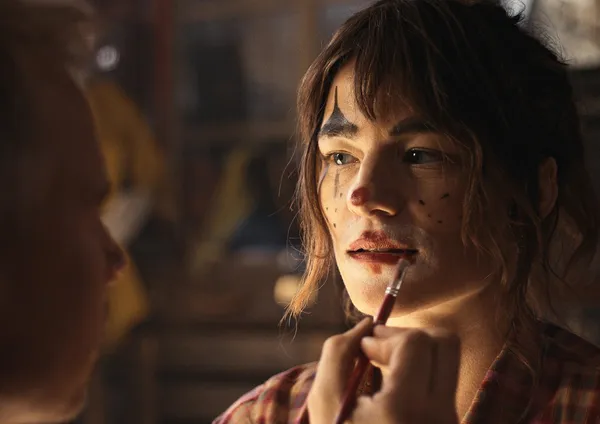

Adrian Goiginger is best known for the true stories he tells, whether about his childhood (The Best of All Worlds, 2017), his grandfather’s WWII experiences (The Fox, 2022), or a man who left a profit-oriented society behind to establish a commune (Above The World, 2022) and the Austrian filmmaker returns to his preferred “genre” of sharing the actual, lived-in experiences with Four Minus Three. Even the film in-between, Rickerl (2023), was based on “facts” and anecdotes from the unique Viennese singer-songwriter scene. However, with this year’s Berlinale Panorama title, Goiginger has slightly changed his modus operandi by using a best-selling novel as his source.
The novel is autobiographical, written by Barbara Pachl-Eberhart, but adapted into a screenplay by the Bosnian-born Austrian writer Senad Halilbašić (so far, best known for the 2019 Amazon-produced action-thriller 7500). Pachl-Eberhart experienced an immense tragedy and had to deal with the societal consequences of it, so the book she wrote served as the ultimate therapy of sorts for her. After the success, she became a sort of a professional writer of both (auto-)fiction and non-fiction and a public figure in the German-speaking parts of the world.

The film starts in an unsuspecting, idyllic manner. Barbara, better known as Babsi (Valerie Pachner), her husband Helmut, or Heli (Robert Stadlober), and their two small children enjoy breakfast together discussing the minutiae of the daily planning. Since Babsi has to go to work for the Red Noses association of clowns, who perform at hospitals for children, Heli is set for the school run that day. The tragedy strikes off-screen – Heli’s van gets hit by a train – and Babsi is informed about that once she gets back to the village she lives. At first, she has trouble accepting it and dealing with her late husband’s conservative parents and their ideas of how it has to be dealt with. But when a letter she writes to her friends and acquaintances that goes viral – for the early noughties standards and by the common means for the period – it proves to be the turning point that takes us to the real pressing concerns of both the novel and the film.
The matter of dealing with grief, the urge to continue with life and the ways to express this, along with the clash between an individual in the midst of emotional turmoil and society's rigid code of what is considered proper becomes the central point. Barbara doesn't just lose her family, she is also forced to lose herself and the identity she spent years building. For instance, she cannot continue to work with the Red Noses and to play the character of the Swiss clown Heidi she created because the parents of her patients see her as a “celebrity widow”. She has to deal with the same status even when she meets the new people, as it is the case with a TV actor friend (Hanno Koffler) of her neighbours’.
That dominant narrative line is broken by flashbacks to the focal points of her life before the tragedy struck. How she met Heli who, as an artistically inclined street clown, inspired her and showed her the ropes of the trade. How they started family and enjoyed life together. How he persuaded her to refurbish the house he inherited from his aunt. And their disagreements. Those flashbacks are actually the only weak point of the film because all of them except one nasty fight seem like common place parts of the family idyll. They can be justified thanks to the concept of the distortion of the protagonist’s memories, but they still need more flair and “personality” written into them.
On the other hand, Valerie Pachner (known for her role in A Hidden Life by Terence Malick) gives another acting masterclass and shows how she can command a scene. To achieve that, she has to channel an array of different emotions in a way so that her character is always out of sync with the world around her. It is a hard task, but she manages to do it with the help of the supporting cast, who follow her cue closely and enable her to shine.
On his part, Goiginger once again proves that he is a keen student of human nature, behaviour, interactions with society and the eternal pursuit of living one’s life in one's own way. He does not portray the roller coaster of grief the usual manner, through murky colours and the overflow of sadness, but with awareness and the sense that there are quirky and beautiful things around us as well, that some kind of firm hope is needed to carry on, that dreams are necessary and that the best way to honour someone’s life is by living our own in the best way we can. From the troupe of clowns turning a funeral into a surreally joyful event to the potent ending that serves as an ode to the inner strength.
Reviewed on: 01 Apr 2026


