 |
| Hlynur Pálmason: 'I've always been interested in things being specific or idiosyncratic, because they're personal, and that's why with cinema, you're looking for an individual or personal vision where someone is just pouring their heart out' Photo: Courtesy of San Sebastian Film Festival |
Pálmason previously directed the drama A White, White Day (Hvítur, Hvítur dagur) about an off-duty police chief's obsessive search for the truth regarding his late wife's affair, and Godland (Volaða land), which follows a Danish Lutheran priest tasked with establishing a parish on the remote Icelandic southeast coast.
In conversation with Eye For Film, Pálmason discussed the idiosyncratic and personal in art, his interest in exploring basic human needs, and allowing a film to express itself in a truthful way.
Paul Risker: In my opinion, there are specific shifts in the way we digest films as we get older. When you're young, you're like a sponge, which makes it a wonderful time to discover cinema. With age, we become increasingly aware of time and just see film differently. How do you perceive the way our relationship changes with age?
Hlynur Pálmason As you grow older, it's almost like time is passing by quicker, or at least, every year, it feels that way for me. And so, time suddenly becomes more precious. You have less of it, and you begin to think about it differently.
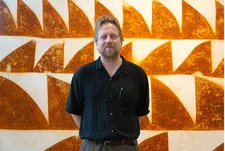 |
| Hlynur Pálmason, pictured at San Sebastian Film Festival: 'You should be in a constant state of creative conflict about everything you do' Photo: Courtesy of San Sebastian Film Festival |
PR: There's the sentiment that every book and film deserve their day in court, but equally, there are those that will argue for reclaiming time. This obviously means abandoning something you're not connecting with.
HP: You're not abandoning it. Sometimes you'll read or watch something that makes you doubt your own thoughts or your own process, which is healthy. As human beings we should doubt – it's important. You should be in a constant state of creative conflict about everything you do. And so, I definitely don't mean that you don't read or watch through those books and films because that's important. It's more that you see what the state of the mainstream is, and if I don't find anything to humanly connect with, then I just don't need to watch that. It might be something that doesn't really feel like cinema. Instead, it's something else, but it doesn't stimulate you. It's something that numbs you and I don't want things that do that. I want something that stimulates me, gives me a shake and entertains me.
PR: Unlike in past decades where the grain in the image gave films a texture, this appears to be lost for the most part nowadays. Your films, however, have a texture that even differs from one to the next. Is this lack of texture in contemporary cinema, which looks so pristine, something you've noticed?
HP: When I watch a few films at festivals, they often look and feel alike, and it's almost like they're shot with the same camera, the same lenses and the same colour. I don't like that feeling of things looking alike or even tasting and feeling the same. But that's what's happening in the world, and there are good and bad things about it.
 |
| Hlynur Pálmason: ''The beauty of cinema is that you're invited into another world, and films should not shy away from doing that Photo: Courtesy of San Sebastian Film Festival |
PR: Do you perceive there to be a relationship or connecting thread between your films?
HP: If your film is shown in cinemas around the world, and people write about it, then you're very lucky. And when you've done more than one film, they start talking about the evolution of your films. I find that very interesting and I love to get a feel of how people are responding to the material.
There is this interest in the seasons in my films and the way the world moves, as well as the contrast between those basic things, such as something being cold or something being warm, a storm and sunlight, or something beautiful and something violent. All of these things are about being interested in the world and life, and how people live, their routines and rituals, how they breathe and their desires and fears. These are all very basic things and if you look at all my films, they are about these basic primitive needs and wants and how to be a human being in this world. So, yes, I'm always exploring similar things.
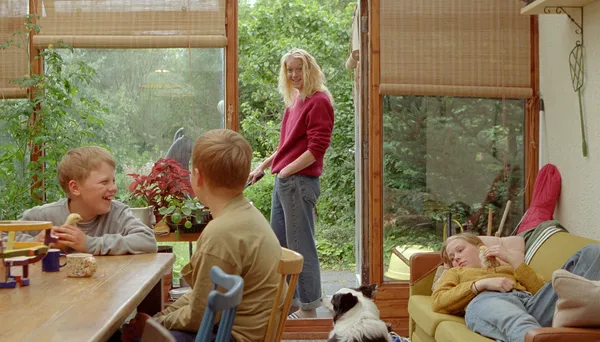
The Love That Remains is an extension of Godland in some way, but hopefully it's still a different kind of beast, with a different form and temperament that's exploring something else. I think The Love That Remains is more playful, and it's a bit warmer than Godland, even if they are exploring similar things.
You don't change as a human being completely, but you do evolve, and so in the last couple of years I've still been exploring family life and sibling relationships. And no matter how long I make films for, I'll only scratch the surface of the things I want to talk about. I'll either die or just will not get a chance to make any more films. You never know.
PR: The Love That Remains has some quirky elements alongside this exploration of a family falling apart. It's a film that slowly reveals its characters or allows us to emotionally connect. Therefore, it requires patience from the audience, who have to settle into the experience.
HP: I'm aware that what we make as filmmakers is not going to be for everyone. And we're not trying to make something that is preconceived for a mainstream market. Of course, we want people to experience it because we really believe in it, but never in the process of making the film do we ever talk about explaining something. Instead, we allow the film to be whatever it wants to be — we're never going to stand in its way. But this only happens if you spend a lot of time on something, where you lose yourself in it, and you're not even making decisions anymore. Instead, the film is just telling you what to do. And that's one of my favourite feelings, to lose myself in a film where it feels intuitive, and it's expressing itself in a truthful way. You're no longer dictating.
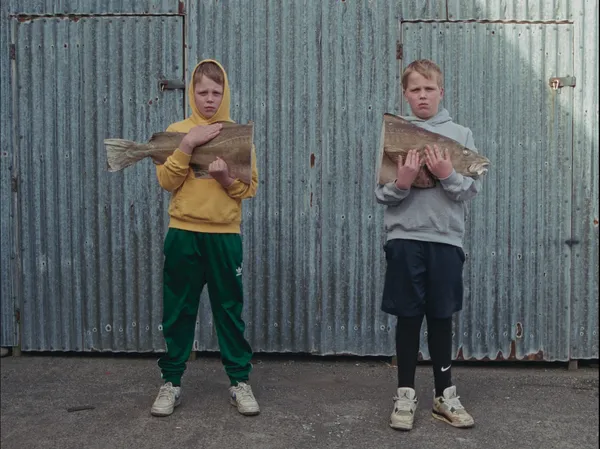 |
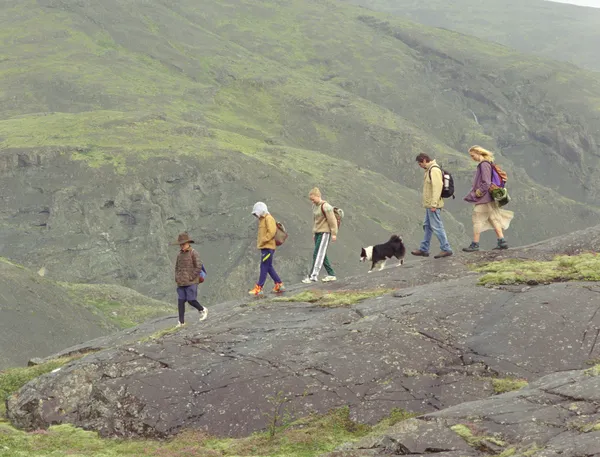
| Hlynur Pálmason: You don't change as a human being completely, but you do evolve, and so in the last couple of years I've still been exploring family life and sibling relationships'' Photo: Courtesy of San Sebastian Film Festival |
PR: It's said that first and final impressions are important, and so, how did you steer the overall temperament of the film to reach a satisfactory tone?
HP: How the film fades out was an effortless ending, and I remember when we filmed the last scene with Magnús floating in the ocean, it was beautiful. Everything was like it was supposed to be, but I just had this feeling that it was not right and were we to finish the film this way, it would be a little too dark. So, we needed to film it again, in the right light.
Two days later, there was this beautiful clear sky with the sun just behind the glacier. The waves and the ocean were like velvet. When I saw that footage compared to the earlier footage, you could feel the hope in the images. There was a beauty in it that couldn't be explained, whereas in the earlier footage, it was realistic and a little cynical or dark. I didn't want to end that way because there was already enough of that in the film.
You're always trying to strike a balance so that it's not too sentimental nor cynical; it's not trying to be too smart nor is it stupid. It's this constant dance where there's this push and pull, and you're doing it with all the tools available to you. You're doing it with the visuals, the performances, the editing and the music. And you just know when it's off, and you know what direction to go in.
PR: When you're editing a film, you're not only being attentive towards the rhythm of the cuts and the music, but also the rhythm of the themes and the performances. Crafting a film is working with all of these different layers, but this complexity can easily be overlooked.
HP: It is so close to music. The way a film begins, in that first minute, I know what the film is going to be. I'll know if I like the temperament and the editing. I'll have very strong feelings about it, but this is the same as if you went back hundreds of years in time, when the painter [Eugène] Delacroix and the pianist [Frédéric] Chopin were good friends. They went to concerts every week like we'd go to the cinema, and they said that each time a symphony started, in just the first fifteen seconds they could feel if it was anything interesting, or it was just shit. And it's still the same today. The sound, the colour, and the experience is something you can't fake – it's impossible. If you make a painting, it's going to show you who you are, and if you make a film, it's going to reveal who you are. And that's the beauty of it.
The Love That Remains is now playing In New York, Los Angeles and the San Francisco Bay Area. For information on listings, visit: thelovethatremains.film/buy-tickets