




 |
| Normal (2026) |
British director Ben Wheatley made his directorial feature début with crime drama Down Terrace, about a crime family trying to expose a rat in their midst. Favouring a heavier type of genre film, he has directed the psychological horror Kill List, the black comedy Sightseers, about a couple of kagool-wearing killers on a caravan holiday, the British action-comedy Free Fire, and adaptations of British author JG Ballard’s dystopian novel High-Rise, and Daphne du Maurier’s gothic novel Rebecca.
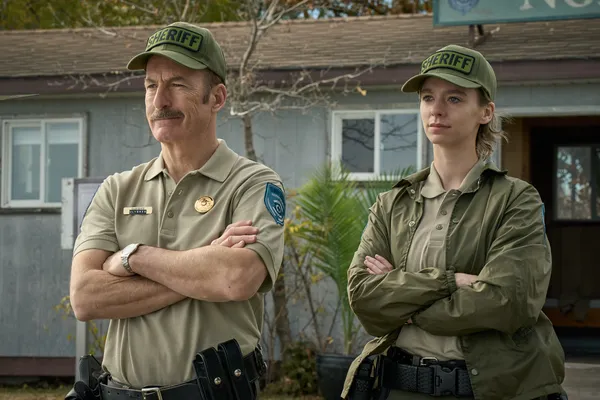
Normal is an action comedy set in the small and quiet town of Normal, Minnesota, whose new interim Sheriff, Ulysses (Bob Odenkirk), discovers the town’s shared secret after a botched bank robbery by a couple of outsiders. The mayor, played by Henry Winkler, has an arrangement with the Yakuza to use the town’s bank as a secret storage facility for what they’re unable to launder, including a stockpile of gold. And the town will do anything to protect their secret and save themselves from the impending wrath of the Yakuza if anything should go wrong.
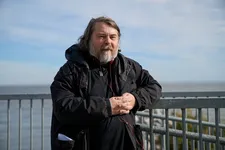 |
| Ben Wheatley |
In conversation with Eye For Film, Wheatley discussed his creative journey, the evolution of the action genre, Normal’s moral ambiguity and creating moments frozen in time.
The following has been edited for clarity.
Paul Risker: Why filmmaking as a means of creative expression? Was there an inspirational or defining moment for you personally?
Ben Wheatley: I've always drawn and when I was a kid, I drew a lot of comics. I thought that was what I wanted to do, but I realised it was sequential storytelling, and I was never going to be a comic book artist. But I still wanted to tell stories, and so, when I was at school, I thought maybe I could get hold of a camera. But it took a long time to work it out.
I went to art school, and I was pretty good at learning how to edit and got in with people who were making movies at the time, and I was editing for them. And that’s what led me down this road really. Then I did a lot of adverts and online stuff initially and shot loads of episodes of TV. I then made Down Terrace, which was out of frustration with TV, because I was doing a lot of comedy. I asked the BBC if I could do a drama. They said, "Not unless you've shot a dramatic short film.”
I didn't want to make a short, I just wanted to make a feature because it's as much effort to make a feature as it is to make a short really. So, we put together Down Terrace and that basically changed the lives of everybody that was involved. It won a load of awards and set off a series of movies over the next 12 years.
PR: Aside from drawing, what are your memories of cinema in those formative years?
BW: I had a Calvinist Paul Schrader-like upbringing in terms of not seeing any films. I can count on my one hand how many movies I saw in the cinema, but I was still fascinated by film. A lot of movies I saw when I was a kid would be the first half hour before going off to bed at the first ad break. So, a lot of beginnings of James Bond films.
PR: Ah, yes, so many films you’d see the beginning of, and you’d wait years to see the rest of the film. I remember that experience well.
BW: There was that, and then when I was older the video shops started to open, and you got to watch a lot of crazy shit. But yes, I was just mad for films. And my granddad had this book called The Talkies. It was also called the History of Cinema. It was made up of stills from the movies or lobby cards. WH Smith’s used to print it, and it was black and white. The one he had ended in ‘77. So, it ended with Star Wars and went all the way back. It included The Jazz Singer, and all the Bogart films. It was fantastic, and I used to look at it a lot and then draw pictures from it. And from there, seeing these films were on TV, I’d watch them. So, that was a big influence on me at that point. Then I saw The Jungle Book, Star Wars, Temple Of Doom, and Superman, and that’s about it.
PR: You’ve spoken about wanting to get into drama and heavier types of stories. Where does Normal sit within your filmography?
BW: Normal is an extension of the work that starts in Free Fire, in terms of having enough money to start to stretch my legs properly with action. And it’s a very specific type of action. It's cause and effect and is structured around these very small stories in which some of the drama is about dynamism and physics.
But you don't get to make films like Free Fire very often because they're expensive and specific. So, I made Free Fire and then didn't really get back to it again until The Meg 2. And a lot of that action stuff is half Sam Peckinpah and John Woo and the other half of it is Sam Raimi and Warner Brothers cartoons and stuff like that. So, it's smashing these things all together.
PR: Could you explain more how you see these filmmakers shaping the action genre?
BW: Peckinpah is like Kurosawa but with a lot more booze and cocaine. But if you look at Seven Samurai, it is the basic blueprint for all modern action cinema. The Cameron stuff all comes from Kurosawa because it's unbelievably clear and concentrated. They’re doing really complex stuff, but it’s delivered in a very straightforward way.
The next big change for me is Tony and Ridley Scott, specifically Tony Scott, and then you get Michael Bay’s style of action, which is much more sensation and less geography. And then I guess the other end of it is John Woo, which is a mixture of Tony Scott, Kurosawa and Peckinpah. So, it's artful and also super specific in terms of geography and super romantic at the same time. All these things go together. Then, for me, Alan Clarke is the other end of it, which is the brutally real that tries to make you feel sick through experience rather than titillating you. And from there you get to Taxi Driver or something like that, which is a mixture of the two.
PR: Everything is connected, which shouldn’t be surprising because cinema is a shared language.
BW: For me, it's also video games. So, something like Free Fire comes from playing Counter Strike and Doom and for a whole generation, video games have been a massive influence on cinema. And then the other end of it is anime, from Akira onwards.
PR: One of the challenges with a film like Normal is devising a series of creative set pieces, in which the violence and comedy feed into the characterisation. This often takes the form of silent cinema.
BW: That’s why they're popular, and they play all over the world. It was something that was lost in cinema when sound was introduced — that singular cinema culture where it didn’t matter where you were from because you’d be able to understand it. The film just spoke in pure emotion or pure dynamism. I like those movies a lot and I miss them. There's only so many movies about issues that you can watch. It doesn’t mean you shouldn't watch them, but it's a balanced diet, right? I love eating pizza, but I’d probably die if I ate it every day.
PR: No film exists in a vacuum, and so, how does this film, especially the Ulysses character relate to our present-day reality?
BW: It exists on different levels, right? You can just take it as an action movie and enjoy it for that, or you could look at it more deeply and say he was a sheriff that went to a town and didn't fix it. Nothing has really changed by the end of this film. He just forgives the corruption and moves on. He sides with the bank robbers who have clearly just murdered two people in the bank, so he can survive and then he allows them to escape. So, there's a lot of moral ambiguity in the movie, and it’s not your usual movie in that respect.
There’s something about the charisma of Odenkirk that brings it back, so you don't think about these things too much while they’re happening. I like those kinds of movies where you're implicated to a degree by your enjoyment.
PR: It’s about the way in which we morally compromise.
BW: He's right and he's wrong. He does a lot of things that are right in the movie, but he's so broken to start with. And that’s the same problem in Free Fire, which is a much bigger movie that gets broken by the smaller characters. You’re supposed to go off an adventure in Boston with Armie Hammer and Brie Larson, but you never get to it because the side characters are such idiots, and they drag the whole movie down to the ground. That was the plan and it's a similar thing here. He's helping, but he's not committing enough.
PR: Is filmmaking a transformative experience?
BW: No, I think you just change over time, and then you look back and think, ‘Oh God, did I make that? I can't remember who that person was.’ I never thought in terms of leaving a permanent record of my thoughts and feelings.
It doesn’t seem much of an epiphany, but it is, because you look back on these things and say, "Oh, this is like a moment frozen in time.” Specifically, for something like Down Terrace, which was shot in Rob Hill's house, that is frozen in time. And then his dad, Bob Hill, who's now passed, gives a big performance and Rob's daughter is in it as well as the little kid. Now, she is all grown up. So, it's kind of just stuck in time and Kill List is the same. We were all young when we did that and so it is alarming when you look back and think about the attitudes that are baked into some of these things that have changed over time as you've matured. You think in a different way and the things that you think are entertaining change over time as well. It’s inevitable, but it’s not that you're regretful of it.
I always used to think about directors and think why don't they make films like that anymore? They should just keep making that movie that I really liked at the start. But it's impossible because you change completely.
Normal is in UK and Irish cinemas from Friday 15 May.