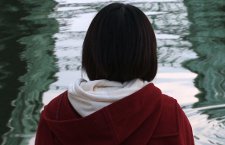
Katsumi Sakaguchi's film Sleep challenges attitudes towards rape
Sleep is a powerful examination of the stigma faced by rape victims in Japan. After a screening at the Sheffield Showroom, director Katsumi Sakaguchi took questions from the audience with the aid of an interpreter.
Sakaguchi's background is in documentary film making. So far, he has directed more than 200 documentaries and four feature films. When asked how he got into documentary making, he said that he was working on TV productions and found too many restrictions on his creativity.
First he explained the meaning of the film's title, that rape survivors, rejected by society, are left to sleep in their own world. In this case, the hope of one day finding the attacker could bring about an awakening.
In reply to another question, he explained that it was this joint hope which held the family together in such difficult circumstances and was the reason why there was no strife among them. The questioner had suggested that there would be more conflict in such a family, given the violence in their lives, and that this made the film rather unrealistic.
Sakaguchi was asked whether the film was based on an actual case, to which the answer was no. But it came about because the director was planning to make a TV documentary about rape.
But how much of this was fictionalised and how unusual is this sort of crime in Japan? This was asked by a Japanese woman who appeared to think it unusual that a mother and daughter would both be raped.
Sakaguchi reiterated that in Japan rape survivors tend to hide the fact of their rape. But the story was well researched and the film has been viewed by rape survivors, who say that in reality life is even tougher than in his portrayal.
How did he persuade the actors to give such brave performances? (The film contains a lot of nudity and some violent sexual scenes.) Sakaguchi said that when he was casting he explained the scenes to the actors and never persuaded them. But if the actors were willing they came to take it on. On a lighter note, he said there was one scene which caused conflict. The actor playing Natsume has to cut her hair. She hacks away until there is hardly any left. Apparently she complained that he never said “Cut.” She told him “If you don't include this scene, I will kill you.” Sakaguchi said “I'm still here, and you can see I used that scene.”
The film includes repeated (beautiful) shots of trains crossing the bridge to the city. Sakaguchi was asked about this motif. He replied that this is a very important symbol in the story. The poor outsiders never got on a train and never will. They will never be part of mainstream society.
The director talked more about why he made this film. He saw a film which seemed to celebrate rape, a teenage fantasy. He wanted to make a film which would stand against this, showing the reality for the women. He also mentioned the current mood in Japan after the earthquake and tsunami. People are looking for direction and hope. He implied that, although this is a very bleak film, people who feel lost and rejected can be given hope when their stories are told and understood.
Asked about his budget, Sakaguchi said he shot the film at his own expense, using a very small team to minimise the cost, but he emphasised that he used the very best equipment to get a good result. He said he can't say exactly how much it cost him, but he doesn't expect to make a profit, and that was not his motive in making the film.
This film was screened as part of this year's Japan Foundation touring film programme – Whose Film is it Anyway? - showcasing contemporary Japanese auteurs.
We are very fortunate in Sheffield to have this programme at Showroom, where there is an eager audience, and you can still catch the other films there next week. After Sheffield, the programme will visit other cities, next stop Edinburgh.