 |
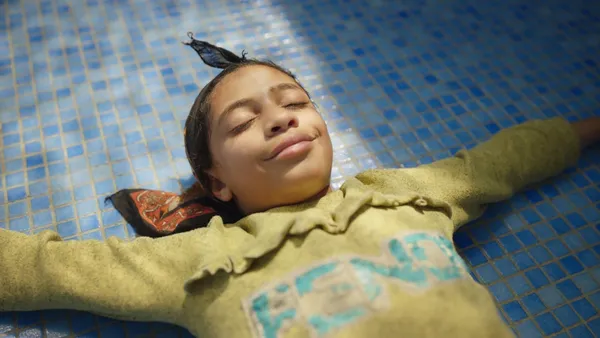
| Dohan Ramadan as Toha. Sarah Goher on the character: 'She carries the entire film on her little shoulders so, if I don't get her right, the entire foundation of this film is just going to collapse' |
Let’s start by talking about how you learnt about this role of the child maids, via your own family's experience. Now, when you look back on it, it must seem quite incredible in a way but it sounds as though it was a gradual dawning for you at the time.
So let me start by saying I was born and raised in New York, but I would spend all my summers in my grandmother's little apartment in Cairo as a kid. At the time, I didn't speak Arabic that well, but the only kid by age was this child in her house, who I thought was extended family, from her village. We just really hit it off really well as two kids, just running around and playing and the fact that everyone around me was quite nonchalant about her presence just made it harder to question. So it wasn’t until we came one summer, she wasn't there, that it kind of felt, like, “Okay, that's weird”. Then I started to realise what she really was. Then I would kind of debate it with my grandma. “She’s my age, she’s a kid. I can’t do this stuff you expect her to do, so why?” And the response of my grandmother – who had got married and had my mother at 14 – was like, “I don't get it, I was a kid when I had a kid, I was cooking when I was just a little over her age and if anything, I'm doing her a favour. If I didn't take her in, she would have been doing something worse, far more dangerous”. She would tell me: “If I’m going to go to heaven it’s because of what I did for her.”
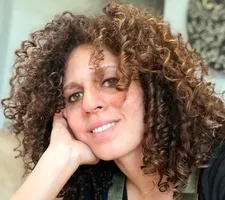 |
| Sarah Goher: 'I feel like in the Middle East in general, we need to create more content that serves us' |
The way it works for a lot of the families here, they will take a child and then they'll be like, “Eventually, I'm going to pay her back by getting her ready when it comes time to get married. I will help her finance, her dowry, stuff like that.” So it's kind of almost like a deal in a way.”
It must have been tricky to cast. How did you go about doing that?
The most obviously important role to cast was Toha. She carries the entire film on her little shoulders so, if I don't get her right, the entire foundation of this film is just going to collapse. I knew I wanted to work with a child who understood the socioeconomic world of the character and I also wanted to work with a child in a collaborative spirit where I even have the space to help flesh out the colour of their character because also it was important for me that she understands this is fiction, this is not a projection of her, psychologically speaking, that she is a part of the fictionalisation of this character.
Also that we don't just pluck a child out of her world, put her in front of the camera and then she's forgotten once, you know, the lights turned on. I had a clear plan for her afterwards that I could personally sustain. I have a teacher who's been teaching her privately three times a week ever since June 2024 when we stopped shooting. Now she can read. I also enrolled her the same month in the Cairo Opera House's gifted youth and talent programme that kind of pulls together kids from all over the city in singing and in ballet. She does the ballet programme. Obviously some part of it is divine blessing but another part is that there's a whole kind of environment around them that is putting them on that track. So we spent a whole year preparing for this film and part of it was doing a lot of character work, constructing the background of the character and improvising things not in the film.
Since she couldn’t read when you started the process, it must have meant a ton of rehearsal. So, did you script it for her or did you improvise with her around ideas?
The script was there. She also has a great knack for memorisation so that also helps. But also there were moments of improvisation and that comes from knowing your character so well that you could start to act spontaneously. It’s because she knows her character so well.
So does the girl who plays Nelly come from a different background in real life?
She does. She comes from a middle-class background and she's also an actress. She's been acting in commercials and TV shows since she was three. So they're two different kinds of actors to work with. But their chemistry was a very important part of the process. A lot of times I would take them out on trips and we would just be playing and doing stuff that you'd see at a nursery or a child care centre and my producer would be walking by saying, “Okay, when are you going to actually start shooting this film? It just seems like you're running an elementary school operation here. And I'm like, “Well, this is so important because once you get on set, I need her to have confidence that she knows her character because that's when the real magic happens”.
So how old were they when you started working with them?
They were turning eight. I wasn't intending to cast that young but they just blew me away, the both of them. I knew when I was looking for Toha that I was never going to find them online, I had to go and find her myself, so I had this little team of young women and we would go for three months in the streets of Cairo, just kind of looking for kids and then getting permission from their parents to do some acting exercises with them and just talk with them. And because we had the role of Nelly, we also did the open casting call.
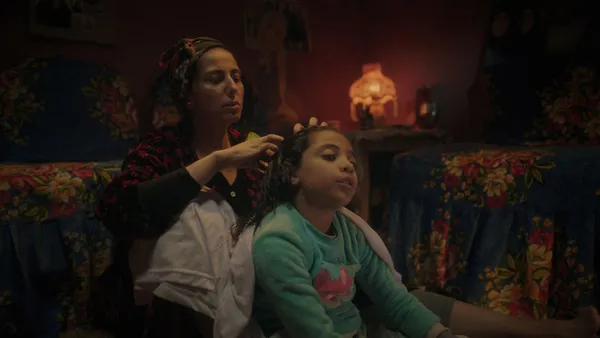 |
| Toha and her mother (Hanan Motawie). Sarah Goher: 'I was really just trying to focus on the psychological repercussions of this situation' |
I can’t ask a child to act, if they don't know what acting is, especially at that precocious age. So, a lot of it was playing, dancing, reading exercises and mirror exercises and improvs along the lines of the film.
Then it just became really clear. When you leave a bunch of girls together without their parents, I don't want to say all hell breaks loose but there's an energy, there's an excitement, and they just really reveal themselves quickly. You start to see who has an attitude, who's shy, who's easy to work with. Because if they can't handle that kind of environment, then how are they going to handle like 100 people around them and the chaos of the shooting set? No matter how intimate I wanted my set, it’s so hard to make intimate sets in Egypt.
It’s interesting you mention that because I was wondering about the challenges of shooting this, including the scene of the little boy driving a tuk-tuk and the water scenes involving Toha and her mother.
So, the water scenes, I had to have her spend three months learning how to swim. The problem was we had a camera that kept malfunctioning and we had to go back three months later to shoot the rest of that scene. The day we came shooting, the water rose 20cm because, hey, that’s Mother Nature for you. But, luckily, I had driven my production crazy by creating an entire map, because I know, as a producer, you’ve got to have a Plan B, Plan C and Plan D and so had I not scouted and made my own little map of that area, we would have probably had to wait for the water to drop.I knew somewhere, so luckily were able to do it.
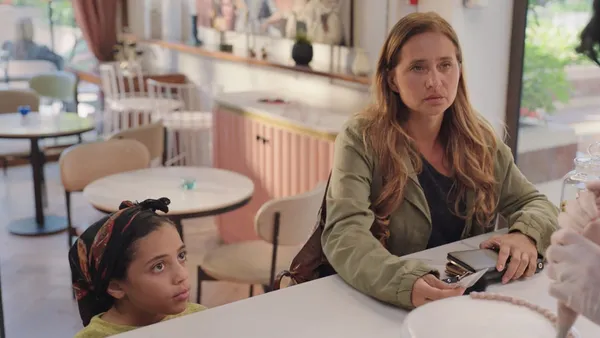 |
| Toha with Nelly's mother Laila (Nelly Karim). Sarah Goher: 'I don’t just want to make a film that is artistic, but I also want to make a film that is powerful and effective in addressing a concern in our society' |
This is a story about children, but the mothers’ characters are also very important. Your script is very careful not to demonise them. That's quite a fine line to have to walk.
100% and I’m not going to lie to you, the nuance of the portrayal, for me, there were two things. At the end of the day, I wanted to make a film that the people who need to hear this message, like my grandma, are actually going to watch. If I try to project a version of that character that's already reading as detestable, do you think she's gonna watch herself? No. I don’t just want to make a film that is artistic, but I also want to make a film that is powerful and effective in addressing a concern in our society. So having a nuanced portrayal of the characters was very important. I was really just trying to focus on the psychological repercussions of this situation. If I had given you a buffet of abuse and, and all these other issues that are very real to the situations of these children, am I going to eventually get this film to the right people to watch? Probably not.
This has been a heck of a trajectory for you, your directorial debut, winning in Tribeca and opening El Gouna. Do you think that will help with whatever comes next?
I'm going to tell you something and this has to do with a greater conversation and debate about women in film in general. I hate to kind of hammer on these subjects but even recently I read an article about how Hollywood is slowly backpedalling into just hiring white male directors. Trying to make films for more than diverse and marginalised voices whether it be women or or male directors from different backgrounds, at the end of the day, I still feel like I don't know how much this film is going to help me with my next project, realistically speaking. Until now I haven't had someone come and tell me, “Okay? We want you to come do this Netflix series.” This has not happened and I don't presume that it will happen as there’s a kind of habit in this industry of trying to walk in the paths that are more familiar.
In any case, I'm far more interested at this point and kind of really exploring stories that have to do with my part of the world. I feel like in the Middle East in general, we need to create more content that serves us. You tend to have films that are either commercial or artistic. And if they're commercial, they have a wide appeal. If they're artistic, they don't get any local traction. So I think we've managed to be in a very rare sweet spot. That’s why I told you the importance of having a nuanced conversation.