




Eye For Film >> Movies >> Days Of Wonder (2025) Film Review



“We all need acknowledgement,” documentarian Karin Pennanen’s father Jukka tells her. He’s talking about why he thinks his brother Markku might have dropped out of college. In fact, the work of the highly creative and talented but reclusive Markku didn’t receive much notice in his lifetime, with most of it only coming to light after his death.
In her touching and inventive tribute to her uncle – which won the Doc@POFF International Competition award at Tallinn Black Nights – the filmmaker sifts through a lifetime of ephemera and art as she discovers what lay behind the door of his house, which nobody had visited in more than 30 years. In the process she invites us to consider what it means to have true creative freedom and how easy it is for people to become isolated even when they have a family who love them.
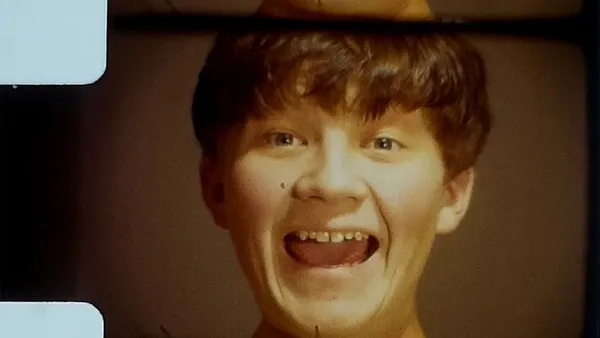
From the start, Pennanen takes a kaleidoscopic approach, as a child’s voice-over – representing her own thoughts from that age – explains the presence Markku had in her childhood, while home video and photographs bring the ideas to life. Layered and responsive sound design from Ville Katajala along with a wealth of music from Markku’s archive adds to the vivid texture of the film, inviting us to be folded into the thoughts and feelings Pennanen articulates.
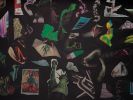
Many filmmakers would have drowned in the amount of material Pennanen found in her uncle’s home. In addition to huge art canvases, there was folder upon folder of drawings and smaller works, plus videos he made for an imaginary audience. There were also so many tape recordings of his phone calls that it took the documentarian a year to listen to them all. Pennanen immerses us in her discoveries as she starts to have a dialogue, of sorts, with her uncle after his death, exploring an unconventional love story he was part of while interviewing family members and some of those who knew him to try to fill in the blanks. The inclusion of audio diaries giving us a direct insight into Markku’s thoughts reminded me of their use in Listen To Me Marlon as they offer a similar sense of being party to his most intimate feelings.
Pennanen’s approach is eclectic, which matches her subject, as she animates some of the collage items he collected to help her tell her tale. She even visits a medium, although this particularly on-the-nose reference to what might “lie beyond the veil” feels like a riff too far on a film that is already packed quite tight. She’s on much firmer ground as she considers Markku’s hidden trove of art while reflecting on her own work and, to a degree, that of her mother Agneta, who is also an artist.
In some of his work, Markku talks about how to make a character in a film “real”. His niece succeeds in opening a window to a life that, though reclusive and not always happy, was full in its own way and lived on Markku’s own terms.
Reviewed on: 25 Nov 2025


Director: Karin Pennanen
Writer: Karin Pennanen
Year: 2025
Runtime: 87 minutes
Country: Finland, Denmark, Norway
Search database: