 |
| Hedda |
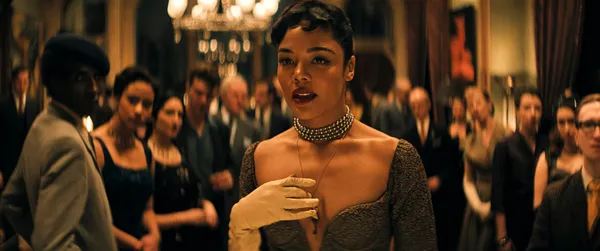
Currently streaming on Amazon Prime and nominated for several of this year’s major awards, Hedda is a modern interpretation of Henrik Ibsen’s play Hedda Gabbler, relocating the action to mid-20th Century England and changing the character of Eilert to Eileen. Between this and the casting of a Black woman (Tessa Thompson) in the lead, the social dynamics of the story shift considerably, whilst its personal dynamics remain as intriguing as ever. Speaking at a press conference last month, writer/director Nia DaCosta said that they key was knowing that to keep and what to get rid of, with Aunt Julie the first character destined to go in the bin.
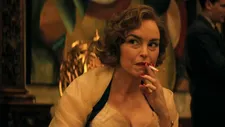 |
| Nina Hoss as Eileen in Hedda |
Free to work at her own pace, which is unusual in the film industry, she stripped the story down to its core components and then began to explore the aspects of it that made her most curious – the fear and intensity underlying the characters.
“I first read Hedda when I was getting my Master's in the UK in 2012, and we were doing a theater module studying Ibsen,” she told me. “It was a play that we weren't studying, but I picked up after I read A Doll's House, and I thought ‘Oh, this man is very interesting, and he's very invested in complicated, interesting, confrontational women.’ I was really into it, and I kind of wanted to study it more. So I went a theatre library and watched a recording of a stage production that happened, I think, a year or two before. And it was so interesting because I didn't really see the play that I read.
“All of the tension and the humour and the fear underlying everything, and the sexiness of it, even, I felt like wasn't there. And in that gap, I started to kind of fill in my own little pieces. And so I just kept thinking about it, and eventually some of the big changes I made came into the world of my story.”
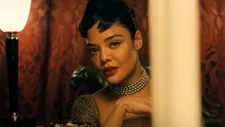 |
| Tessa Thompson as Hedda |
Storytelling is all about staying humble and staying curious, she says. She’s curious about the audience, and doesn’t like to dictate meaning. She sees the increasing willingness to embrace diversity within the industry as valuable in part because it makes it possible for more varied stories to be told. In this case she was worried about the cliché of all lesbians in the past being sad, but there was no getting away from it if she wanted to be true to the rest of the story. She saw Thea, Eileen and Hedda herself as incredibly brave characters ready to take risks in order to control their own destinies.
As well as taking her time to adapt the story, she was able to take her time over rehearsals. One of the things she enjoys most as a director is working with actors, and she likes to have a week or two before a film to get them ready and give them a chance to share ideas. Whilst she’s quite particular about choosing her words, she wants to hear from them if there are any that don’t fit. Coming from a musical family, she was also excited about choosing the music for the film, which packs in a few surprises in terms of style, even though it’s all period-appropriate. Getting MGM’s music department to send her every song from 1949 to 1956, she gradually worked her way through them and surprised herself a few times along the way. Now she’s looking forward to viewers discovering them too.