




 |
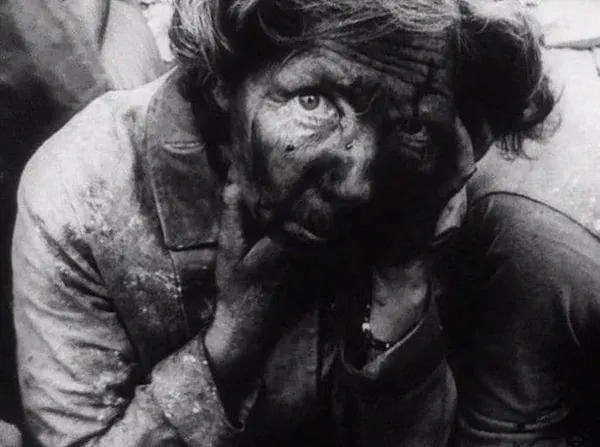
| The War Game is among the films screening in Berwick |
Oscar-winning director Peter Watkins has died at the age of 90. The director, whose 1965 film The War Game - contemplating what would happen if a nuclear bomb dropped on Kent - was so shockingly realistic that the BBC cancelled it before it was broadcast branding it "too horrifying for the medium of broadcasting”.
It nevertheless won the Academy Award, although it would not be televised until 20 years later. That, in many ways, stopped what was to that point a burgeoning career in its tracks, at least on British soil. Watkins, who had previously found acclaim with Culloden, a groundbreaking film that got inside the battle by the use of a documentary 'reportage crew' interviewing those involved.
While its form was radical, it's consideration of British history, with an emphasis on what was lost rather than won, was also very different from the usual approach of the time. His hybrid approach to form - along with his notable use of non-professionals - is something that remains influential today.
Watkins continued to pursue his career abroad, making Privilege, in 1967, starring Manfred Mann's Paul Jones and Jean Shrimpton, about a pop star's ability to control a population being exploited by the govermnent, and The Gladiators in 1969, which imagines a future in which governments engage in combat not on the battlefield but in televised games. In essence the corporate-sponsored comodification of death that rests on a sense of nationalism. Themes that feel just as relevant in the modern world as they were then.
 |
| Gianfranco Rosi: “For me, inside the lens, in filming, is where I discover storytelling.” |
He continued his dystopian themes with Punishment Park in 1971, which again uses a pseudo-documentary framework to explore what happens to a group of dissidents who are offered the choice of either a long jail term or four days in the titular park, which is as bloody as you might imagine. Again, although this was a specific reaction to the Nixon government, it's relevance remains disturbingly keen in the modern world.
Much of the rest of Watkins career unfolded in Scandinavia, including The Seventies People (1975), The Trap (1975) and Eveningland (1977), which covered topics including suicide, nuclear waste and police violence.
Other notable work included Edvard Munch (1974), a detailed film about the Norwegian artist and Fritänkaren (1994) about playwright August Strindberg. The horror of nuclear weapons also runs through The Journey, an epic, more than14 hours long, that was shot over four years and features interviews with people about their thoughts on nuclear war as well as featuring fictionalised episodes. Further evidence of Watkins' determination not to be dictated to by convention in terms of either form or length. His final work was La Commune (Paris, 1871) in 2000.
On his website, in 2016, he wrote: "Another emerging goal in my work was to find forms which might help the public to break away from this repressive system, to distance themselves from the media-cultivated myths of 'objectivity', 'reality', and 'truth', and to seek alternative information and audiovisual processes for themselves."
After his death on October 31, in France, his family paid tribute, saying: “ Peter Watkins fought to the end, uncompromising and without concessions. Throughout his life, he lived censorship and exile. The world of cinema loses one of its most incisive, inventive, and unclassifiable voices. We would like to thank all those who supported him throughout this long and sometimes solitary struggle.”
He is survived by his wife Vida Urbonavicius and sons Patrick and Gérard. Those wanting to read more about his thoughts on mainstream audiovisual media, should take a look at his essay from 2018.