





 |
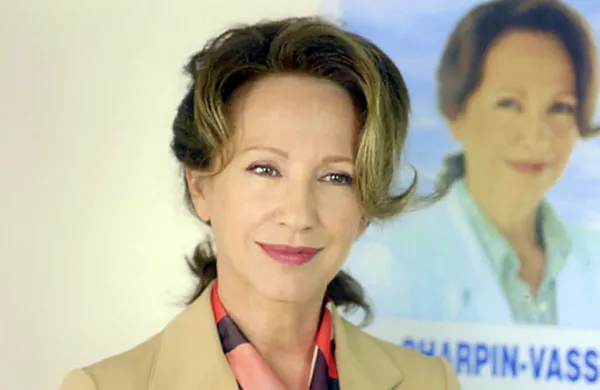
| Nathalie Baye as a French politician in Claude Chabrol’s Flower Of Evil Photo: UniFrance |
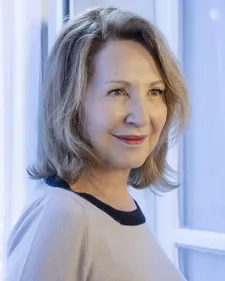 |
| Nathalie Baye: 'I saw myself playing dangerous and unsympathetic women' Photo: Philippe Quaisse/UniFrance |
It was not only a reunion for Baye and Beauvois but also marked the first time she had worked in cinema with her daughter Laura Smet (playing mère et fille). Smet, 42, was born of her four-year relationship in the Eighties with the late Gallic rocker Johnny Hallyday. In his autobiography, In My Eyes, Hallyday wrote: “I was not in the habit of hitting on girls like Nathalie …” as an explanation for their rather odd couple status. She was also married to actor Philippe Léotard from 1972 to 1982.
Both Baye and Beauvois originally come from Normandy which helped to explain their obvious empathy. She regarded him as a close friend, having worked with him first on To Matthieu (Selon Matthieu), a psychological drama set in Normandy.
Baye’s career spanned work with some of the directorial greats including Bertrand Tavernier, Jean-Luc Godard, Claude Chabrol and Maurice Pialat as well as the new generation (recently with Xavier Dolan in The End Of The World). Internationally she earned reputation for roles include playing Leonardo DiCaprio's mother in 2002's Catch Me if You Can and French aristocrat Madame de Montmirail in the film of Downton Abbey: A New Era in 2022.
Her breakthrough role came in François Truffaut's 1973 film Day For Night. She said this was the role that made her fall in love with cinema after she initially strived for a career in theatre.
In our conversation she expressed surprise when she received the César for The Young Lieutenant. “Usually prizes are for acting performances,” she explained. Her performance under Beauvois’ direction was low-key and restrained. “You have to allow yourself to be stolen from,” she said at the time.
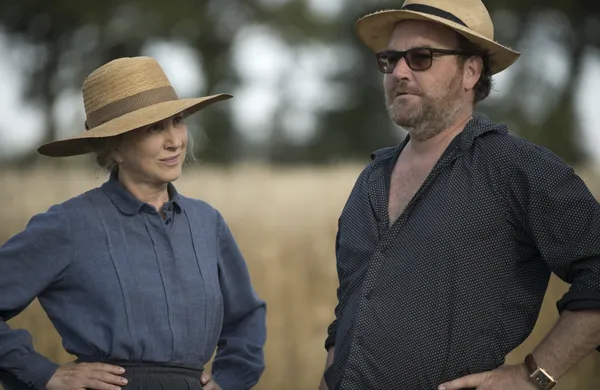 |
| Nathalie Baye and director Xavier Beauvois filming The Guardians Photo: UniFrance |
“Rather I saw myself playing dangerous and unsympathetic women,” she added adamantly.
Her criteria for choosing roles never changed. “It was never just about my character but the whole universe of the film, including that of the director. I would always say, 'No' to a good role in a script that I did not really like. And the same went for a not particularly interesting role in a good script. If I didn’t like the director, however important he might be, I would also decline. I have always been lucky enough to choose, but it is quite a hard job making these decisions. It is not the size of the role that matters - but the content,” she suggested. Her final on-screen role came in the 2023 Franco-Lebanese drama The Night Of The Glass of Water.
 |
| Nathalie Baye in her César winning role in The Young Lieutenant by Xavier Beauvois, alongside Jalil Lespert Photo: UniFrance |
She was even happy enough to work with him on only one scene in his film of The Man Who Loved Women opposite Charles Denner. “Before the shoot I began to feel a bit nervous in case I blew the opportunity,” she recalled.
With an admiration for actors of a similar generation such as Meryl Streep and Helen Mirren, Baye appeared happy that in France directors were much more open and audacious about offering interesting roles to females over the age of 40. “We spend a lot of time saying that everything is better elsewhere, but in this regard, at least, we can say things are better here in France,” she smiled at me during the conversation. She played the President’s wife in the first season of the political TV series Spin (Les hommes de l’ombre), a role taken over by Carole Bouquet. Baye did not want to be locked in to the same character in the season after season syndrome.
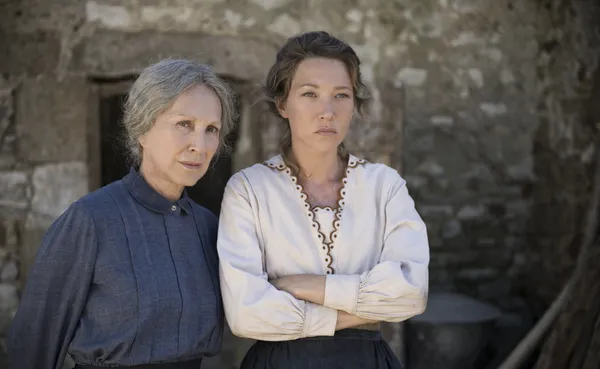 |
| Nathalie Baye and her daughter Laura Smet in The Guardians. 'A career is built little by little, like a puzzle with new pieces added to older ones' Photo: UniFrance |
Her parents were both artists and encouraged in her endeavours. She was discovered in childhood to be dyslexic and became actively committed to the cause, helping children with such learning difficulties. “I had a lot of difficulty in concentrating but I developed my imagination. My academic results were poor but I was sent to a speech therapist who understood my difficulties. I needed to be accompanied and encouraged and I was which is why I want others to have that chance.” She was also a campaigner for reforming France’s end of life legislation.
As tributes began to pour one epitomised the outpouring of loss: “Nathalie Baye has passed away, embodying a certain idea of French cinema demanding and elegant in unforgettable roles: she was a part of our heritage that has vanished.”