





Eye For Film >> Movies >> Two Women (2025) Film Review


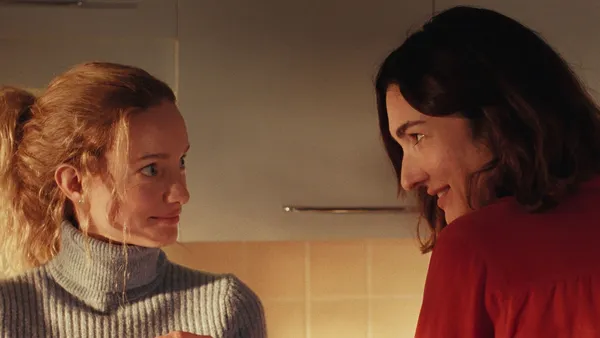

In 1970, French comedy Deux Femmes D’Or had something to say. Yes it was shallow and daft, but it was a response to the male-targeted pornography of the time, co-written by a woman and introducing something of a female perspective. It was aware of its own silliness, and it was having fun at a time when sex was something women could feel carefree about. The arrival of contraceptive pills meant they could finally enjoy themselves without the risk of pregnancy, the spectra of AIDS was yet to arise, and, well, other diseases were perhaps not on the radar as much as they should have been, but they were comparatively easy to treat when people did get unlucky.
Flash forward 26 years to Chloé Robichaud’s remake and the landscape is not the same. The risks that people face in having unprotected sex are completely ignored here, which doesn’t ring true (and certainly doesn’t send a good message). Free love is no longer fashionable – to many women’s relief – but there’s a growing awareness of alternatives to monogamy. One of this film’s two heroines, Florence (Karine Gonthier-Hyndman), persuades her husband to consent to an open relationship, and they both feel positive about ceasing to view one another as property, though her resolve is never tested and he has underlying emotional problems which she misses, mistaking her sudden sexual freedom for a lack of any responsibility to attend to his wellbeing. This is, however, about as far as consent goes. Many of the men in the film are coerced into sex in situations where it’s not clear that it’s what they really want, and there’s never any concern about how it might impact the rest of their lives.
Is there a satirical edge to this? The remake is entirely female-led, and one might argue that it’s sending up the way that male-focused sex comedies have tended to treat women. A lot of its viewers, however, are likely to be unfamilar with those films. How you relate to it may very well depend on your age. It is silly and playful, but there are times when it becomes uncomfortable; feminist anger aside, assumed entitlement isn’t really any nicer when genders are reversed.
The plot of the film hinges on an initial clash between Florence and her neighbour, Violette (Laurence Leboeuf), who is annoyed by a sound like a crow cawing and becomes convinced that it must be the sound Florence makes during orgasm. Florence’s declaration that she and her husband don’t have sex so that can’t be the case also seems out of place today – should we still assume that women’s pleasure requires a man? This difficulty is handled like the others, by simply ignoring it, and we get into the action, which initially focuses on their mutual lust for a builder from a company called Les Anges De L’Extermination – a cute joke (if you know your French cinema) but one which Robichaud finds it necessary to repeat in case we missed it the first time.
There is some entertaining stuff to follow as the women lust over the bodies of various visiting male officials and repairmen, none of whom fails to attract their interest. The sheer enthusiasm involved here goes some way to making up for the film’s other issues, and if you share their tastes, you may find it erotically pleasing too. it’s a definite positive that no apology is msade for this. Whilst the characters change and develop, there is never a moment when they regret their actions and take flight back to conventional morality.
The film does have one other strong moment, which is a conversation between Violette and her husband about #MeToo, in which she addresses the difference in gendered experiences by explaining that no, she has never been raped, but the question of whether or not she has been sexually assaulted is a fuzzy one. This is particularly important in France, where, partly thanks to figures in the film industry, understanding of what #MeToo was about is poorer than elsewhere, and many men still don’t grasp the level of day to day harassment, often physical, that women endure. It’s just a shame that this doesn’t square well with other aspects of the film.
If you’re ready to turn your brain off for an hour and 40 minutes, there’s a fair bit to enjoy here, but a little more thought at the outset could have bypassed the problems and led to a much more satisfying experience.
Reviewed on: 03 Apr 2026


Director: Chloé Robichaud
Writer: Catherine Léger
Starring: Karine Gonthier-Hyndman, Laurence Leboeuf, Félix Moati, Mani Soleymanlou, Sophie Nelisse, Juliette Gariépy
Year: 2025
Runtime: 100 minutes
Country: France
Search database:
