





Eye For Film >> Movies >> Mariinka (2026) Film Review



The social and family fractures and fragments caused by the Ukraine conflict are highlighted by Pieter-Jan De Pue in his latest documentary, which itself splintered from its original intent during the course of the ten years he filmed. The complex result doesn’t always slot together smoothly but its jagged edges serve to illustrate the unpredictability of living – and in his case, working – in a warzone.
Mariinka is a city in eastern Ukraine, not far from Donetsk and close to the border with Russia, putting directly in the line of fire from Putin’s troops. It’s where the Belgian filmmaker first encountered brothers Mark, Ruslan, Maksim and Daniil, who were intended to be the subject of this documentary, then to be entitled Four Brothers. They are a case study of the way that war can tear families apart in multiple ways, with Mark and Ruslan ending up fighting on opposing sides of the conflict. Maksim, meanwhile, who in an odd editorial choice is seen only briefly in the finished film, was not called up due to a motorbike accident which left him physically disabled. Finally, Daniil, who spent time in an orphanage because of his mother’s addictions, was adopted at the age of four, and with his brothers’ blessing, by an American couple from Mississippi, who changed his name to Samuel but who ensured he kept up long-distance contact with his siblings.
This might be considered a lot for a single documentary to handle, but De Pue widens his net further to take in female faces from the conflict zone, who have a tangential connection to the brothers. Angela, whose tough start in life is nodded to rather than wallowed in, runs goods of all shapes and sizes across the border. Some of De Pue’s most visceral and striking 16mm footage – shot by himself at what must have been considerable personal risk – shows her pushing her bike through the devastated no-man’s land loaded with everything from electrical goods to flowers, as bullets whizz past them both.
Natasha, meanwhile, is a more conventional presence on the frontline. Now working as a paramedic, De Pue’s film of her attempting to save lives is interwoven with earlier snapshots of her as a teenager – not so long ago, yet a lifetime away – sparring in the boxing ring or taking part in school events.
De Pue constructs a film of contrasts, not just in the sharp divisions between the then and now of Natasha’s life or the choices that mean Mark and Ruslan could take one another’s lives, but between the warzone and the Bible belt where Samuel now lives. How the elder brothers ended up on either side of the conflict is left somewhat opaque but it speaks to the torn loyalties of a region that has been hotly contested for years. Samuel’s adoptive parents are shown to be caring people but the way he is brought up around guns that mean his thoughts turn to military sign-up carries considerably more weight when you consider the less voluntary fashion in which his brothers have taken up arms.
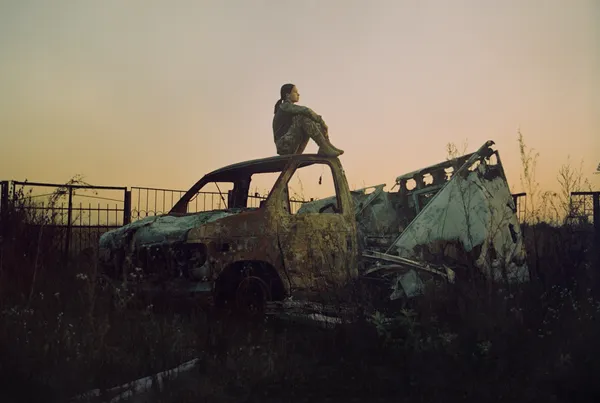
In between the verite footage are more poetic abstract moments that, in different and not always peaceful ways, speak to innocence lost. If we can sometimes see the join perhaps that is part of the point, indicating the impossibility of leading a seamless life when it could be brought to an abrupt halt at any moment for no other reason than a dictator’s land grab.
Reviewed on: 02 Apr 2026


