 |
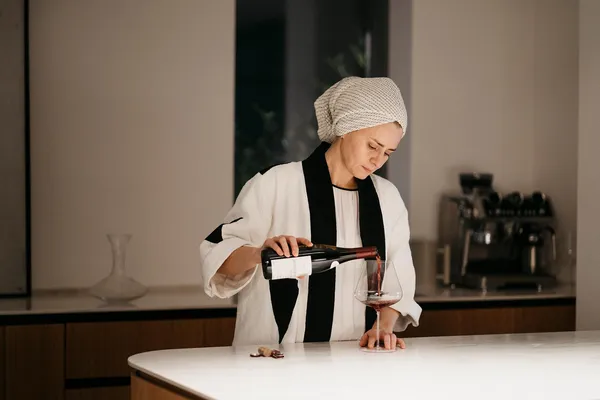
| Maria Popistașu as Olga. 'We decided to focus on her perspective because we needed a main character to center the moral ambiguity around and not make it a social drama' Photo: Courtesy of Warsaw Film Festival |
Following their 2018 directorial debut short The Seagull, Maria Popistașu and Alexandru Baciu return to the directors’ chairs, having both built careers screenwriting and acting since the early 2000s. Their moralistic drama had its world premiere in the 41st Warsaw Film Festival’s International Competition section.
Y combines elements of reality and fiction, through its use of archival footage shot in orphanages following the Romanian revolution of the 1989 and the toppling of the communist regime in the country. It examines the consequences of Nicolae Ceaușescu’s dictatorship and his natalist policies. Restrictions in birth control meant that women were unable to care for their children and were forced to abandon them in orphanages with horrible living conditions. Kids were neglected, put up for questionable adoptions, trafficked, or left to die.
Set in the present-day Romania, Y follows Olga, whose wealthy, benefactor grandmother passes away. As she steps out of her privileged bubble, certain questions arise, as to her grandmother’s shortcomings in handling international adoption cases in the Ninetiss. Besides co-directing and co-writing it, Popistașu stars as the lead.
How did you come up with the story and what was the reason for linking it to Romania’s orphan crisis?
Maria Popistașu: We both wanted to make a film about inheritance and this idea that some people live in bubbles of privilege. We can say that we live in Bucharest, but we don't really live in Bucharest. We live in an insulated version of it. As soon as we leave the comfort of these bubbles, the reality can be shocking.
Alexandru Baciu: And it's something that can happen to anybody.
MP: At the Thessaloniki Film Festival Co-Production Forum, we were recounting stories about the Romanian orphans of the Eighties and Nineties to international producers. They could all relate on a certain level since child welfare systems are lacking in most places, even today.
Why did you center it on Olga's perspective?
MP: We decided to focus on her perspective because we needed a main character to centre the moral ambiguity around and not make it a social drama. Also, because I wrote this for myself.
Were you planning on including the archival footage from the start?
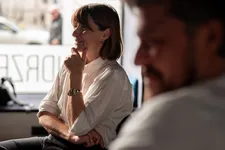 |
| Maria Popistașu and Alexandru Baciu 'Instead of calling shots, you end up doing many things yourself' Photo: Courtesy of Warsaw Film Festival |
AB: Yes. We grew up watching a lot of local reports about the consequences of Ceaușescu’s natalist policies. But when Romania finally opened its borders in the early 90s, Western media arrived and investigated. There was a lot we actually didn't know. We knew that restrictions on birth control meant some women were unable to care for their children.
MP: But we didn't know that it was so harrowing. And the classification of the orphans based on the severity of their disability was reprehensible.
What was the reason you chose the specific footage from a Belgian network?
AB: There is this part where an employee of an orphanage is interviewed about the conditions. Despite the harrowing images of the children, it was her resigned apathy that was the most atrocious. She goes as far as to paint herself a victim. This mindset is why such things happen in the first place.
How do you reconcile the collaborative nature of filmmaking with your vision as directors?
AB: Instead of calling the shots, you end up doing many things yourself. This was certainly the case with Maria. It might not be a professional or ideal method, but ultimately, for the most people involved it's just a job. For us, it's so much more.
MP: I was involved in many departments on the film. I wrote the script, played the lead, and directed it. I also scouted locations myself after failing with three different crews. I worked with the costume team. I oversaw the aesthetic choices and even prepared the storyboards with our DOP.
Was the dialogue partially improvised or strictly scripted?
MP: It was scripted. Efficiency was key to us. We storyboarded and camera-blocked months ahead of shooting. We also rehearsed in spaces similar to our shooting locations. We rehearsed it like a theater play, focusing on both lines and movement. Once we were on location everyone knew what they had to do. Despite this, I ended up using a lot of the takes with little mishaps because these unscripted touches gave a scene its organic quality.
How are you feeling after the world premiere?
AB: Being a director means that you see your film so many times.
MP: Before Warsaw, we had a technical screening in Bucharest. I hoped that was the last time I had to see it. But I ended up seeing it again, here at the festival. I'm pretty sure this was the last, last time. Now we can start thinking, what next?