





Eye For Film >> Movies >> The Partisan (2024) Film Review


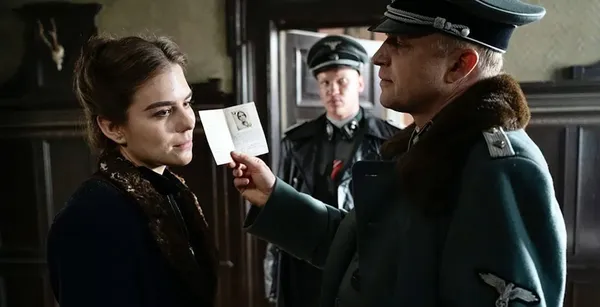

Famously described as the bravest of the brave, but also treated with that suspicion still all too frequently attached to women who don’t prioritise romantic or reproductive lives, Warsaw-born Krystyna Skarbek was one of the British secret services’ greatest assets during World War Two, taking great personal risks to obtain information and seemingly enjoying the thrill of the game. She’s made her way into numerous books and is said to have been the inspiration for Ian Fleming’s Vesper Lynd, so it seems none too soon for her to get the biopic treatment, Unfortunately, despite some promising casting, this one doesn’t quite hit the mark.
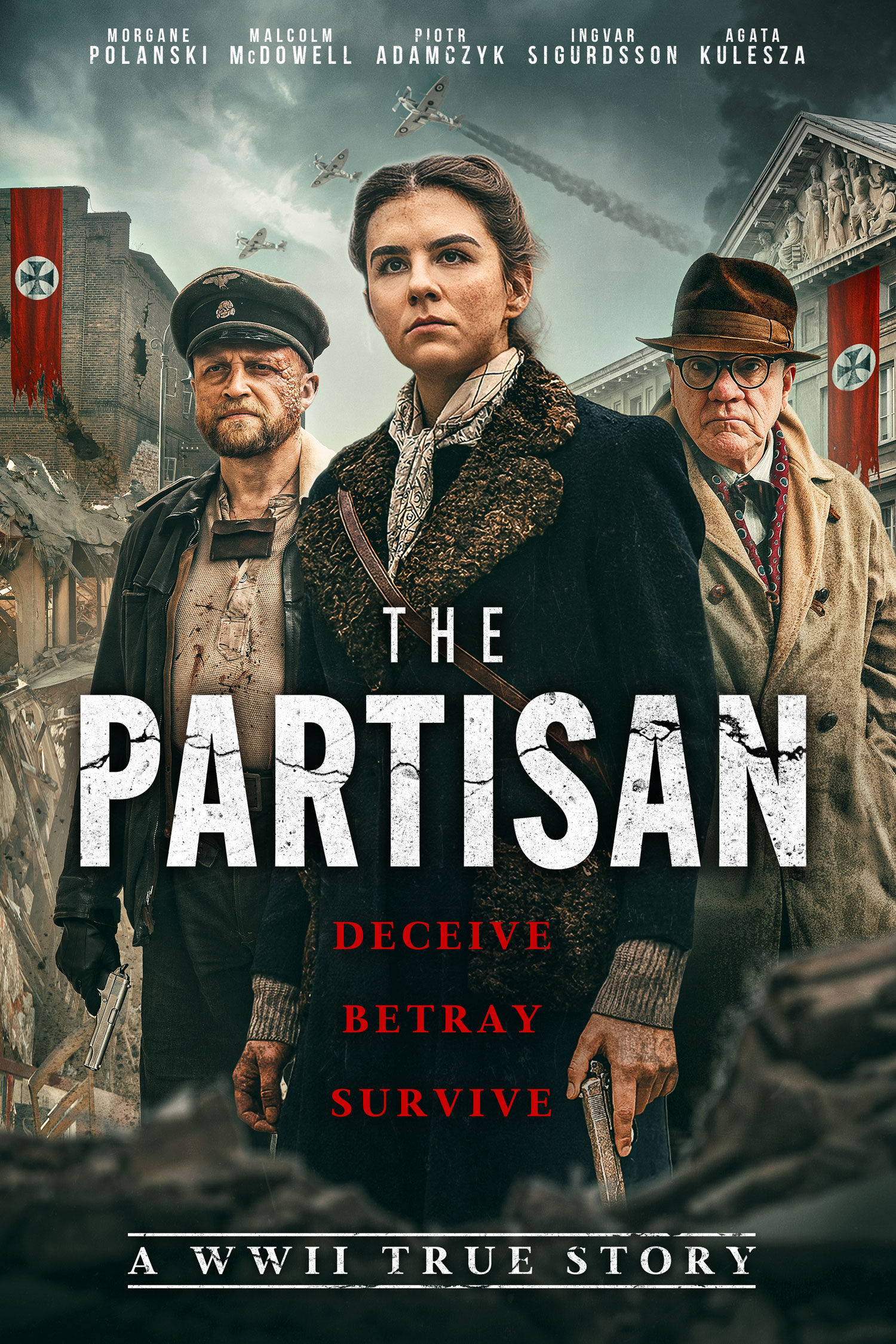
It stars Morgane Polanski, a skilled actor who is perhaps just a little too inexperienced to put her foot down when she should. She captures the character well, tracking the gradual breakdown of aspects of her mental health through a script which tends to leap back and forth in time, and capably managing the moments when Krystyna’s own acting, though not as good, combined effectively with the sexism of the time to get her out of trouble. Nevertheless, she’s up against it, working with a script which delivers on big moments but isn’t so good at tying them together. If you’re already familiar with Krystyna’s story, you’re likely to find the film satisfying enough, if a little weak in places; but if you’re not, you’re really going to struggle to keep track.
It opens well enough, with an interrogation sequence which effectively establishes what the enemy is up against. Though she is the one held captive, Krystyna controls the room. What follows is a tour of some of her better-documented adventures, illustrating the risks she took and the personal losses she experienced in the process. Writer/director James Marquand has the wit not to over-egg the latter nor to suggest, as others have, that her psyche was shaped by some such tragedy. Instead he foregrounds her intelligence and the skill with which she could get herself out of exceedingly precarious situations. Confidence is an important aspect of this too, and there one can see why she appealed to Fleming.
The difficulty with this approach is that we never get to know Krystyna very deeply, whilst other characters are only around for short periods of time, so it’s difficult to get emotionally involved. When there is no immediate puzzle or peril, it’s easy for the viewer’s attention to wander. This is countered to an extend by some excellent casting in the small roles. Malcolm McDowell gets what is, extraordinarily, his first ever chance to play a spymaster, a role which his longstanding love of Le Carré et al lets him slip on like a glove.
Despite the issues with the main body of the film, its downbeat ending is handled very well. Again, Marquand resists sensationalism, and the simplicity of the final note, delivered as a postscript, makes it sting all the more. one might hope that this film, for all its shortcomings, will encourage more people to learn about Kryztyna’s remarkable life.
Reviewed on: 02 Oct 2025



Director: James Marquand
Writer: James Marquand
Starring: Morgane Polanski, Malcolm McDowell, Ingvar Sigurdsson, Frederick Schmidt, Pyotr Adamczyk
Year: 2024
Runtime: 108 minutes
Country: US, UK, Poland
Festivals:
Search database:
