|
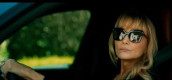
| Léa Seydoux with George MacKay in The Beast |
Sometimes fact can seem even stranger than fiction but despite all that happens in it, Ron Howard's film about all the things that very nearly saw Jim Lovell's 1970 Moon mission end in tragedy, sticks close to the truth. Based on Lovell's book, Lost Moon: The Perilous Voyage of Apollo 13, it was praised on release by people within NASA, including Lovell, for its accurate depiction of what occurred. Who better to be the hero at the helm than Tom Hanks, as Lovell, who finds himself hampered by not only leaking fuel that means the mission must be aborted but toxic gas level that could kill his whole crew? Although Hanks is perfect for his role, the rest of the ensemble cast is as airtight as spacesuit, featuring Ed Harris in mission control, Kathleen Quinlan as Lovell's wife on the ground and Gary Sinese as an astronaut pulled from the Moon shot.
Breathless, 12.25am, Talking Pictures TV (Freeview Channel 81), Tuesday, August 19
Richard Linklater’s enormously entertaining Nouvelle Vague has, with a bit of luck, brought Jean Luc Godard’s classic to a whole new generation as it recounts the making of this French New Wave gem. Godard's film stars Jean-Paul Belmondo as a macho criminal-on-the-run and Jean Seberg as his American girlfriend who is debating if she loves him. Stylistically innovative, with its documentary-style observation of the Parisian streets and its use of jump cuts, the whole thing is achingly cool and offers a jazzy riff on young love.
The Beast, 11.40pm, Film4, Wednesday, August 20
Anne-Katrin Titze writes: The Civil War mentioned as an aside in Bonello’s The Beast, which takes place in three distinct points in time (1910, 2014, and 2044), is that of 2025. As musical variations on a theme, The Beast explores what Henry James diagnosed so devastatingly. The chill of egotism and the feverish dance around the void are so desperately relevant today that it leaves one breathless. Gabrielle (Léa Seydoux) and Louis (George MacKay) meet in the earlier sequences, with some of the James dialogue reversed in gender, and a subplot of doll-making added, which makes you think of E.T.A. Hoffman’s 1817 story The Sandman. The future in 2044 has developed an apparatus that can erase all the emotional baggage of history and tame those beasts once and for all, at least for most. The 2014 sequences feature Seydoux as an aspiring actress and model, housesitting in Los Angeles and MacKay as an incel who is stalking her, which may be the most disturbing and pressing episode of them all. Lots of clairvoyant details, a pigeon in the house, music as the spirit of its years, the power of dance, tears and knives and floods and a brilliant brooch of wings speak of a panorama of the same beast to look out for. The unfilmable text has found its 21st century elucidation.
The French Connection, 9pm, BBC4, Thursday, August 21
William Friedkin's gritty 1971 thriller is as good as they get. Gene Hackman stars as NYPD detective Jimmy "Popeye" Doyle alongside the equally reliable Roy Scheider as his partner Russo as they take on a narcotics ring while breaking every rule in the book. There's a docu-realism to the camerawork meaning you can almost taste the tang of the New York City streets and the subway train chase scene has also lost little of its impact down the years, even if Doyle's attitude is even more problematic by today's standards than it was back then.
Tár, 12.05am, BBC2, Friday, August 22
Jennie Kermode writes: Although this plainly rather contrived film is not as clever as it thinks, and sold any soul it might have had in exchange for a shot at the Oscars, it is worth watching for Cate Blanchett's performance. As world famous conductor Lydia Tár, Blanchett gets to move into new territory, exploring the kind of big, complicated, self-contradictory role usually reserved for men. Forget the actual conducting, which professionals say is all over the place – it's the way she drills down into her character's unpleasantness and explores it without apology, allowing moments of wisdom or genius to co-exist with rather than absolving it, that makes this interesting. The #MeToo movement is addressed when Tár is accused of sexual exploitation and it's refreshing to see a film that doesn't shrink from exploring this in a woman, and a lesbian, whilst the character is so specifically drawn that there seems little danger of it contributing to problematic stereotypes. What follows is less about the pursuit of objective truth and more about the shock that Tár experiences in being doubted, as someone who is used to getting her own way, and who frequently treats people atrociously. Blanchett gives it her all; she is unforgettable.
Rush Hour, 11.50pm, ITV1, Friday, August 22
Cinema history is littered with misfiring mismatched buddy cop movies but Brett Ratner's tale, which brings together Jackie Chan and Chris Tucker, is up there with the best. Chan plays a serious Hong Kong cop who finds himself shackled to Tucker's brash LA detective after a diplomat's daughter is kidnapped. The action moves at a pace, allowing Chan to showcase both his slick martial arts skills and his comic timing, but it's in the spark between him and Tucker that the film really finds its groove. You may just come for the action but you'll end up caring about the case.
Eyes Without A Face, 12.50am, Talking Pictures (Freeview Channel 81) TV, Saturday, August 23
Jennie Kermode writes: The most powerful horror often has an ethical dilemma at its core. Though nothing can justify the abductions and killing of young women by a surgeon, the fact that he is doing it to try to restore his daughter's face – and therefore her hope of a normal life – makes one feel for him at the outset of Georges Franju's seminal film. Less so later, when Dr Génessier (Pierre Brasseur) – whose name, in French, hints at the other reason why many people desire new faces – expands his operations, but the daughter (Edith Scob) herself remains a sympathetic figure, with a haunting gaze emerging from the blankness of her mask. The film is full of fantastic imagery. Wistful, fairy tale elements combine with slick, clinical modernity. The promise of science and the ugliness of human indulgence are both eclipsed by the existential horror at the film's core. The reminder that life can be turned upside down with no warning, and that nothing endures.
Due to the pressure of multiple festivals right now, our short selection is taking a short break.