 |
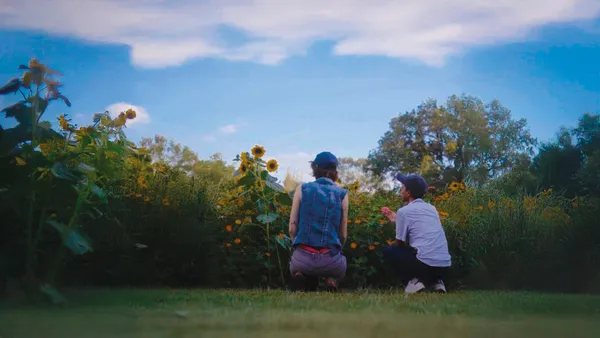
| What Will I Become? Photo: BFI Flare |
Recently screened a BFI Flare, Logan Rozos and Lexie Bean’s documentary What Will I Become? explores the often overlooked challenges faced by young trans men trying to find ways of living comfortably in today’s world. It reflects on the lives of two such men, Blake Brockington and Kyler Prescott, whose online presence made them into much-needed role models but whose lives ended in tragedy. There are difficult themes here, and this interview was a difficult process for the two directors, but they were willing to open up because they hope that their film can help others.
“A big thing that we talked about a lot as a creative team was just letting the subjects speak for themselves as much as possible,” says Logan. “We were lucky enough to have that great footage of Blake that he did for a student film while he was alive. We wanted to use his words because he knew best how he wanted to be represented. And also not leaning into the kinds of narratives that often appear in the media that sensationalise the most dramatic details of someone's death.
“I think also being honest with the audience about our relationship to the subject, we hoped to build trust, so that people would feel that, both in terms of subject matter and dealing with concepts, that they were in good hands, but also that emotionally we would take care of them a little bit and navigate it through this stuff.”
It can be difficult growing up in a world where you don’t see role models you can relate to.
“I've definitely struggled with finding role models,” says Lexie, pointing out that he addresses this in the film itself. “I arrive at this point in my life and my transition journey as an incest survivor and having a lot of abuse around me growing up. So exploring masculinity, I just was so scared of replicating the very people who hurt me or hurt other loved ones. I felt like I didn't have a lot of role models or options, and so that really heavily contributed to my suicidality.”
So it's not just a lack of trans male role models, I suggest. It's a lack of any men who seem like good examples.
“Yes, exactly. Perfectly said.”
Can the way that trans men are opening up these discussions potentially help all young men?
“Yeah, I hope that's true,” says Logan. “I think, you know, we're just starting to have conversations as a culture about toxic masculinity and men being explicitly told to emulate the worst misogynistic and emotionally toxic behaviours in order to get social privileges back. So hopefully not only that, but cis men will feel comfortable not only emulating men who don't behave that way, but emulating trans people, emulating men who don't share identities with them. It's sometimes hard to even get young boys to read books about girls. For them to idolize anything other than other cishet men feels so out of the question for them. I think part of the change that needs to happen is getting people to empathise with and see role models in other places.
“That's something that then would hopefully help trans boys as well. Because there's a suggestion in the film, I think, that if you want to fit in, then you have to appeal to the worst masculine qualities in order to feel that you're like the other boys, because they're all trying to emulate that or trying to pretend that they are that. And that doesn't create any space for anyone.”
“That really ties into several types of misogyny,” says Lexie. “I feel like for trans boys who are being interpreted as women, there's this idea that – I'll just say things that have been told to me specifically and directly, but I know so many people have heard these things – ‘Oh, you're just that way because you're tired of womanhood,’ or ‘Actually you're just a confused girl who's going through a phase.’ There's a particular misogyny that trans boys experience where there's this idea pushed on too many that's like, ‘You will never know yourself and you should never trust yourself,’ and ‘You just couldn't take womanhood.’ And so it can lead to this very intense extra pressure to believed.
“What help you to be believed are the things that you were just referring to. Even the toxic traits that have directly hurt us and have hurt our loved ones. It could be quite overwhelming at times, but I think trans people are so amazing – as a generalisation. I do, because I think one of the reasons people or society or politicians or whoever is so afraid of trans people is because we have to be thoughtful, ultimately, about what parts of the gender or what parts of ourselves we're going to carry forward. We make so many active choices and work hard to become full versions of ourselves in a way that many men especially can take for granted or lose themselves in. I really believe in trans leadership when it comes to thinking about what is actually serving us. Not just falling into the default, I guess.”
Logan nods. “I 100% believe that the way forward for our understanding of gender and feminism is going to come from trans people leading the way. And I was know the way that these social systems work is it's so easy to go with the flow and to accept the most negative parts of masculinity and patriarchy. It takes real moral courage to default from that and to not try to accept those privileges. It takes even more moral courage for trans men who are afraid of facing transphobia if they don't fit into the perfect model of manhood. But, yeah, I think it's just as necessary for trans men.”
It’s something that other men might also relate to, I suggest, because they too risk being told that they’re feminine if they fail to behave in the way that’s expected of them.
“Yeah. I hope the film appeals to cis people too, because they understand these questions of identity.”
I recall that, a decade or two ago, there were hardly any films about trans people, and latterly the focus has mostly been on trans women. There’s still a public perception that trans women are more vulnerable to violence and that trans men don’t have much to worry about.
“We do,” says Lexie. “This journey can be a lonely road. Like, for me, like, since coming out, female friendships have changed. Pressure to do certain things or to not ask for help has changed. Access to particular helping services have changed. Things pile on, and unfortunately so much of what is upheld in the masculine world relates to isolation and not asking for help. And so I think it's not so simple to say that.”
“Something that we definitely talked about that is that violence from men is such a significant cause of death in cis women and trans women,” says Logan. “Similarly, suicide and not having any type of social support network, that leads people to despair and depression and suicidal ideation, is really common amongst cis men and trans men. It's a twisted kind of affirming where it's like, yes, cis men are part of the same gendered class, and trans women and cis women are part of the same gender class. They really are women and we really are men, but in this really dark way.
“Blake was a really big deal to me because I didn't see a lot of trans men of colour on the internet. There were a few trans men who had blogs or made YouTube videos, but a lot of them were white. And Blake, you know – we don't get into much detail in the film, but we've definitely heard a lot of stories from people in his life about him facing racist aggression as well as transphobic aggression, and being an activist not only against transphobia, but against gentrification and anti-blackness and police violence. These were all issues that really mattered to him.
“I think, also, transitioning into black masculinity is such a broad experience because it's transitioning into this experience of being perceived as a threat in public or becoming seen as a criminal, so that there's a different type of danger that comes into play. That was part of what made it such an urgent form of activism for him.”
Blake and Kyler’s stories are really rich and well told. How did Logan and Lexie persuade the people who remembered them to be so open about their memories?
“In some cases, trust was established relatively quickly because were arriving as trans people, but also more specifically as suicide survivors ourselves,” says Lexie. “I think being able to hold that particular grief in a way is meaningful. I think also our tonality meant a lot to people as well, in terms of just speaking about it like it's a difficult yet normal thing that happened. Most of the people we interviewed said something like ‘Wow, no one's asked me about this for years,’ or were afraid to talk to their peers about suicide loss out of fear of maybe triggering them or out of awkwardness or out of social taboo. And it means a lot to hear people say that they haven't been asked about a dead loved one in years. So I definitely had the mindset of being like, even if we had never finished this film, the filmmaking process would have been worthwhile because it gave some folks a chance to remember and reconnect.”
We talk about the problem of therapists who don’t take the concept of being trans seriously.
“Kyler was also autistic and that really affected his access to particular ways of being believed,” Lexie says. “Particularly when he was received into different support or therapeutic spaces that, as his mother said, made it seem like there was no place for him. Like the autistic group wouldn't take him because he was trans, and then the LGBT group wouldn't take him because he was autistic. And then he eventually found a place to go to, that was a trans youth support group that we feature in the film, but that was an hour drive at least one way. It was very hard. And yeah, and I'll say for myself: bad therapeutic practices can be heavy contributors. They heavily contributed to my own suicidality.
“Having experienced that directly myself and being told misogynistic things like I'm just this way because of my adverse childhood, or I'm just this way because I can't handle womanhood. And this also, lastly, I'll say on this topic. It comes up when Kyler goes to the hospital, one of the times he goes to hospital towards the end of his life and the nurse says, ‘Well, I'm not going to refer to you as he because you're too pretty to be trans.’ Which is another form of misogyny. I guess it goes back to your earlier question of ways in which it's not so simple to conflate the experiences of trans men and cis men entirely, because of this particular misogyny that people experience. Obviously there's a long history in the US and the UK and beyond with the relationship between misogyny, pathology, hysteria, and how that has been funnelled into psychiatric systems. It’s a tale as old as time.”
It's a difficult time to be making a film like this, I observe, but I think at the same time it's all the more important that there’s good content out there and films that people can access. How did they address those difficult social issues honestly and still find a way to give viewers hope?
“It is a difficult time,” says Logan, “and it's a difficult time to try to get people to see challenging films, to champion challenging films that deal with themes of queerness, themes of transness. We found a lot of lovely homes for films so far and we're hoping to find more. But it is a very challenging time where a lot of people are complying in advance with the reactionary turn back away from queer and trans rights. And at the same time, I think the film tries to communicate that even outside of official systems that begin to abandon trans people more than they already have, that trans people can make things for each other and that communities can make things for each other that will help to support staying alive. You know, whether that's as simple as the hiking group that we show.
“Maybe just having time to be with another person who understands your experiences or being able to call someone on the phone, being able to rely on other people who are part of your community for your material and social needs - that might be enough.”
I mention that I recently spoke to a Namibian man – Out Laws’ Friedel Dausab – who said that he felt that although legislation is going backwards in some parts of the world, culturally we're moving forwards. That people are more likely to say ‘That's wrong’ when they see homophobia or transphobia, that maybe there's something positive that's changing.
“I think I agree with that on some level,” says Lexie. “In the US it's really, I would say, culturally going back as well, because people are so afraid specifically of losing federal funding that trans people in particular have been made into one of the first people to set aside or eliminate the resources for, out of fear of losing support or out of fear of any type of federal backlash. We have become pawns. And I've noticed many groups, organisations, and individuals who were openly supporting us before are actually way less likely to support us publicly now. It has been very scary to see how quickly people are willing to drop us because it shows, maybe, how much they cared to begin with. Honestly, that's been extremely painful.
“I allude to it briefly in the film. I speak about a hotline I used to work for. Once Trump was in office, they took all mention of trans people off of their website. I pushed back on it, as someone who was involved in their system. They told me that nothing had changed. And then upon talking to more people and digging through this, I realised they had removed trans people from all their research. They have stopped referring callers to relevant resources that are trans or LGBT-related as a whole. And all the while, I'm continuing to be told from the organisation and in their messaging for fundraising that, like, ‘We support all survivors.’
“When I would push back, they would say ‘Are you trying to ruin things for all the other survivors?’ So with this group that previously supported us and is in some way centrist and maybe even slightly left leaning, we were like the first to be put out and all the while told that ‘You're too sensitive,’ or like you are being like the villain in this moment for taking away from other people, which you are not. It's like ‘You need to be realistic’ – and that is the same rhetoric that the right uses. It has been scary. People are afraid to support us. Organisations are afraid to support us as humans.”
He’s clearly finding the discussion hard going, so I switch to asking about a different aspect of the film. I’m curious about their use of a tent in the film. It reminds me of the recent Mexican film Niñxs, in which two other trans filmmakers use a similar device like a cocoon, narrating from inside it.
“It's like it's a safe space within a safe space,” says Lexie. “It's almost like being at home isn't enough, or being in a cosy living room isn't enough. It's like there has to be another layer of protection, which is say the outside world can be hostile, especially when it comes to these topics. And also I'm really interested in the concept of building. With the help of our producer, David [Sherwin], we took the time to build a tent, which is to say, that's our relationship with bodies, gender, masculinity, what have you, in the future. There's a sense of having to build something. It's hard to do alone. It's a team effort when you want it to be really good. I think that is also how all these subjects go in the healing process.”
Logan agrees. “And I think the film has a different visual language for when we're dealing with the hostile outside world and when we're dealing with this safer place, and also a different visual language when we're dealing with the period of time where Blake and Kyler were alive and the time where we're dealing with a world that has gone on without them. That was one way of doing that.”
As we prepare to wrap up, I ask if there’s anything they want to say to young trans people watching their film.
“I'm really, first of all happy for them,” Logan says. “I’m happy that they're here. If they're contending with their gender and also seeing the film and they take with them that there is a future for them and that they can build the resources that they need and that it's not easy and the larger structure of support that should exist doesn't. And that's not fair, but that doesn't mean that anyone's doomed or that there isn't a vision of a positive future for them and their community.”
“There's so many things to say,” Lexie acknowledges, “but I went to let people know that they're not a burden, despite what all the messaging says. I want to really encourage, in this case, trans boys to know that they are deserving of eye contact and intimate friendships, that even when continuing to experience different types of misogyny, that doesn't mean that they're not real.
“I guess a wider message for people who might be not sure if this film is for them: we are all implicated in this question of becoming. We can learn from our trans siblings about what it means to become, and what is possible. This film doesn't purely belong to us because we can't do this alone with. We can't have survivors supporting survivors all the time in whatever context. It takes risk to care for us publicly right now. But when it happens, it actually does mean so much.”