





Eye For Film >> Movies >> Noise (2025) Film Review


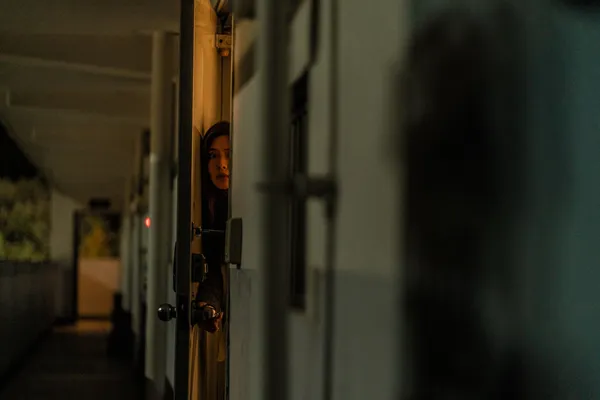

The concept of noise is a subtle one, in Korean as it is in English. It’s not just a high volume of sound. Rather, it’s the way sound interacts with our minds. It’s intrusive sound; it’s sound that baffles and obscures. Rather than magnifying a message, noise makes it harder to understand what’s being said.
Working with noise effectively requires an impressive command of the cinematic art. Most directors develop their craft through a fascination with narrative, characters or visual elements; it’s a rare individual who has a strong understanding of sound design. To tell a story about the distress caused by noise is to rusk putting viewers through something similar. brief bursts of this can be very effective – like, for instance, James Wan’s use of a burglar alarm in Insidious – but too much and people will just stop watching, or even warn one another not to start. It takes skill to communicate noise without viewers having to endure it.

In the opening scenes of this Fantasia 2025 hit, director Kim Soo-jin gives us waves of sound which are uncomfortable in a variety of ways but only brief. We understand them to be something more intense because of the reaction of Ju-hee (Han Soo-a), a young woman who is frantically trying to attach soundproofing materials to the ceiling of her apartment when they begin to intrude. She displays the frantic emotions of someone who has been trying to cope with excess noise for far too long – someone who hasn’t been able to sleep or even to relax in her home. Having set the stage like this, Kim has no need to labour the point later on.
We spend most of the time that follows in the company of Ju-hee’s sister, Ju-young (Lee Sun-bin). The two used to share their home at 604 Samil Apartments, having supported each other following the accident that killed their parents, cost Ju-young her hearing and left Ju-hee with a permanent limp, but they haven’t always got along, and since getting a job in a factory, Ju-young has been living in her work dormitory instead. She returns upon hearing that her sister has gone missing and, when the police fail to devote much attention to the case, decides to investigate on her own. In this she is aided by Ki-hoon (Kim Min-seok), a young man who introduces himself as Ju-hee’s boyfriend, but finds opposition coming from the homeowners’ association, whose members are concerned that she will damage the reputation of the building at a point when they are awaiting approval for reconstruction work.
There are, in fact, multiple reasons why the building’s reputation might be called into question, not least the spectacular accumulation of trash in the basement, which has been left to rot because nobody wants to pay to have it taken away. There are also problems with noise throughout the building, driving some of its residents into a frenzy. Lack of sleep is a major contributor to psychosis in otherwise healthy people, and not long after she returns, Ju-young is threatened by a man who thinks she must be responsible for the noise. There are rumours of past violence associated with it.
Anybody familiar with the housing situation in South Korea’s major cities will understand where this is coming from. Living space is at such a premium that many people settle for conditions which are objectively terrible, and noise in particular is a problem due to an architectural style which favours concrete, large panes of glass and wooden or stone-flagged floors. Though Kim’s film builds on this to create an unnerving thriller which also draws in elements of folk belief, the essential ingredients are ones that most urban Koreans will relate to.
For Ju-young, of course, the noise problem is complicated by her deafness. A next generation digital hearing aid which she can adjust from her phone helps her to communicate with others whilst managing noise levels, though she remains vulnerable to unexpected volleys of sound. The way the sound designer creates a landscape of silence is particularly impressive. Lee’s performance might seem to be a little too normative to make sense in light of her character's difference, but a moment towards the end of the film when she converses in sign language with a Deaf child has an intimacy that is absent elsewhere, and we can sense her relief as she is really able to be herself – even if the content of the conversation is disturbing.
As a thriller, the film is stylistically conventional but well handled, with a sense of creeping dread interspersed with emotional outbursts. There are a few small plot holes but for the most part it holds together well, and Kim very effectively conveys the different types of desperation that characters are feeling. The building itself becomes a character, to the point where one might imagine the noise problem as its own scream of protest. Although there are moments when viewers might find the sounds they hear distressing, most will not find it difficult to bear with this, and will find plenty to reward them.
Reviewed on: 20 Jul 2025


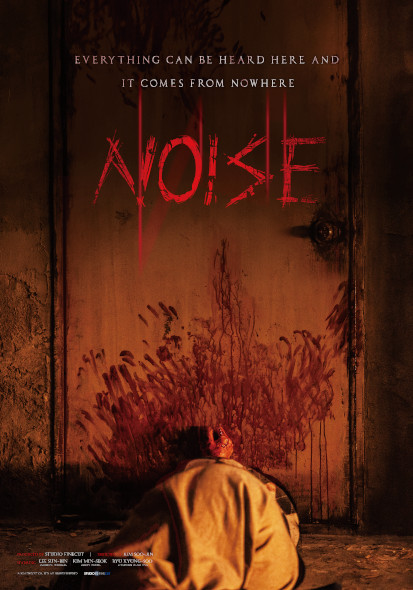
Director: Kim Soo-jin
Writer: Lee Je-hui
Starring: Lee Sun-bin, Han Soo-a, Kim Min-Seok, Ryu Kung-soo, Jeon Ik-ryeong
Year: 2025
Runtime: 93 minutes
Country: South Korea
Search database:
