





Eye For Film >> Movies >> The Cure (2026) Film Review


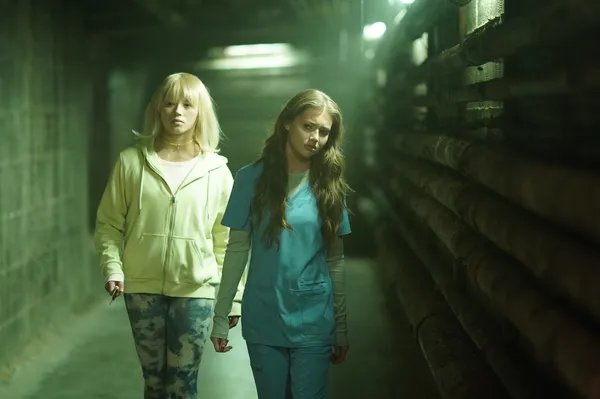

“How do I make friends?” Ally (Samantha Cochran) asks her computer. By the time she’s finished whittling down its suggestions by explaining what she can’t do, it’s recommending that she seek companionship from a pet snail.
It’s never a simple thing to live with serious illness when you’re 16, especially if you have the complication of being immunosuppressed, so that you need to be careful about the ways you mix with other people. Having rich parents makes a lot of practical things easier but if anything it worsens Ally’s isolation, because it’s easy for them – Jeff (David Dastmalchian) and Georgia (Ashley Greene) – to keep her secluded at their remote beachside home, where only boring middle aged professional people come to visit. So when, one day, Ally sports a group of other young people chilling out in the little cove at the foot of the property, which they don’t seem to have realised is private, she sneaks out to introduce herself. It’s the start of a messy but vibrant friendship with local girl Brooke (Sydney Taylor), which will change her perspective on a lot of things – including her illness itself.

What exactly is this illness? It’s apparently supposed to be lupus, but the way in which Ally’s hair has thinned is more suggestive of radiation treatment. She frequently complains of feeling awful, but in a very generic way, and though she walks with a stick, there’s no indication that her joints hurt or that she’s experiencing any swelling. As someone who has had lupus for over three decades, I was not convinced. Several design elements give the impression that it was supposed to be cancer but the script was altered at the last minute. Similarly, a scene in which two characters turn out to be older than expected flops because the ages given are comfortably within the actors’ playing range, so one finds oneself wondering if the roles were intended to go to younger people. Then there is a scene in a swimming pool in which we witness an inexplicable and unconvincingly presented instance of aquatic distress. All of these things will, in turn, weaken other elements of the story.
The most effective scenes in the film come early on. The girls’ relationship is well realised, both narratively and in the performances. Dastmalchian, in unusually restrained mode, brings emotional complexity to the role of the father, which withstands the heavy-handed direction. As the massive power imbalance between the characters comes to the fore, the film is chilling in ways that extend beyond the immediate narrative. The obviousness of some parts of the narrative shouldn’t matter too much because the real interest lies in Ally’s psychological adjustment and the uncertainty around what – if anything – she can do to protect herself.
There are all sorts of interesting ways this could have been developed. A sudden act of self-destructive aggression from our heroine towards the end reminds us that we don’t really know much about her or what lessons she might have learned from her dysfunctional family. Another character who appears to be a doctors of some kind and possibly also a monster – he is at least perceived as monstrous – wanders around doing nothing in particular, like the remnant of an abandoned subplot. Problems are always dealt with in the least subtle way possible, by characters and screenwriters alike. The final act is a mish-mash of clichés, all handsomely shot but abandoning any attempt at narrative coherence, so that for all its grand gestures it just fizzles out.
Reviewed on: 17 Jun 2026


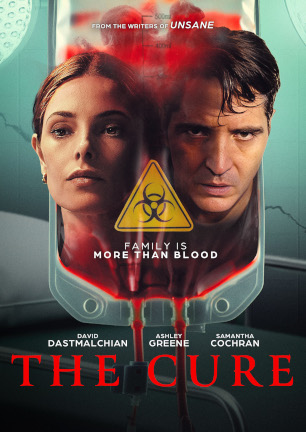
Director: Nancy Leopardi
Writer: Jonathan Bernstein, James Greer
Starring: Samantha Cochran, David Dastmalchian, Ashley Greene, Sydney Taylor, Tyler Lawrence Gray, Alex Veadov, Marisa Echeverria
Year: 2026
Runtime: 91 minutes
Country: US
Festivals:
Search database:
