





Eye For Film >> Movies >> Tape (2025) Film Review


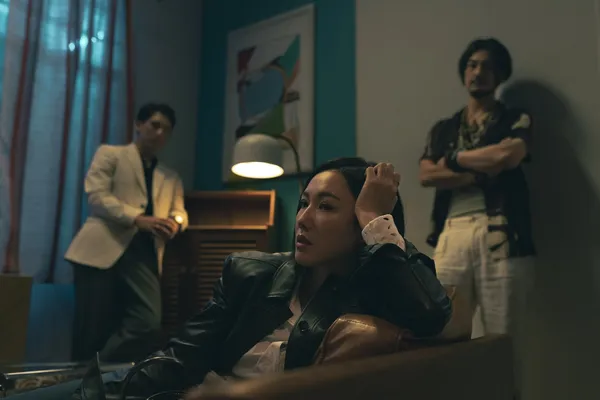

A lot has changed in the past 24 years, so that as tightly written as Stephen Belber’s play is, aspects of it play quite differently now from the way they did in the Richard Linklater version. By giving it a different cultural context too, writers Selena Lee and Lo Lok-yung have created something fresh and engaging, whilst director Bizhan M Tong opens up the setting and lets in more light, giving viewers more room to breathe whilst making his characters seem more exposed.
They have kept one of the names: Jon is the chosen name of the successful film director formerly known as Chong-ho (played by Kenny Kwan), much to the amusement of his former high school friend Wing (Adam Pak). They are meeting in a Hong Kong AirBnB. Jon doesn’t really know why, figuring that it’s just an opportunity to catch up after 15 years apart. But as viewers might guess from the opening scene (unlike its predecessor, this film is bookended with flashbacks to graduation night on a beach), Wing wants something – a confession regarding just what happened that night between Jon and the girl they both liked, Mei-mei.

The first two thirds of the film play out as a two-hander. Because Wing is a small-time drug dealer perpetually getting high on his own supply – or at least wanting to give Jon that impression – Tong has a good excuse to keep him moving around the spacious set, which helps to energise the situation, whilst intermittent glances at the apartment door, which Jon can never quite get to, maintain the sense of claustrophobia. Technological changes since the play was written also expand his options. Wing can have as many cameras as he likes, but controlling them from his phone means there’s still an object for the men to focus on. The ethereal nature of today’s recordings also implies that the truth, though real, might be mutable. This may, in fact, be the last time the play can make sense unless framed in an explicitly historical context, as AI is reshaping perceptions of such material.
Tape is, of course, in large part about perception and interpretation. When Mei-mei appears in the third act she immediately destabilises Wing’s confidence in his own. Co-writer Selena Lee very much makes the role her own, giving her character a lot more agency and an emotional depth in relation to her experience on that fateful night, which exposes the shallowness of both men’s understanding. Who is Wing really doing this for? What might Jon hope to get out of an apology? And, crucially, who gets to define what happened? We see the hurt on her face, but she refuses to be driven by emotion, taking ownership of the situation and changing the meaning of the recording.
This latter part of the film is complicated by a social context quite different from that in which the play was written. Wing makes reference to #MeToo and Western feminism, looking at the situation in black and white terms, but for Mei-mei, who works as a state prosecutor, it is both more nuanced and more susceptible to external framing. In Hong Kong, being a victim of sexual violence is still heavily stigmatised, and she isn’t willing to have that stigma imposed on her by a would-be saviour. Where Wing argues from a position of morality (though she notes that he may be driven by ego), and Jon’s attempts to defend or excuse himself are rooted in the cultural, Mei-mei is concerned with the practical, and unwilling to let the men determine what she has to live with.
Whilst every bit as satisfying in its cleverness as the Linklater version, Tong’s adaptation succeeds in getting beyond the mechanics of debate and fully acknowledging the emotional dynamics at play in all three of the characters. The final shot, which takes us back to that beach and lingers on Mei-mei’s face as she looks at Jon, just before it all goes wrong, is heartbreaking.
Reviewed on: 18 Sep 2025


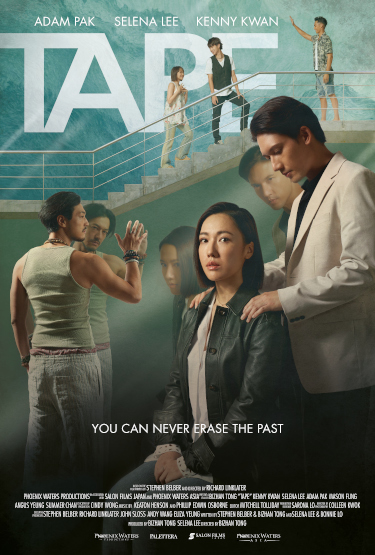

Director: Bizhan M Tong
Writer: Stephen Belber, Selena Lee, Lok-Yung Lo
Starring: Adam Pak, Kenny Kwan, Selena Lee
Year: 2025
Runtime: 110 minutes
Country: Hong Kong
Festivals:
Search database:
