





Eye For Film >> Movies >> Odyssey (2025) Film Review


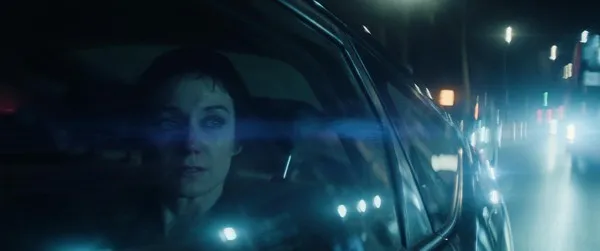

Despite screening as part of Frightfest 2025, Gerard Johnson’s Odyssey is not horror in the usual sense, though it contains some truly horrific scenes towards the end. It’s closer in style to the gangland thriller, with noirish elements. In the first half, the scariest things by far are the price of private dentistry and London rents. What Johnson does like to do, however, is to make his audience uncomfortable. Opening with dental work shot in the first person is an effective way to do that and to set the scene for what follows when estate agent Tash (Polly Maberly) responds to her card being declined by doing a runner. The truth is, she knew that her card was over its limit, and all her other cards are too.
Running around London trying to impress clients, rent out flats and seal the deal that she thinks will give her company a shot at the big time, Tash is up to her eyeballs in debt and all out of cash. “That’s okay, it’s all covered,” she tells young intern Dylan (Jasmine Blackborow) flippantly and unconvincingly when asked about expenses, but everybody she knows is owed something. Her harried staff are running out of patience. She’s a skilled fast talker,quick-witted and decisive, at least with aid of cocaine, which she persistently manages to acquire; and she’s possessed of a certain glamour that beguiles less confident individuals. nevertheless, her ship is sinking fast. She has ongoing dental pain which she can’t resolve, because she can’t go back, and she has found herself beholden to a loan shark who is, in his turn, caught up with some very scary people.

Fast-paced and always on the edge of disintegrating into violence, this is a film that will not allow its audience to settle. Every aspect of Tash’s day is either an opportunity or a crisis, and sometimes both. She’s not as smart as she thinks she is, but viewers are kept so close, so bound up with her mindset, that it’s easy for anyone to become dazzled too, unable to see clearly. She’s frequently obnoxious, but Maberly makes her so charismatic that her adventures and misadventures make for compulsive viewing nonetheless.
There’s no room for hesitation or sentimentality in the brutal world that Johnson presents – a world in which acts of kindness rarely go unpunished, and in which there is barely a hair’s breadth between legitimate commerce and organised crime. It’s also, notably, a world in which most significant players seem to be living the way that Tash is, acting on instinct without much real clue what they’re doing, their survival dependent on how far they’re willing to go. We root for Tash not for any moral reason but because of her remarkable fortitude and courage – even if some of that is nasally ingested. She’s a monster, but she’s our monster, and it’s easy enough to relate to her desire to carve out a piece of this world full of monsters for herself.
Johnson manages the pacing superbly and makes good use of intermittent blurring and tonal shifts when Tash spends the night rushing round London’s scuzziest bars looking for favours. The routine exploitation of women in these spaces feels different in the presence of a female lead, adding to our awareness of her vulnerability, and the occasional brittleness that becomes apparent during moments of doubt is something she gets away with only because her precociousness amuses those with more power. An original soundtrack by The The contributes significantly to the atmosphere. There’s a great supporting turn from the always impressive Sallieu Sesay, and Maberly herself is unforgettable in a gem of a role. We are a long way from Emmerdale Farm.
The ending of the film may disappoint some viewers. There is a extent to which it relies on a deus ex machina, but in fact we get little hints of this all the way through. Tash’s story is not really the rags to riches tale that she tries to present it as. She has always had certain privileges; though she wants everyone to think that she’s independent, they are there to fall back on. Johnson is presenting us not only with the viciousness of modern capitalism, but also with the underlying power structures built atop centuries old systems of class. Dark as things get in the final scenes, the real weight of abuse and exploitation remains offscreen. A kindly decision on Tash’s party is not an indicator of some recovered humanity, merely an expression of impunity.
Reviewed on: 28 Aug 2025



Director: Gerard Johnson
Writer: Austin Collings, Gerard Johnson
Starring: Polly Maberly, Mikael Persbrandt, Jasmine Blackborrow
Year: 2025
Runtime: 110 minutes
Country: UK
Search database: