




Eye For Film >> Movies >> Making Marie Antoinette (2026) Film Review



In 2005, Sofia Coppola made her masterpiece, Marie Antoinette. At the same time her mother, Eleanor Coppola, shot almost 80 hours of video. There’s far more to this than the average behind the scenes featurette found on Blu-rays. It’s an in-depth portrait of the production, a rare opportunity to see how a film on that scale is put together. There are interviews with key crew members and stars, a glimpse into their process, and an intimate record of Sofia’s own journey as a filmmaker. At the same time, it provides a rare insight into the work of Eleanor herself. Having spent her life surrounded by filmmaking without participating herself, she is proud to see her daughter taking steps into what was then an almost exclusively male realm. She would go on to become the oldest woman ever to make a first film, at 80, and would make several more prior to her death in 2024.
Eleanor narrates parts of the film by way of her journals, with Diane Lane reading out her words. It’s documented by shots of Kirsten Dunst sitting patiently in a bath, almost motionless as her hair is sculpted and sprayed, looking like a porcelain ornament. Nearby, one of the long outer corridors of Versailles is lines with supporting players and extras having their make-up and hair done. The team was given unprecedented access to the palace by the French government, we are told, and it is clear that out of necessity it has become warehouse, dressing room, green room and much more. Constant changes of appearance are required to make the courtiers look realistic. Costume designer Milena Canonero made 72 original dresses for Dunst alone and it‘s getting people in and out of their elaborate garments between scenes that represents the biggest risk of delay to the production.
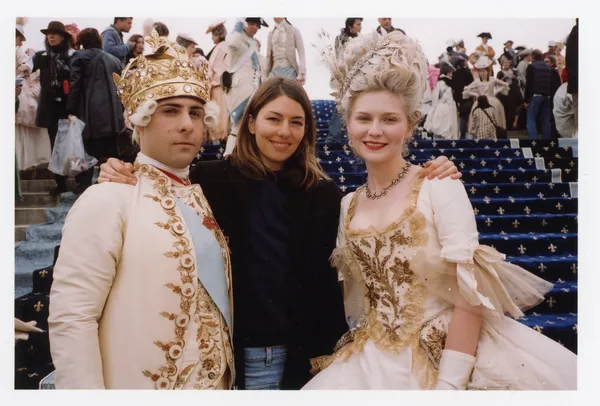
One might think that overseeing something like this would require a military mind and demeanour. “Sofia looks too small and unprepossessing to be the director of a £40m movie,” Eleanor worries – and yet she watches her daughter take control. Not the type to shout orders, Sofia instead gets to know everybody on the set, welcoming their ideas and making them feels valued. Dunst says that she thinks of her like a big sister. Still, a clear vision of how the film should develop is maintained. Sofia is delighted by cinematographer Lance Acord’s work, but when he wants a scene of flirtation to include a young man’s perspective on the young queen, she puts her foot down. It’s a telling moment, with echoes elsewhere. This is Marie Antoinette’s film. She is the subject; we do not need to know how she is objectified. History has done enough to that. If she likes the look of a man, she will enjoy him, and there is no need to balance or justify that.
The weight of the film also falls on Dunst. It’s the first time she has been in every scene, something she didn’t really take in until she got to the set. Even during her breaks, Eleanor’s camera is on her, and other people are snapping pictures. In many ways it seems like perfect preparation for playing a woman who was herself under constant observation. She remembers what it was like to become famous at a similar age, and to try to keep her head straight in dizzying circumstances. Humour helps. In bed next to Jason Schwartzman, who plays Louis, she offers to snog him to impress his girlfriend, who is a big fan of her.
It was realising how young Marie Antoinette was when it all began that really fascinated her, says Sofia, who is also fascinated by the logistics of the court and her heroine’s ability to adapt and understand them. Though one imagines that the places smells better today, in other respect she makes every effort to keep it real. Where most productions use dried or artificial flowers, she fills hers with living blooms, positioned by a master flower arranger. The food is genuine too – it can all be eaten, she insists, though Dunst thinks some of it looks revolting. Less traditional is the music, and the documentary makes use of some of the songs from the original film – Crimson And Clover, I Want Candy and so forth – which yet perfectly fit the mood. Sofia does not seem to have fully grasped the irony present in the New Romantic movement, nor the influence of pantomime (an art inscrutable to many Americans), but her particular choice and placement of tracks in the film meant that it still worked for her.
One of the unspoken challenges presented by Versailles is all those mirrors. They must have made Marie Antoinette keenly aware of how others saw her. At one point Eleanor catches a glimpse of herself in one of them, and realises that she had forgotten how she looks in her gear. Suddenly she is more than Sofia’s concerned and helpful mother. She sees herself as a filmmaker. The subject recognises the object, and the documentary finds its point of focus.
Reviewed on: 23 Oct 2026


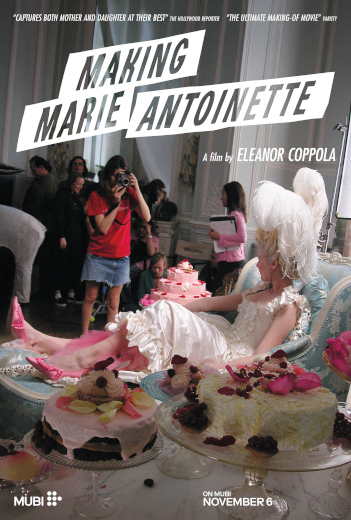
Director: Eleanor Coppola
Starring: Diane Lane, Sofia Coppola, Kirsten Dunst, Jason Schwartzman
Year: 2026
Runtime: 86 minutes
Country: US, Italy, France
Search database: