





Eye For Film >> Movies >> Lover, Not A Fighter (2026) Film Review

There is no dignified way to grow up. Fumbling, failing and living with uncertainty are parts of our lives, however convincingly everyone else seems to be managing. Among an emerging Czech-Slovak new wave, Slovak director Martina Buchelová’s feature debut, Lover, Not A Fighter, approaches these experiences through Gen Z characters whose vulnerability survives even their most ridiculous behaviour.
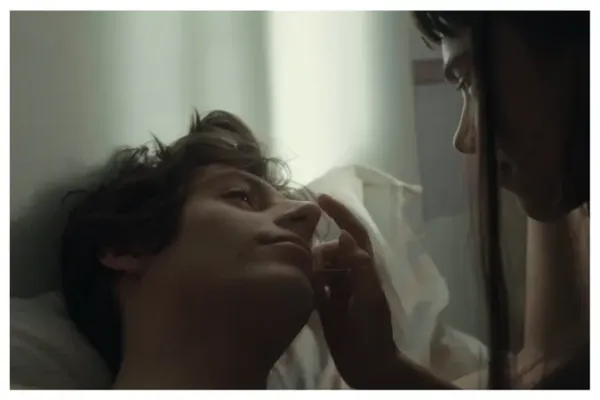
Growing up looks messy here, but being lost together offers its own comfort. Andrej (Adam Kubala) plans to spend the summer helping his grandmother (Jaroslava Pokorná) and staying out of trouble, preferably sober and safely out of trees. Then a conversation over Fanta with Miša (Michaela Kostková) complicates things. Their hesitant romance offers both acceptance, even at their most awkward, without requiring either to become someone else.

Buchelová divides the film into chapters, introducing characters and returning to Andrej’s past. These interruptions resemble someone telling family stories, drifting away from one person to explain another. An encounter with Andrej’s father and his much younger girlfriend comes with the caption: “Andrej’s father is in debt. And also in love.” The blunt afterthought makes his troubles sound like family gossip, briefly turning him into the subject of his own little comedy. The adults, evidently, are no better at managing their lives. Such detours can feel abrupt, but they suggest that everyone around Andrej has a messy story worth telling.
Kubala gives Andrej enough charm to remain good company even when he becomes irritating. Sprawled out watching TikToks or loudly chewing apples, he seems happy to let life happen around him. His carelessness can be exhausting. Yet when faced with sudden illness in the family, something changes. Looking after those around him, Andrej becomes calm and capable. Kubala makes that shift convincing without turning it into a grand announcement of maturity. The boy who seemed unable to manage himself knows how to care for others when it matters.
A quieter scene finds his young neighbour asking for advice on confessing his feelings. Distracted by his own difficulties with Miša, Andrej is hardly qualified to help. But he listens. The scene gives the boys room to be unsure together, allowing their feelings to matter without making embarrassment the punchline.
Cinematographer Adam Mach’s handheld camerawork and close-ups lend these encounters an almost documentary intimacy. The vertical, social-media-style footage is less convincing. Uncertainty about who is filming, and why, distracts from the people being filmed. What should feel spontaneous begins to look arranged, weakening the closeness the performances have established.
When everything else fails, there is always the emotional support tree, right?
Even familiar comforts have a way of letting us down. Luckily, the people around Andrej offer their own kind of reassurance. Their company makes the film’s unevenness easier to forgive, even when its meandering tests that goodwill. Nobody has much figured out, but they keep finding reasons to try. Spending time with them feels like a hug from an imaginary emotional support boyband, absurd, reassuring, and perhaps something everybody needs from time to time.
Reviewed on: 13 Oct 2026


Read more Lover, Not A Fighter reviews:
| Boldizsar Forro |   |
Director: Martina Buchelová
Writer: Martina Buchelová
Starring: Adam Kubala, Michaela Kostková, František Beleš, Jaroslava Pokorná, Marián Mitaš, Mia Sofia Arpášová
Year: 2026
Runtime: 107 minutes
Country: Czech Republic, Slovakia
Search database: