 |
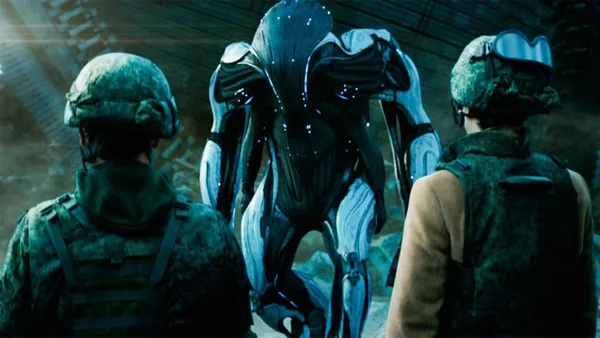
| 'The alien's exoskeleton was a long job. We made a clip where we found the movements of various animals, insects and snakes and selected the movements we liked' Photo: Art Pictures |
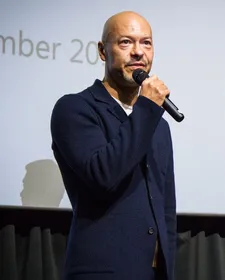 |
| Fedor Bondarchuk Photo: Denis Ishtokin |
As part of the first FIPRESCI colloquium on Russian cinema in St Petersburg, actor-turned-director Fedor Bondarchuk took part in a Q&A about his film Attraction. The Russian blockbuster, which was a box office hit in his home country and opened London's Russian Film Week this month, tells the story of alien Hijken (Rinal Mukhametov) who gets into trouble when his spacecraft is shot down over Moscow. As he tries to recover a vital part of his ship, he enlists the help of teenager Yulya (Irina Starshenbaum), who also happens to be the daughter of a high-ranking army colonel (Oleg Menshikov). As the attraction between the Yulya and Hijken grows, so do the problems with Yulya's boyfriend Artoyam (Alexander Petrov), who - in scenes recalling right-wing protests across Europe - begins to rally a mob. The film is notable for its slick CGI, including a shape-shifting, durable exoskeleton armour worn by Hijken and a crashlanding sequence that wouldn't look out of place in a Michael Bay movie.
How hard was it to obtain the permits to shoot the film?
Believe me it's very very difficult to obtain the permit for the military transport to circulate around the centre of Moscow. Imagine military helicopters, for instance. Most of what you see, 50 per cent is CGI and modelling but some of the sequences are actually filmed and for that we received special permits, which required a lot of support.
So much of the film was CG. Who were the primary contractors - was it in Russia?
It was made by a Russian company that is called Main Road Post and two years after Stalingrad and the showreel they did for me, they became one of the top 100 companies globally. However, the engine for the alien, this was made by one US guy.
The alien's exoskeleton was a long job. We made a clip where we found the movements of various animals, insects and snakes and selected the movements we liked. Then we sent the selection to the US and we had a very funny video, where our specialist in the US is running around the studio wearing plastic tubes on his sleeves, trying to imitate the movement of this thing that he was meant to design. It was a long road, but when the skeleton's idea was mostly created, the rest we developed in Moscow. The same goes for the sound design because this field of the industry is not so well developed in terms of post-production here. We have very few specialists in that field in Russia. We worked very fruitfully with Dave Whitehead, who also worked for District 9 and when he was working with us, he received an Oscar for his work on Arrival.
How many days of shooting were there?
Sixty days for the main crew and 20 days for the action crew. Then a year in post-production.
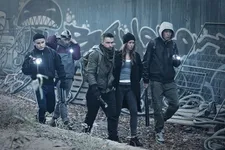 |
| 'The district of Chertanova appeals to me visually because it was built specifically for the Olympic Games and it was built as a Utopian futuristic perfect neighbourhood' Photo: Art Pictures |
There was a film, produced by Lenfilm, by Lopushansky, called Ugly Swans [2006] - I believe it was a special film. Also, I directed the film Inhabited Island (Dark Planet: Rebellion) back in 2008. That film was two years in the making and it was a quite difficult work because 10 years ago the industry was not as developed as it was now. The same company, Main Road Post, which has now reached full capacity, had only just started then and we had to start from scratch. But the Strugatskys are widely discussed and often considered in any sci-fi project.
A lot of these young adult films in the US are modelled to become franchises or spin-offs - do you make this film with similar intentions?
Yes, we are now planning and already working on the second part, which will be the second and last instalment of this series and it will be released in 2019.
You said you wanted this movie to touch on some things that are present in society today - and I wondered if you could talk a bit about the idea of mob rule in the movie, the community almost turning on itself?
The first draft of the film was received by me, as a producer, and this script appeared more or less in connection with events that took place in 2013, the Pirodova riots in Moscow - those were ethnic-related riots there - and sometimes things like that still happen in the city where I was born and grew up. You could see in the footage reel in the film, we used some of the actual images from the newsreel at that time.
Does that have to do with the Chertanovo region. It's mentioned a lot in the film, can you talk a bit about the importance of situating the protests in that area?
The district of Chertanova appeals to me visually because it was built specifically for the Olympic Games and it was built as a Utopian futuristic perfect neighbourhood with full infrastructure, so for me it really stands out. When we were selecting, I thought of Chertanova in this sense. Also, when I was a student of the USSR institute of cinematography we would go there and practice. To me, it stood out. It's funny now, since the film premiered, there are a lot of gyms, shopping malls and even residential buildings that are called Attraction.
Attraction will be released in the UK and US in January, distributed by Sony