





Eye For Film >> Movies >> Kagemusha (1980) Film Review


With the advent of the fantastic effects of Crouching Tiger, Hidden Dragon and the gore of Battle Royale, it is easy to forget that there is another, more regal strand to Asian cinema, retelling real or imagined histories in an epic style and relying on the sheer weight of crowd scenes for dramatic impact.
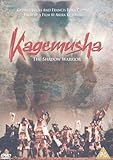
Akira Kurosawa's Kagemusha is one such film. Set in mediaeval Japan, the warlords are getting restless and fighting for their share of the land. The most powerful, Shingen Takeda (Tatsuya Nakadai), is mortally wounded in a sniper attack, but, determined that his dynasty should live on after his death, instructs his inner circle to pretend that he is still alive, with the help of a double, Kagemusha (Tatsuya Nakadai).

However, the lookalike replacement comes with his own set of problems. He isn't from noble stock - far from it. He is a petty thief.
It falls on him, therefore, to convince, not only his enemies, but also his family, that he is the living lord. No easy task, especially since Shingen's son feels cheated and is desperate to see him fail.
This film is as much about man's humanity as it is about fighting in ancient Japan. We live with Kagemusha, as he attempts to subjugate his own personality. Nakadai brings different qualities to his dual role, so that you genuinely feel that you are watching two separate individuals.
Kurosawa prompts us to ask ourselves, what would you do with a sudden change of fortune? Do you need to be born of the upper-classes in order to be noble? It is a mark of the film's quality that although these questions are familiar to an audience, reared on mistaken identity movies and plays by Shakespeare, that you still feel the need to address them again and become swept up in the actions of this reluctant hero as he charts his tragic course.
The movie has an epic spread, so be prepared to give up your time for the long haul. Despite its length, it never drags. Kurosawa has an eye for the big canvas.
Reviewed on: 05 Jul 2002



Director: Akira Kurosawa
Writer: Masato Ide, Akira Kurosawa
Starring: Tatsuya Nakadai, Tsutomu Yamazaki, Kenichi Hagiwara, Kota Yui
Year: 1980
Runtime: 179 minutes
BBFC: 
Country: Japan
Festivals:
Search database: