





Eye For Film >> Movies >> The Zombie Diaries (2006) Film Review
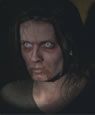


As a global virus hits Britain, rapidly turning those it infects into flesh-eating zombies, two men chance upon a documentary crew from London - now hiding terrified in the woods at night. Puzzled by the outsiders' camera, one of the locals comments: "It sounds like my kind of film."
Anyone who has sought out a film entitled The Zombie Diaries is likely to agree - but in the three episodes that make up Michael Bartlett and Kevin Gates' feature debut, it is the constant, intrusive presence of a camera that will ultimately leave all viewers a little perplexed. Like The Blair Witch Project (1999), My Little Eye (2002) and The Collingswood Story (2002) before it, The Zombie Diaries turns its low budget into a virtue by incorporating its cheap, home-movie aesthetic into the very fabric of its story-telling.
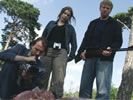
Here the rough-and-ready handheld video purports to be 'found' footage shot on the fly by three different groups caught up in the disaster. Yet what at first seems a refreshing vérité take on the whole zombie genre soon imports problems of its own, as you find yourself wondering why these people do not just drop their cameras while they hide, run and (eventually, inevitably) die screaming. Like any self-respecting apocalyptic horror made in the post-9/11 era, The Zombie Diaries duly references the collapse of the Twin Towers, rural livestock culls and bird flu epidemics - but it has another, more covert agenda, slyly satirising the Noughties obsession with documenting any and every aspect of experience for public consumption. This is horror well and truly updated for the YouTube/reality TV generation.
In the first episode, The Outbreak, four London documentary makers (Craig Stovin, Anna Blades, Victoria Nalder, Jonathan Ball) head off to interview a blighted Hertfordshire farmer, only to find themselves in the middle of nowhere with "strange dead things running around" - and there is something even worse awaiting them in the woods. In the second episode, The Scavengers, a married couple (Kyle Sparks, Alison Mollon) and an acerbic fellow-traveller with a video camera (Johnnie Hurn) drive around Southgate desperately looking for supplies and trying to get a clearer radio signal. In the third, The Survivors, a beleaguered group (Russell Jones, James Fisher, Imogen Church, Sophia Ellis, Will Tosh, Ralph Mondi) has managed to keep zombies at bay for a month, but starts unravelling when one member becomes infected and another is revealed to be more monstrous than any undead…
The Zombie Diaries may have lifted its digicam style and much of its plot from Danny Boyle's 28 Days Later... (2002), but this need not cause too much concern. After all, zombie films multiply and proliferate as fast as their shuffling subjects, always looking for some kind of new flesh to sustain themselves beyond their use-by date, and even Danny Boyle's vision of the UK overrun by ravenous braindead killers was itself a derivative reassemblage of zombie films past.
The Zombie Diaries, too, plays like an exhaustive compendium of zombie clichés: doom, desperation, depleting supplies, in-fighting, loved ones bitten, the living mistaken for the dead, the dead mistaken for the permanently dead, and humans mistakenly presumed to be less predatory and savage than their zombie antagonists. What is new here is the interweaving of different narratives to create a panoptic view of societal breakdown from the ground up – and this is enough, or almost enough, to help the film make a solitary stand against its bloodthirsty competition.
Even here, though, despite some unexpected connecting links that emerge between its three fragmented 'diaries', the overall film suffers from a lack of cohesion and economy. If, for example, it lost its middle episode altogether, The Zombie Diaries would lose little else save its claim to a feature-length duration (and one horrific, if traditional, sequence of zombies chowing down). Still, for all this mid-section padding, it is well worth hanging around for the climactic series of grimly bleak endings (plus ambiguous coda) - in which zombies prove easier to survive than the darkest part of the human soul.
Reviewed on: 13 Aug 2007


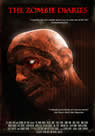

Director: Michael Bartlett, Kevin Gates
Writer: Michael Bartlett, Kevin Gates
Starring: Russell Jones, Craig Stovin, Jonnie Hurn, James Fisher, Anna Blades, Imogen Church, Kyle Sparks, Alison Mollon, Victoria Nalder, Jonathan Ball, Sophia Ellis, Will Tosh, Hiram Bleetman, Ralph Mondi, Leonard Fenton
Year: 2006
Runtime: 85 minutes
BBFC: 
Country: UK
Search database:
If you like this, try:
28 Days LaterThe Blair Witch Project
Diary Of The Dead
The Great Ecstasy Of Robert Carmichael