





Eye For Film >> Movies >> Marie Antoinette (2006) Film Review


Passionate, sensitive and misunderstood or an expensive waste of time - the same controversy which once surrounded the young Queen of France has now attached itself to Sophia Coppola's film. Relying on the viewer's existing familiarity with her story, Coppola has taken a big gamble, addressing a naturally vivid and dramatic subject through the medium of cautious touches and small glances. Hers is a film in which the audience are made to feel like eavesdroppers catching whispered court gossip. It relies entirely on its lead performance for an anchor. Fortunately, Kirsten Dunst is on stunning form. Though not everyone will be willing to play along, those who do will consider this a masterpiece.
Based on the book by noted historian and feminist Lady Antonia Fraser, Marie Antoinette follows the life of the young Austrian princess from the point at which she leaves her home to marry the Dauphin to the point at which both she and her husband must acknowledge that the revolution has come. Any exploration of events thereafter would be gratuitous, the emotional journey already complete.
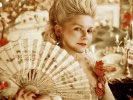
The focus of the narrative is on its heroine's isolation, her difficulty in adjusting to her strange new circumstances, her despair at her husband's lack of sexual interest (she must produce an heir or risk losing everything), her struggle to deal with her own passions and the impossible distance which exists between her life and that of the common people.
Her sex life has been sanitised to an extent, possibly to avoid still pertinent prejudice damaging audience sympathy, but strong visual imagery and Dunst's smouldering performance make it clear that her adulterous activities were more than just casual flings. Even at her most restrained she creates a sense of passion and power scarcely kept under control. As the staid, naif Louis, Jason Schwartzman is the perfect foil, his awkwardness gradually giving way to a deep-seated affection which reveals the complexity of the man behind the sun king's image. When the real Louis was locked in the Bastille, the philosopher Thomas Paine pleaded for his life with the words "kill the King, but spare the man". He could not have had a better advocate than Coppola at his side.
With its genuine Versailles locations and sumptuous costuming, Marie Antoinette is a feast for the eyes. Dunst looks ravishing in the title role. The sets are perfect, brilliantly detailed, with marvellous design work in food, jewellery, fans, wigs and shoes. Omnipresent anachronistic champagne glasses recall a popular myth about the wayward queen; her "Let them eat cake" line is mercifully well handled, acknowledging its falsity if not the reason behind it.
The supporting cast are all solid; Steve Coogan may be playing Steve Coogan, as usual, but the role he's been given means it doesn't really matter. But one of the most remarkable things about this film is the delicate political balance it strikes. It's impossible to watch this and not feel distressed by the thought of the young queen's ultimate fate, yet it's equally possible to understand how public resentment was occasioned. Making friends by finding a weaker figure at court to bully, playing games in her quaint little toy village whilst the real peasants starved, Marie Antoinette is not all sweetness and light - at the very least she might be held responsible for her failure to take a real interest in the people for whom she was responsible, or, indeed, in anyone beyond her immediate circle. By failing to make excuses for her in this regard, the film makes her all the more compelling, giving her a certain rawness despite her immaculate appearance.
The relationship which Coppola and Dunst built up whilst filming The Virgin Suicides pays off, as they seem to understand each other intimately, the one speaking directly through the other. Maybe it's not quite what audiences expected, but Marie Antoinette is a remarkable film, vast in scope, yet unfailing human.
Reviewed on: 19 Oct 2006



Read more Marie Antoinette reviews:
| Chris |  |
Director: Sofia Coppola
Writer: Sofia Coppola, based on the book by Lady Antonia Fraser
Starring: Kirsten Dunst, Jason Schwartzman, Steve Coogan, Marianne Faithfull, Rip Torn, Judy Davis
Year: 2006
Runtime: 123 minutes
BBFC: 
Country: USA
Search database:
