





Eye For Film >> Movies >> Reading Lolita In Tehran (2024) Film Review



Published in 2003, at a time when there was still some hope for reform, before Ayatollah Khamenei’s regime became replete with hardliners, Azar Nafisi’s memoir Reading Lolita In Tehran became an international bestseller and still has legions of fans. It comes to the screen at a time when the relationship between its author’s two countries is particularly messy, but this seems apposite, because despite the criticism Nafisi has received for being one-sided (a curious accusation to aim at someone’s personal reflections), what it has always done well is to humanise the people of the West Asian republic.
The majority of people who watch this film will not remember the way Iran was before the 1979 revolution; they may not understand why left wing intellectuals, including women, eagerly returned to their homes there once it was secure. As Azar (played by the always excellent Golshifteh Farahani) walks though the airport with free-flowing hair, make-up and a knee-length skirt, she gets a look from a security guard which mingles disapproval and puzzlement. She responds with something similar. This may be her homeland, but things have been changing fast, and there is an unexpected culture clash.

Like the book, the film is divided into four chapters, each named after one of the subjects of Azar’s university class. In the first, we see The Great Gatsby put on trial: is it an acceptable work of literature or does it promote immorality? In going along with this conceit, Azar signals her understanding of the cultural shift: she cannot simply condemn the notion of banning books and expect her class to concur with that; furthermore, she does not wish to give succour to the politics of condemnation, but, in encouraging even her most hardline students to question and engage with different ideas, she draws out a more sophisticated perspective in at least one of them.
The film charts the course of Azar’s life across two decades, as she leaves the university (rather than submit to mandatory veiling) and switches to holding private classes, with a women-only book group which mixes literary study with the opportunity to discuss personal problems in a safe space. As the new regime increasingly disempowers and objectifies women, these problems grow, male entitlement expressing itself first with jibes in the classroom, then with violence in the streets and, in due course, violence in the domestic realm. The women, as shocked at first as any citizen of a democracy would be, become subdued, exhausted by it all, and Azar likens them to Lolita, losing their sense of self as a new identity is imposed on them by others.
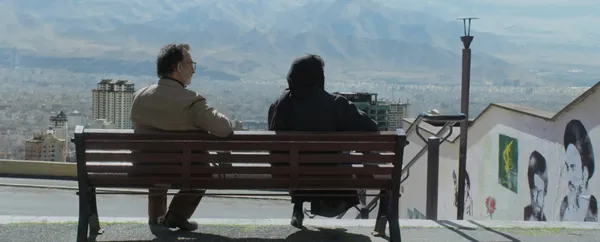
The literary analysis presented within the film is, as these brief summaries may suggest, somewhat limited, and those interested in the novels will find the film no substitute for a good local book group or online class. What we get works effectively enough as metaphor, however. Similarly, Azar’s experience, though it cannot possibly encompass every nuance of the complex political situation, is a powerful lens through which to look back at the first two decades of the post-revolutionary Iranian regime. Azar’s friendship with a former drama teacher, an older man with whom she enjoys a hint of flirtation which helps her continue to feel alive, allows for analysis, but the film’s strength lies in its quieter observations of change.
There is also a moment of magical realism in which both these characters seem to see a street as it used to be, their favourite bookshop surrounded by people coming and going, talking and laughing, a couple holding hands, only for the illusion to evaporate, forcing them to face the barrenness of what exists in its stead. Nabokov’s Speak, Memory changes hands and one cannot help but recall that author’s words about abysses of emptiness, here taking on a different tone as Azar begins to consider what else she might be doing with her life.
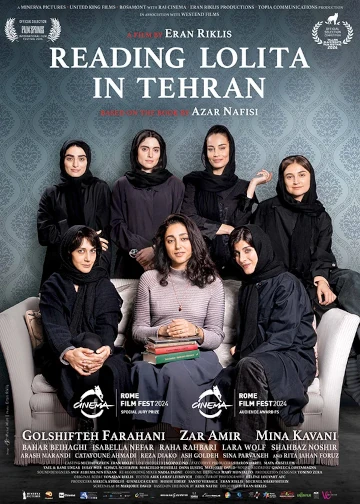
Farahani is not only a great actor: she is a generous one, and leaves ample space for those who surround her. The limited time we have to get to know the women in the book group is compensated for by a number of fine performances. This is most urgent with regard to Mina Kavani’s turn as Nassrin, who spent several years in Evin Prison; Riklis is careful to avoid exploitation with the few scenes set in Evin itself, so it is left to Kavani to put across the horror of the experience and show the way that it affects many survivors over time. Moments like this are more powerful precisely because the film avoids being grim throughout. We see violence but we also see a cinema audience laughing at a censor’s butcher of Tarkovsky’s The Sacrifice. What ultimately lingers is the absurdity and the unnecessariness of it all.
Reviewed on: 15 Jul 2026


Director: Eran Riklis
Writer: Marjorie David, Azar Nafisi
Starring: Golshifteh Farahani, Zar Amir Ebrahimi, Mina Kavani, Reza Diako, Arash Marandi, Catayoune Ahmadi, Sina Parvaneh, Lara Wolf, Raha Rahbari, Ash Goldeh, Isabella Nefar, Abbas Fasaei, Hamid Karimi, Bahar Beihaghi, Shahbaz Noshir
Year: 2024
Runtime: 108 minutes
Country: Italy, Israel
Search database:
