





Eye For Film >> Movies >> Put Your Soul On Your Hand And Walk (2025) Film Review


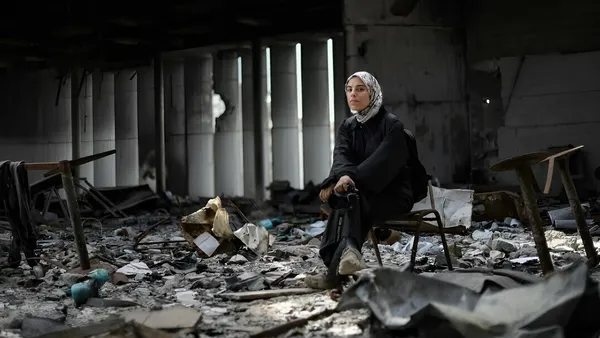

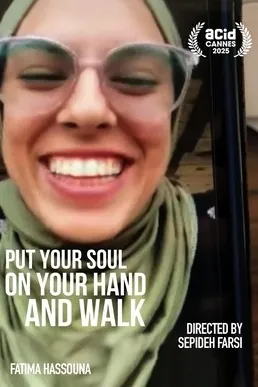
For most people in the West, the war between Israel and the Palestinian inhabitants of the Gaza Strip is a remote event; some are even under the illusion that the killing and mass suffering have now stopped. For those of us who continue to follow events there as journalists, speaking with people caught up in the middle of it every day, the experience is very different. Yes, one is traditionally supposed to keep a distance from one’s subjects, and setting boundaries is important for both ethics and mental health, but in an intense situation like this there is inevitably some personal involvement, and frequently, friendships develop. This is what happened to Iranian-born French filmmaker Sepideh Farsi, who chronicled her conversations with 24-year-old photographer Fatma for a documentary. This film captures both women’s experiences and, in the process, raises the question of how most of the world can turn away in an age when we have the potential to engage with people practically anywhere.
Sepideh and Fatma’s recorded conversations began on 24 April, 2024 – six months after the start of the war. By this point Fatma, along with hundreds of thousands of other Palestinians, has been forced to flee her home following its partial destruction by bombs. She and her family of ten are living in a single room with no water or electricity. Her uncle, aunt, niece and nephews, grandparents and four second cousins have all been killed, but she is determined to remain a positive person and seems, in the early stages of the film, genuinely happy, having made peace with her troubles. She is confident that things will get better sooner or later – not an unreasonable attitude in a country which has seen attacks come and go – and says that she’s unafraid of death.

This early part of the film is light and upbeat. One gets the impression that the situation is still novel enough for Fatma to feel a sense of adventure. Fireweed grows in the ruins, brightening them up with its purple blooms. The two women discuss details of their lives, and Fatma introduces her 20-year-old brother, Muhannad, who is shy and a bit overwhelmed because this is the first time he has encountered a foreign woman. Despite the unfamiliarity of these experiences, the world still seems to operate by familiar rules.
It can’t last. Fatma’s tone changes when the army enters Rafah and she sees it being destroyed. She repeats a phrase one often hears from Gazans these days: “I feel so tired.” From this time onwards, she looks increasingly fatigued, although we learn in due course that she is still involved in efforts to try to help those whom she considers worse off. Her brothers go out to gather water and wood for making fires. She helps to look after four-year-old Sahar and baby Hassam. Experts in famine will tell you that young children are the most vulnerable, but Fatma is sometimes too hungry to focus, longing to eat chicken.
The film doesn’t answer every common question that people have in this situation, but it does provide some context. In and around the women’s video calls are clips revealing a ground level view of the situation in Gaza. We see night shots when bombs are falling; a window (including the frame) smashed inside a bedroom; blue sky, pink curtains and broken glass. There’s a clip of a UNICEF worker talking about being denied the chance to distribute aid. Clips, too, of Benjamin Netanyahu blithely endeavouring to justify the actions of the Israeli Defence Forces – the organisation that he and his supporters continue to refer to as “the world’s most moral army.”
Put Your Soul On Your Hand And Walk premièred at Cannes 2025. Fatma was not there. There was a reason for that. Don’t expect a happy ending. Gaza has not had one yet. If there is to be any hope of that, it must begin with people bearing witness. Sepideh Farsi has helped to make that possible.
Reviewed on: 21 Jan 2026


Search database:
