





Eye For Film >> Movies >> Baab (2025) Film Review


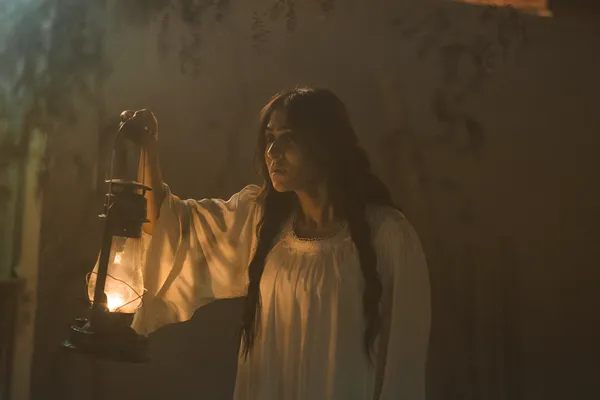

Things don’t so much burrow under the skin of the protagonist of Baab, as get inside her head. Wahida (Shaimaa El Fadul) is mentally reeling from the death of her twin sister Nisma, while also physically trying to cope with debilitating tinnitus, an episode of which at the start of Nayla Al Khaja’s stylish psychological thriller immediately immerses us within her headspace. Wahida bears another self-inflicted wound in the eyes of her mother Fatma (Huda Alghanem) – that of her divorce, which has sent Wahida and her teenage daughter Amal (Meera Almidfa) and son (Mansoor Alnoamani) back to live with her.
“A woman has nothing but the love of her children and, before her children, her husband,” Fatma tells her – a melancholy assessment about the cultural expectations if ever there was one and which is subsequently both challenged and confirmed by the film in various ways.

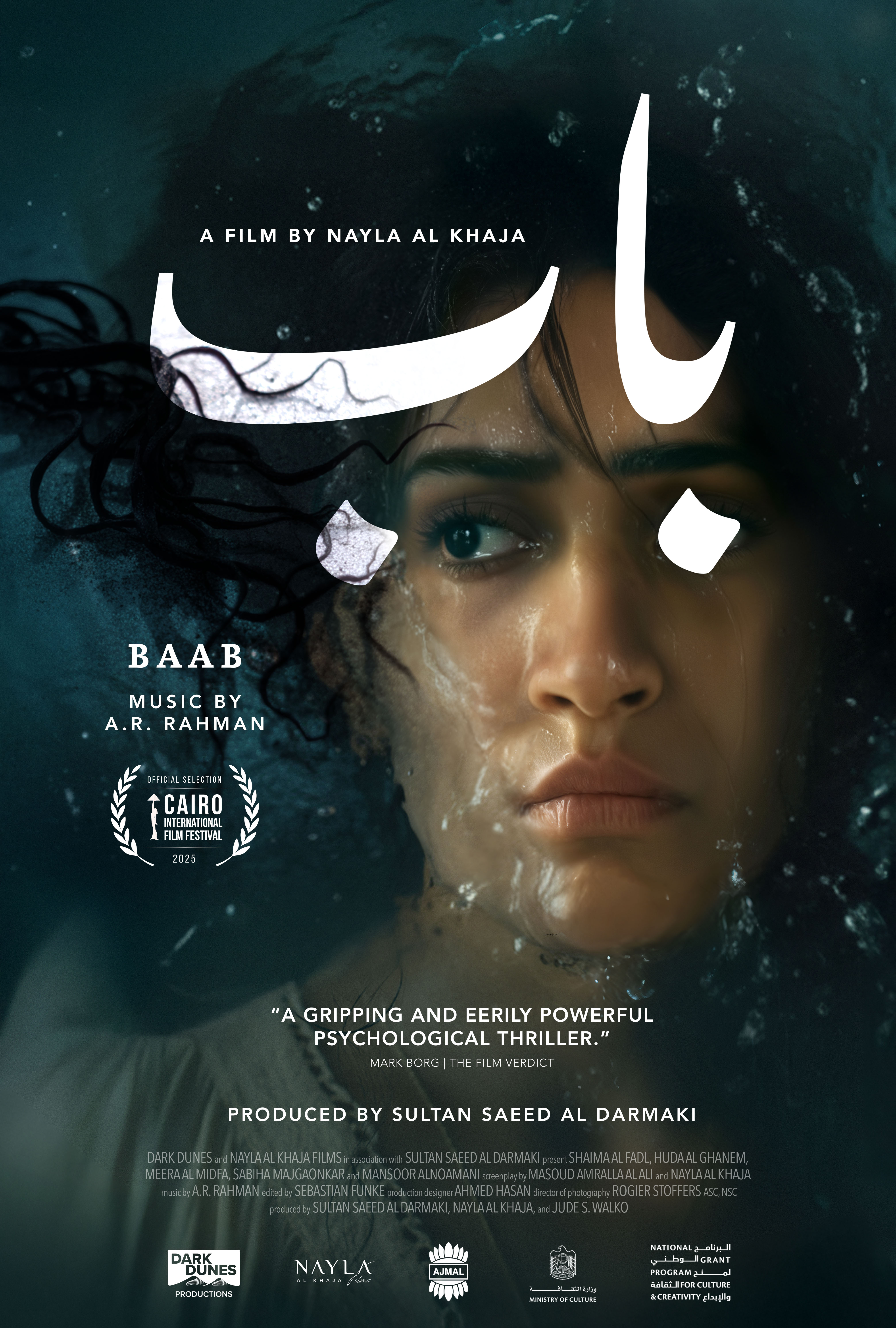
The title is the Arabic word for “door” and, sure enough, one that is coloured green – a colour in Islam often associated with life and renewal – takes centrestage. It belongs to Nisma’s old room and is kept firmly locked by Fatma, who forbids anyone to enter. A classic set-up then for a horror film, as it’s not long before Wahida finds a way of getting inside. There, sound again proves key as an old cassette tape holds voices that take Wahida into a nightmarish journey into the past.
While the storytelling element of Baab perhaps holds on to a little too much mystery for its own good, Al Kahja takes a confident but slow-burn approach that allows the various tensions to build. Everyday occurrences, such as a pet parrot’s repeated cry of “Nisma”, become increasingly unsettling in her largely confined world.
When the horrors of Wahida’s imagination bloom into full surreal life, they are well realised in terms of the visual effects, which join the recent body horror trend, but Al Khaja is arguably even more successful at bringing home the everyday pressures Wahida is facing from her mother, children and wider society. Whether what Wahida is experiencing is real or imagined doesn’t matter since we’re firmly wedded to her emotional journey no matter what. In that regard, the score from AR Rahman, which has a melancholic grace, helps to emphasise Wahida’s grief.
Al Khaja is a UAE pioneer, being the first female director and producer from the federation and with this and her debut thriller Three, she will hopefully help open that particular door for others.
Reviewed on: 09 Jan 2026


Director: Nayla Al Khaja
Writer: Nayla Al Khaja, Masoud Amralla Al Ali
Starring: Shaimaa El Fadul, Huda Alghanem, Meera Almidfa, Mansoor Alnoamani, Sabiha Majgaonkar, Elham Al Marzooqi, Mari Al-Halyan
Year: 2025
Runtime: 97 minutes
Country: UAE
Festivals:
Search database:
