





Eye For Film >> Movies >> The Mine (2025) Film Review



The digitally created dollshouse-like view of the mines in Jerada, Morocco reveals layers of stone cold mining tunnels. Animated miners work their way through the clandestine maze. Following the official closure of the Jerada mines in 2001, the locals continue to extract coal illegally. The pervasive soot and ever-present threat of collapse lie at the heart of Randa Maroufi’s Mine (L’Mina). For the audience at the Kutaisi International Short Film Festival, the film’s subject matter could hardly be separated from the ever-worsening working conditions in the mines of Chiatura, Georgia.
As the camera slowly pans through the painting-like replica of the mine, we hear the bodies brush against its narrow tunnels. Dwarfed by the mining structure, yet monumental as they crawl through the spaces and fill the frame, the miners appear both miniature and gigantic. The audience, scared to death, finds itself entombed along with the miners as the mine collapses. This reconstruction of the mining site offers a new perspective on the tragedy of mining labour. Watching miners become trapped within the layers of the set evokes a different kind of fear from that of films shot in the pitch black tunnels of actual mines. Paradoxically, the artificial space feels even more claustrophobic.
The camerawork grounds The Mine in raw reality. Specifically, it feels striking and authentic whenever the camera glides through the physical space rather than zooming in on staged details. As the camera slowly pans across the mine, it captures the slow rhythm of the miners’ labour. We, as viewers, linger with the miners as they carry out their monotonous routine tasks. In such sequences, the film’s cinematic qualities also come fully into view as the camera’s slow pans through the mine evoke cinema’s essence as an art of movement through space.
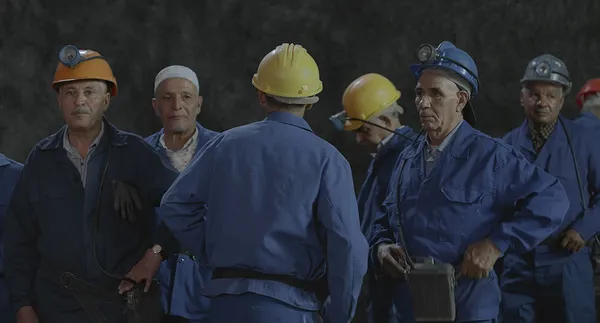
Yet as the camera zooms in on the mine, the life gets lost. The close-ups of the flesh-and-blood miners wearing pristine, spotless mining gear resemble men straight out of an advertisement for a mining company. The artifice of the grit, soil, and mining equipment, particularly apparent in close-ups, strips the subject matter of its specificity and context, making it feel less real. At times, this lack of specificity makes the film feel more like an art installation than a work of cinema, such as during the freeze-frames of digital 3D scans of the mining area that try to immerse us in the contemplative state of observing an art installation.
This artifice reaches its peak when the film cuts to a scene of miners and their families protesting with placards. Here, Maroufi seems unable to contain the gestures of protest (such as the raising placards and shouting) within the film’s stylised visual composition. These movements, normally simple and spontaneous, appear staged and become the most cumbersome element. With such an excess of artifice, the film becomes untrue to the reality it seeks to portray.
The 8mm family footage, showing miners’ families and children at play, offers a juxtaposition with the scenes that precede it. Its grainy, colourful images, in which people breathe and move freely and children play with stones, accentuate the constricted, claustrophobic spaces of the mine that we have just witnessed. Interestingly, this thematic juxtaposition also raises questions about the limitations of a filmic form itself. Does the footage, overflowing with life, just accentuate the artifice of the preceding scenes, or does its raw texture expose the limitations of Maroufi’s meticulously constructed visual world? It is for the audience to decide how successfully The Mine uses this friction between the two cinematic modes to bring its world to life.
Reviewed on: 23 Oct 2026