





Eye For Film >> Movies >> The Electric Kiss (2026) Film Review


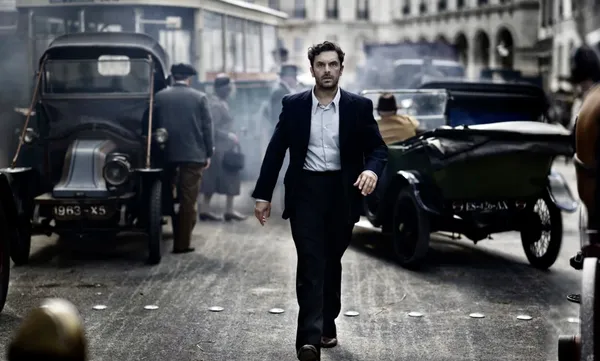

In the world of whimsical French romance, Amelie has cast a long shadow. But the films Pierre Salvadori’s Twenties-set ephemeral tale of a carny girl who may or may not find love most recalls is Cédric Klapisch’s The Colours Of Time, since it shares a (albeit more simple) dual narrative and sense of amour, and the more absurdist fairground tale The Magnet Man, though it lacks the latter’s visual distinctiveness. Still, this is a well set out stall of wish fulfilment that largely delivers on the deal.
Anaïs Demoustier is the girl in question, one of many attractions at a travelling circus, which has presently rocked up in Paris. She is Suzanne – or, when on stage, the “Venus Electrificata” – standing between a pair of Van de Graaff generators, her hands outstretched, and receiving a charge which is then transferred from her to male punters as they kiss her for a few coins a (snap, crackle and) pop.
She is saving what she earns in a bid to ultimately pay the owner Titus (Gustave Kervern) enough to secure her release from a contract but that seems a long way off, until she has a spot of luck. One night, as she sneaks into the neighbouring spiritual medium’s trailer to have an illicit drop of laudanum, the drunk and grief-stricken Antoine (Pio Marmaï) staggers in demanding she help him contact his dead lost love Irène, and won’t take no for an answer.
Turns out that Suzanne isn’t half bad at the spiritualist schtick and her patter restores the desire to paint in Antoine, an artist who has hung up his brushes since he blames himself for his lover’s death. When his art dealer Armand (Gilles Lellouche in fine form) gets wind of all this, he offers Suzanne a deal to keep up the deceit in return for more than she could make at the circus in a month of Sundays. She comes across diaries that help her tune in to the world of Irène (who is then introduced in flashbacks, played by Vimala Pons). Meanwhile, unsurprisingly, Suzanne is starting to fall for her mark.
Considering its familiar plot beats, there’s an awful lot of writing talent involved, with Benjamin Charbit, Benoît Graffin and Salvadori expanding an idea from Robin Campillo (120 BPM) and Rebecca Zlotowski (Emmanuelle). Still, the comfy narrative largely works due to the likeable cast and characters that push expectation a little – particularly Irène, who is fully fleshed out as a smart cookie in her own right. The chemistry between Demoustier and Marmaï is at least one Van de Graaff’s worth and Lellouche’s Armand has a playful ambivalence that works well.
If the last act becomes a little laboured by multiple endings, this is nevertheless spirited crowdpleaser and a pleasantly warm-hearted opener for this year's Cannes Film Festival.
Reviewed on: 13 May 2026


