





Eye For Film >> Movies >> Rock Out (2025) Film Review


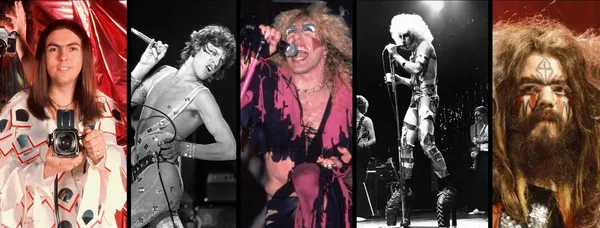

In keeping with a distinct modern trend in documentaries, the personal provides a platform for the more universal in Dustin Lance Black’s Rock Out. Gay rights activist Black has long been a champion of LGBTQ+ history, winning an Oscar for the screenplay for Milk and creating and directing miniseries When We Rise about pioneers of the LGBTQ+ rights movement. He has also tackled personal turf before in Mama’s Boy, his memoir of growing up, which was later adapted by Laurent Bouzereau into a feature documentary.
This time, it’s the life of Black’s brother Marcus that provides a starting point. Marcus, who died from cancer in 2012, was gay but for a long time closeted, largely because he was part of what he viewed as a hyper-masculine punk and heavy metal community that he assumed had “no place” for someone with his gender identity.
It’s this assumption which Black systematically unpicks through the course of a film which explores the queer movers and shakers who shaped and built the careers of many straight artists as well as the gay and trans artists who were an influence on many of them. The term “queer” itself is among things tacitly held up to the light. We see Paul McCartney note in an archive interview how it was used as a blanket pejorative term in society at the start of his career but, like much which has changed positively for the LGBTQ+ community in the years since, it has now been reclaimed by younger generations.
Popular music is an enormous field, so it’s inevitable that Black has to cherrypick his examples to some extent. Reference to problematic queer icon Little Richard is kept to a minimum (and for more on that check out Little Richard: I Am Everything) as Black largely takes what was happening in the British scene of the Fifties and Sixties as his jumping off point. He chiefly keeps his focus on rock ‘n’ roll through to metal and punk, meaning that later LGBTQ+ new wave and pop icons like Boy George, Holly Johnson and George Michael don’t make the cut. While it’s easy to see why some people had to be left out, it’s surprising they don’t merit a mention in despatches given that Black’s film does note how rapper Lil Nas X and the electropop-inflected work of Troye Silvan are examples of today’s trailblazers.
What the film could do with less of is Black “contemplatively” wandering about various neighbourhoods, although when he turns his hand to interviewing people including Marcus’ old friend Rebeks and the lead singer of his brother’s favourite rock band The Dead Milkmen, he is both empathetic and insightful.
Niggles aside, Black serves up a wealth of food for thought, not just in terms of considering the impact of being gay in a world where that could lead to a jail term had on the psyches of many in the music industry but also in terms of the rich seam of personal anecdotes he unearths. Chief among those profiled are Beatles manager Brian Epstein and the network that would grow between the likes of him and fellow gay producers Robert Stigwood and Billy Gaff, with Stigwood’s parties described as being like “the best gay bar you’d ever go to”. The darker side of being gay in a world that viewed it as criminal is laid bare in recollections by Epstein’s friend Peter Brown and in excerpts from Epstein’s diaries, among others.
There’s detailed and entertaining contributions by producer Simon Napier-Bell, who managed everyone from the Yardbirds and Marc Bolan through to Wham! He talks about how Dusty Springfield turned the song he co-wrote based on a gay pick-up line (“You Don’t Have To Say You Love Me) into a hit and about Springfield blocking a marriage of convenience he was considering – don’t be surprised if you find yourself ordering a copy of his book Black Vinyl White Powder after watching this. Other notable interviews feature The Who lead singer Roger Daltrey, Fire hitmaker Arthur Brown, and John Reid, who managed both Elton John and Queen. Elton John becomes one of the focal points of the latter part of the film as Black considers the high price many paid with their careers for daring to say they were anything but straight.
Black also celebrates out and proud trailblazers like singer and actress Jayne County, who provides some of Rock Out’s most acute observations, not least that David Bowie wasn’t averse to pinching an idea or two. Bolstering the talk from the industry insiders are a number of music journalists, one of whom again draws attention to the shifting sands of terminology and attitudes that have happened since the era when Elivs’ hips were considered shocking. Back then, one observes, being gay was considered “a behaviour” rather than “an identity”, while the term “homophobia” didn’t exist because it was considered normal to view being gay as abhorrent. Much then, has changed, although Black's film also suggests activism is still needed to retain progress. With the exception of a bit too much dalliance with Black on those walks, the edit from Justin Lachance is generally tight and, between various needledrops the percussion score from Hole’s Patty Schemel is unusual and evocative.
Sometimes unashamedly gossipy, frequently poignant and generally philosophical and upbeat, this is an observant, informative and above all enjoyable consideration of the huge influence the LBGTQ+ community had on the rock world.
Reviewed on: 09 Jul 2025


Search database:
