





Eye For Film >> Movies >> Lady (2026) Film Review


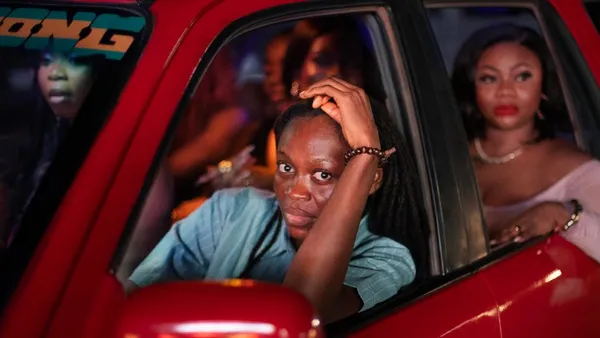

Whether you’re watching a super hero movie or a drama about life on the edge of the poverty line, this principle proves true: No matter how strong a person is, there’s always a weakness that haunts them. Such is the plight of Lady, a determined, self-sufficient woman who you wouldn’t bet against to pull herself out of her life in Lagos, Nigeria. But she also lives with a severe trauma that places constant hurdles on her path to happiness.
Jessica Gabriel's Ujah plays the title character in writer/director Olive Nwosu’s feature debut. A self-starter with real passion and belief in herself, she is one of the city’s only female taxi drivers. The profession has kept her clear of the career many women similar to her fall into: prostitution. Lady has no interest in sex work herself – or sex of any kind, as she was clearly traumatised by something she saw as a child. We see part of the scarring incident – without witnessing the event – in the film’s brief prologue, and it continues to manifest in Lady’s life, most frequently as haunting images in her rearview mirror.
Nwosu, who was born in Nigeria and now based in London, vividly depicts life in Lagos. The film evokes the bustle of highway traffic jams, the squalor of riverside shacks and the tension between a government and its citizens who feel left behind. And it does so while capturing the humanity of those who live and struggle in the city. While Nwosu has a gift for capturing the energy of real locations, she also has an expressionistic flair to communicate Lady’s internal struggles.
This is a film focused more on relationships than plot, but the narrative takes shape as Pinky (Amanda Oruh), an estranged friend, visits Lady with a job opportunity. Lady hasn’t seen her since she left to become a prostitute, but now her boss needs a driver. Lady finds the idea of working for a pimp repulsive, but the pay is way more than typical cab fares, so she reluctantly agrees. After all, it will help her achieve her goal of starting a new life in Freetown, Sierra Leone, which is the shining star that she constantly strives toward.
This new job prompts two things: a rekindled bond for two friends who have drifted apart, and a detour into a world that Lady has been running from. Rather than portraying the prostitutes as seedy, the film captures their humanity. There’s a real sense of camaraderie among the women, even if it can get a bit too juvenile for Lady’s stoic and reserved sensibilities.
When Lady premiered at the Sundance Film Festival, it won a World Cinema Dramatic Special Jury Award for Acting Ensemble, a well-deserved recognition for the warmth and intimacy these characters generate. Given Lady’s hang-ups, romance doesn’t occupy any screen time, leaving Nwosu plenty of time to explore the conflicts and bonds between these different women with very different personalities. While the film has political and sociological themes, it ultimately succeeds because it’s about the true spirit of the people.
As the personal story unfolds, Lagos politics unavoidably intertwines with it. While a popular radio personality stirs the populace with talk of revolution, Lady tells all the male drivers that they need to pull themselves up, because no one is going to help them. However, the wealth disparity and foreign exploitation presents itself at the mansions and parties Lady drives to.
While the arc of the drama may feel inevitable at times, the performances and attention to details in both character and place make Lady a thoroughly compelling journey. This is a film with a rare sense of place that reminds us of the depth of what each person on earth goes through.
Reviewed on: 22 Feb 2026


