





Eye For Film >> Movies >> Dua (99) Film Review


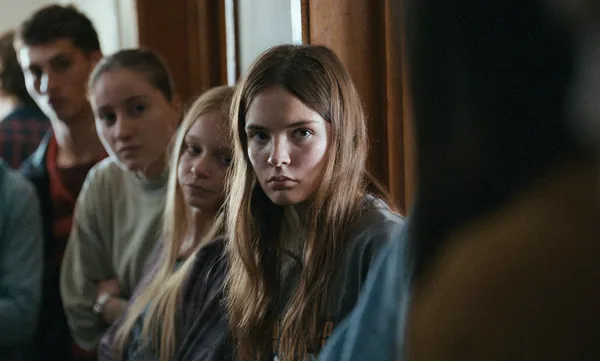

The ethnic tensions and war rumblings of Kosovo in the late-Nineties meet the stresses of puberty in the second feature from Blerta Basholli, who draws in her own experience of being a teenager in the period to offer an intensely focused young view of events.
All the typical rules of teenagehood apply to Dua (Pinea Matoshi) as we see her and her mates planning who to try to kiss at a dance while stuffing cotton wool into their bras. The disco, too, will feel familiar to anyone who ever sat waiting to be asked to slow dance or who tried to pluck up the courage to pop the question. That changes when the gathering is broken up by the military police who send the kids scattering, not into the night, but daylight.

Basholli keeps us in the emotional bubble with Dua through the course of the film, staying with her even as events are unfolding outside of the frame – often revealed via jagged sound design from Marc Von Stürler, Xavier Lavorel and Philippe Ciompi. It’s Dua’s reactions to what is going on that are our conduit to the almost constant fear and stress caused by the fact she and her family are ethnic Albanians, who are facing increasing intimidation and discrimination from their Serbian neighbours. Bombs may not be falling but people’s lives are systematically being quietly blown up.
Dua lives in what, if it wasn’t for the rising conflict, be a happy family environment with her mum (Yllka Gashi, who starred in Basholli’s triple Sundance-winner Hive), dad (Kushtrim Hoxha) and siblings, including her older brother Vegim (Andi Bajgora), whose teasing and tickling sessions offer moments where we see the other, carefree Dua, appear like sun from behind a cloud.
Outside the home, Dua is watchful and nervous, a state that we learn is underpinned by good reason not paranoia. One bright spot is her friendship with a new girl at the off-the-books home school they attend since regular classes are shut down. Maki (Vlera Bilalli) is refugee to Pristina from one of the hotter conflict zones elsewhere and uses her anger to surmount her fear. She takes Dua to a judo club, where the youngster’s confidence starts to blossom.
Tension leaks from the pores of the family. Dua’s dad, who has lost his job, no doubt due to discrimination, busily adds a metal security frame to the family door, while Vegim starts to talk of signing up to the Kosovo Liberation Army, much to his parents’ horror. There is a sense of constant pressure, not least because even in busy frames with many people, Dua remains our focus. Even before any physical blows are struck, there's the loaf of stale bread passed off as fresh by a shopkeeper or the cup of oil that must be returned to an extended facility member who is obviously going short.
Matoshi is brilliantly cast, her expressive performance showing the many facets of fear – from the sort that makes you run to the, even more insidious type that freezes you to the spot. Through it all, however, Basholli ensures we still see the teenager with everyday concerns, hopes and dreams just waiting to re-emerge.
Reviewed on: 14 May 2026