





Eye For Film >> Movies >> Night And The City (1950) Film Review


After the film wrapped, director Jules Dassin’s career in Hollywood was over, a victim of the McCarthy witch hunts, and the final edit was done over the telephone. He went on to make popular, award-winning films (Rififi, Never On Sunday, Topkapi) in Europe.
Night And The City has been hailed as “a baroque masterpiece of corruption, paranoia and doom”. Shot in London less than five years after the end of the war when the city still suffered the ravages of the Blitz, it centres around the clubs of Soho with their ladylike hostesses and shady hangers-on.
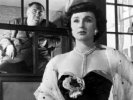
Harry Fabian (Richard Widmark) could be described as a wide boy – the US equivalent. Out of luck, permanently in debt, gambling on schemes that inevitably crash on take off, he’s the consummate conman and inveterate optimist, as well as unscrupulous, selfish and shallow.
Finally, after failing to find backing for a dog racing franchise up north, he believes he has hit the jackpot with the chance of taking over professional wrestling in the capital. In his enthusiasm, aided by a naïve belief in his ability to talk his way out of trouble, he doesn’t reckon on gang boss Kristo (Herbert Lom), who has signed up the big name fighters and has no intention of relinquishing his control of this lucrative racket.
Fabian is only a Yank because 20th Century Fox bought the rights to Gerald Kersh’s 1938 bestseller as a vehicle for their new contract player Widmark, whose debut in Kiss Of Death had been such a sensation. Gene Tierney was shoehorned into the script at the request of studio boss Darryl Zanuck to play Mary, who sings at one of Soho’s night spots, and has little to do but be treated badly by boyfriend Harry and better by next door neighbour Adam (Hugh Marlowe), who has the hots for her. The actual female star role belongs to Googie Withers, as the ambitious, streetwise, conniving wife of Francis L Sullivan’s corpulent club owner. She has spirit to burn and more character in her little finger than Tierney could dream of.
The film has style, created as much by Max Greene’s atmospheric camerawork as Widmark’s bravura acting. It feels dated in the sense that the storyline would never be as stagy, nor as predictable, today. The club scene has a naïve innocence, despite seedy backroom carryings on, and the chemistry between Harry and Mary fails to light the touch paper. However, there are unforgettable moments, such as the fight between the aging ex-champ Gregorious (exceptional performance from real life Polish ex-world champ Stanislaus Zbyszko) and The Strangler (Mike Mazurki), which the American censorship board tried to ban, and the long final chase sequence which was filmed with multiple cameras in one continuous take.
In the genre of noir, Night And The City is like an October sky, invigorating, threatening and dangerous at dawn.
Reviewed on: 17 Nov 2007


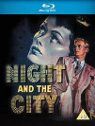

Director: Jules Dassin
Writer: Jo Eisinger, based on the novel by Gerald Kersh
Starring: Richard Widmark, Gene Tierney, Googie Withers, Hugh Marlowe, Francis L Sullivan, Herbert Lom, Stanislaus Zbyszko, Mike Mazurki, Charles Farrell, Ada Reeve, Ken Richmond
Year: 1950
Runtime: 92 minutes
BBFC: 
Country: UK
Search database:
