





Eye For Film >> Movies >> Ballad Of Narayama (1958) Film Review


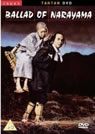
Japan, a remote village some time in the feudal era. It is harvest time and winter is approaching. So is Orin's (Kinuyo Tanaka) 70th birthday and thus the point at which, according to tradition dictated by scarce resources – too many people, not enough food – she will be taken up Narayama mountain and left to die.
It is a fate that she accepts, her one wish that of seeing widowed son Tasuhei (Teiji Takahashi), remarried to Tama-Yan (Yûko Mochizuki) before she makes her final journey.

Tatsuhei's own son Kesa (Danko Ichikawa), whose girlfriend is pregnant, cannot wait to be rid of his grandmother, whom he taunts incessantly for her too-perfect teeth – a salutory reminder, along with her facility in catching fish, that she is hardly the useless mouth to feed that he thinks.
Kesa's attitude is, however, ultimately perhaps less self-interested callousness than the voice of a community which cannot afford itself to make exceptions, as evinced by unwanted presence of an feeble old man who did not do the right thing by going up Narayama and who now, cast out by his own family, scavenges for rice, and the way a family of thieves are dealt with by the collective...
In his concentration-camp set film Kapo, Gillo Pontecorvo was famously taken to task by critics at Cahiers du Cinema for his use of formal strategies clearly intended to enhance the emotional impact of the work. Why had he used this lighting strategy; this close-up; this tracking shot, the critics asked – was not the reality of the situation powerful enough in and of itself? Would not a more self-effacing style have been more effective? Was he not gilding the proverbial lily?
Watching Keisuke Kinoshita's Narayama Bushiko/Ballad of Narayama, I felt something of this same form/content tension. It is unquestionably one of the most beautiful films I have seen, every shot is designed, composed, lit and photographed to perfection. Yet this selfsame sense of a hermetically sealed world, as a highly formalised, stylised studio construction/reconstruction, serves to distance me from completely believing in its world, characters and situation, historically real though they undoubtedly were, as demonstrated – and compounded – by a somewhat jarring black and white, documentary-style coda in which a train takes us to a present-day memorial at an old abandoning post. (To continue the Holocaust film analogies, it is like the colour coda to Schindler's List, or the girl in the red coat in that otherwise black and white film.)
Obviously we are on dangerous ground here and have to try to clarify where we are standing critically. Japanese aesthetics self-evidently cannot be simply conflated with our own, while to apply single, absolute standards of the capital T True and capital B Beautiful across cultures clearly smacks of cultural imperialism. And yet – he says defensively, moving onto safer territory – I do not think this is entirely what it was.
Thinking about the film in relation to other classics of Japanese cinema, whether for their use of Kabuki theatre techniques – brilliantly deployed here, it has to be said, with the titular ballad providing a running commentary on the action, and in-camera effects in place of conventional cuts between sequences – studio or location shooting, or simply their themes and subjects, such as Rashomon, Seven Samurai, Ugetsu Monogatari, Sansho the Bailiff, Throne Of Blood, Onibaba and Kwaidan, there just seemed to be something not quite right; that nagging doubt at the back of my mind that prevented Ballad Of Narayama from coming across as an absolute masterpiece on the level of at least some of these.
Perhaps it is the irony of having a film about the demands of nature on man and of society on the individual that seems, in its own retreat from nature to the studio and the (necessary) subordination of all the craftsmen and performers involved to a singular vision of the world, to reflect these same unresolved, unreconciled tensions, at one (perhaps half-conscious) remove.
Then again, that these were the comparison points which came to mind also serves to indicate just what level of accomplishment we are talking about here.
Highly recommended.
Reviewed on: 22 Sep 2007



Read more Ballad Of Narayama reviews:
| Chris |   |
Director: Keisuke Kinoshita
Writer: Keisuke Kinoshita, based on the stories by Shichirô Fukazawa
Starring: Kinuyo Tanaka, Teiji Takahashi, Yûko Mochizuki, Danko Ichikawa, Keiko Ogasawara, Seiji Miyaguchi, Yûnosuke Itô
Year: 1958
Runtime: 99 minutes
BBFC: 
Country: Japan
Search database:
