





Eye For Film >> Movies >> Vanishing Point (1971) Film Review


Maybe some films are easier to appreciate with the knowledge of hindsight. I only watched Vanishing Point after my curiosity was aroused by Quentin Tarantino's Death Proof. In Death Proof, one of the leading characters hero-worships and repeatedly refers to Vanishing Point's protagonist, Kowalski, who is a car delivery driver.
The film was the inspiration for a number of rock music projects (including an album of the same name by Primal Scream). Its iconic status is also underlined by several remakes and references in film culture.

My first objective was simply to experience the movie, the headlong rush, the adrenalin it created (or deficiency thereof). But I knew afterwards I would want to ask why it had achieved cult status. Our attitude of mind probably influences our film experience. In this case, prior knowledge maybe even opened me up to regarding it with a certain respect, although I can think of other films where that has been the case and I have simply disagreed with mainstream opinion. In the case of Vanishing Point, I feel my optimism was justified.
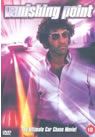
Vanishing Point, which positions itself as a car chase involving "the maximum trip at the maximum speed", follows Kowalski across several state lines. He is trying to drive a supercharged 1970 white Dodge Challenger from Denver, Colorado, and deliver it to California. He takes some benzedrine and makes a bet with a local drug dealer on how fast he can reach his destination.
Kowalski is able to outrun police cars. Not only is he driving a powerful car, but small flashbacks (augmenting minimalist dialogue) show he has a professional racing background. What begins as a small pursuit over minor traffic violations becomes an interstate hunt out of all proportion.
Flashbacks also pay testament to Kowalski's upright character - the very opposite of how he is soon being portrayed by the police. An African-American DJ called Super Soul - he tunes to his radio station throughout - also builds our portrait of Kowalski. Super Soul, by tuning in to police broadcasts, is able to give our intrepid driver tips to avoid capture.
As verbal exchanges involving Kowalski - a man on a sort of mission - are so few, the image built by Super Soul is paramount. The DJ refers to car and driver with phrases like "soul mobile" and "soul challenger" and says the cops are gonna "rape the last beautiful free soul on this planet." Just hip talk from a fast-talking DJ? But whether or not we later choose to consider the building blocks that lead to this film's influence, the characters-as-archetypes factor has a force that also works on a subconscious level. Bear in mind this movie is set in Seventies, post-VietNam, post-Woodstock America. Amid growing disillusionment with government, advances in civil rights, and an atmosphere where many radical ideas of the Sixties gain wider acceptance in mainstream life and culture.
Flashbacks also show the police in a poor light, such as when Kowalski stops a policeman committing a serious crime. In the present, police imaginings fuel their crazed attempt to catch him. "I think he's gonna hijack that car to Cuba... Hell, Charley, I don't know! Maybe killed somebody! Maybe stole that big dude o' his! Maybe both." In contrast, and in spite of his rush, Kowalski stops to make sure none of the people he runs off the road have been hurt.
Characterisation of minor players is so vivid that there would be every tendency to interpret them symbolically. But they are always entertaining. From the almost psychic DJ, to a desert hobo who seems half-crazed, gay hitchhiker hoodlums, a biker who fashions Kowalski a 'pig pass' (to fool a roadblock), or the caring girlfriend with blonde hair streaking behind her as she traverses the desert nude on her motorbike.
So how does Kowalski achieve demi-god status? The use of language that is at once casual and symbolic is nothing new. But the substance has to come from the story itself. He has to become the archetype, like god-kings of legend. His life has to become a symbol of all that he stands for. The beginning and ending of the film, when compared, provide these defining moments.
The mystically inclined might like to ponder a phrase by the great philosopher Kant: "The transcendental subject is not an entity to be found or recognised within experience, but neither is it transcendent, altogether independent of experience; rather, it is like the vanishing point of a perspectival painting." Kant is referring to identity, personality, or 'soul'. Something that we know is actually there but which we can only define by what's around it.
Our 'last American hero' has been clearly defined in the shape of Kowalski. He stands for himself - rather than country as suggested by the authority of the state. He is pitted against the hubris of a society that 'stood' for all the right things and then lost its way. Vanishing Point not only lauds great American values, it gives voice to the frustration of decent, freedom-loving citizens. Rebel Without A Cause for grown-ups. And the story is set in those memorable - symbolic if you will- open spaces and open roads of the American Golden West.
Director Richard C Sarafian said he wanted to make Kowalski appear outerworldly, and that the world within the film was a temporary existence. But the film doesn't force this on its audience. It can be enjoyed at a purely visceral level. It is an all-time great in terms of car pursuits, unencumbered by being the 'chase' add-on to another story. If the idea of rebellion doesn't appeal to you, it may seem a bit empty. But even then you may enjoy pondering the various meanings of the title.
A totally different (if misleadingly appropriate) interpretation of the common phrase 'vanishing point' is given in a police rider-safety guide: "Find a good bend, it doesn't matter if it is to the right or to the left, and look for the point where the two verges appear to meet. This is the vanishing, or limit, point. If you enter a curve and you seem to be catching up to this point then you are travelling too fast."
Reviewed on: 08 Sep 2007



Director: Richard C Sarafian
Writer: Malcolm Hart, G Cabrera Infante, Barry Hall
Starring: Barry Newman, Cleavon Little, Dean Jagger, Victoria Medlin, Paul Koslo, Robert Donner, Timothy Scott, Gilda Texter
Year: 1971
Runtime: 106 minutes
BBFC: 
Country: US
Festivals:
Search database: