





Eye For Film >> Movies >> Assassination (1964) Film Review
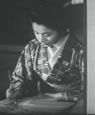


In 1853, four American warships arrive in Japan demanding that, after three centuries of peaceful seclusion, she now open herself up to foreign trade. The Shogunate's pragmatic supporters, based in Edo, have given in to America's gunboat diplomacy without first consulting the Divine Emperor and begun eradicating anyone opposed to their policy, while the Emperor's loyal worshippers, rallying in Kyoto, have started a campaign of assassinations against Shogunate officials, in a bid to save Japan from foreign influence, if not invasion. Civil war is brewing and these times of "double-edged turmoil" call for an equally double-edged brand of hero.
Enter Hachiro Kiyokawa (Tetsuro Tamba), a man who has overcome his humble origins to become a skilled swordsman, eloquent speaker, agile tactician and charismatic leader of ronin (masterless samurai).
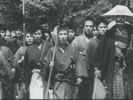
Despite his past reputation as a fervent Emperor Worshipper and agitator against the Shogunate, Kiyokawa is recruited by Lord Matsudaira (Eiji Okada) to form a Free Samurai Army that will wipe out the Shogun's enemies in Kyoto, while, at the same time, Matsudaira enlists another ronin, Tadasaboru Sasaki (Isao Kimura), to study Kiyokawa for weaknesses, in case he should revert to his old Imperialist allegiances and need to be assassinated. Getting to the bottom of just who the "mysterious" Kiyokawa is and what he wants is no easy task when even his own comrades and disciples are unable to trust him, or understand his motives.
Much as Kiyokawa tends to obscure his face beneath a huge straw hat, his character seems half-concealed in a series of flashbacks, designed to tease out the different, often contradictory, facets of his personality, as his top student Ishizaka (Tamotsu Hayakawa) and his would-be assassin Sasaki try to discover the man's true nature. Does Kiyokawa act with brutal ruthlessness, or a genuine desire to avoid violence as much as possible? Was his past opposition to the Shogunate based on nationalistic principles, or indignation at his lack of personal advancement? Has his every move been meticulously planned from the start, or is he simply a time-server with a genius for making the best of any situation? And, finally, is his ultimate allegiance to the Emperor, the Shogunate, Japan, or himself?
Such questions reverberate throughout the film's richly embroidered layers, only to be answered with equivocation, uncertainty or silence. They are the sort of questions that must be asked of anyone whose culture is adjusting to a new era, and, of course, Masahiro Shinoda made this film just as Japan was striving to redefine herself and to reexamine her own recent conduct during the Second World War and the American occupation that followed. It is in this sense that Kiyokawa comes to represent Japan's postwar Everyman, set adrift from the traditional hierarchies of class and caste, and able, if bold and opportunistic enough, to reinvent himself and reach the very top.
Ansatsu, or Assassination, was Shochiku graduate Shinoda's first historical piece, after he had made his name with a run of yakuza films. It is an ambitious, yet assured, blend of intrigue, drama, action, romance and detective story, with a plot as complicated, and a protagonist as inscrutable, as the unstable times in which it is set.
Though highly regarded in Japan, Assassination has rarely been seen anywhere else, no doubt because its convoluted narrative and resistance to easy interpretation has frightened off international distributors. Yet, it is an undeniable masterpiece of cinematic storytelling, matching a jigsaw-like economy of construction to a wide variety of visual styles, while never being anything less than gripping. The violence, when it comes, is fast and shocking, but perhaps the most memorable scene is a prolonged and unbearably tense stand-off near the end, where not a single drop of blood is shed.
With its sophisticated plotting, poker-faced performances, breathtaking mise-en-scene and Toru Takemitsu's stunning soundtrack, Assassination is a classic well worth rediscovering.
Reviewed on: 08 Feb 2006


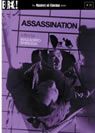

Director: Masahiro Shinoda
Writer: Nobuo Yamada, based on the novel by Ryotaro Shiba
Starring: Tetsuro Tamba, Shima Iwashita, Eiji Okada, Isao Kimura, Tamotsu Hayakawa, Eitaro Ozawa, Keiji Sada, Fujio Suga, Hideo Kidokoro, Gen Shimizu, Yoshindo Yamaji
Year: 1964
Runtime: 104 minutes
BBFC: 
Country: Japan
Festivals:
Search database:
