





Eye For Film >> Movies >> Amadeus - The Director's Cut (1984) Film Review


Whether Czech director Milos Forman had anything to do with this remastered version of his 18-year-old hit is beside the point. Sometimes reissues with "added footage" are marketing ploys to have a second bite at the cherry.
Twenty minutes have been put back. You imagine a room somewhere in which slices of wounded films lie in formaldehyde waiting for the God of Good Taste to resurrect them in the correct order. Certainly, it has happened here. The 21st century edit of Amadeus has a better shape and feel to it, with more music and singing.
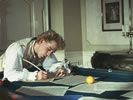
Peter Shaffer's construction of Mozart's life in Vienna, as seen through the reminiscences of the court composer, Salieri, now old and mad, is supremely well done. He has opened up his play, without making it look forced or phoney. There isn't a centimetre of padding anywhere to be seen.
First time round, Tom Hulce, as "the smutty, infantile boy", appeared very much a product of California. Not only did the accent jar against Roy Dotrice, playing Mozart's father, but his body language lacked restraint. This was a kid on campus, showing off. It doesn't seem like that anymore. He captures the uncompromising, naive playfulness of a child prodigy, broken loose from parental ties, at last free to have fun in the Emperor's nursery. As a performance, it stands up well and the accent doesn't hurt like that of Elizabeth Berridge, who plays Constanza, the daughter of Wolfgang's landlady, who becomes his wife. Her acting, not to mention the North American vowels, is the only disappointment in an otherwise sublimely orchestrated movie.
F Murray Abraham has a peach of a role, as the jealous, scheming Salieri. "All I ever wanted was to sing to God and then He made me mute. Why? Why did he deny me the talent?" Shaffer offers lines that are touched with genius. Abraham treats them with the greatest respect. As a partnership of writer and actor, it is as close to perfection as is possible to witness.
By filling out the musical content, the film is more complete. This is Mozart, after all, and by cutting the superbly staged operatic sequences from the 1984 version, because the producers felt that too much posh warbling might put the punters off, is like making a biopic of Jesse Owens and concentrating on the colour of his skin, rather than his ability to run faster than Germans.
The return of Wolfgang Amadeus Mozart, with his amputated life restored in all its chaotic contradiction, is a cinematic delight.
Reviewed on: 29 Aug 2002



Read more Amadeus - The Director's Cut reviews:
| Keith Hennessey Brown |   |
Director: Milos Forman
Writer: Peter Shaffer, based on the play by Peter Shaffer
Starring: F. Murray Abraham, Tom Hulce, Elizabeth Berridge, Roy Dotrice, Simon Callow, Christine Ebersole, Jeffrey Jones, Charles Kay, Kenneth McMillan, Kenny Baker, Lisabeth Bartlett, Barbara Bryne, Martin Cavina, Roderick Cook, Milan Demjanenko
Year: 1984
Runtime: 188 minutes
BBFC: 
Country: US
Search database:
